🫧Global financial markets are out of control, and AI can no longer pull them up
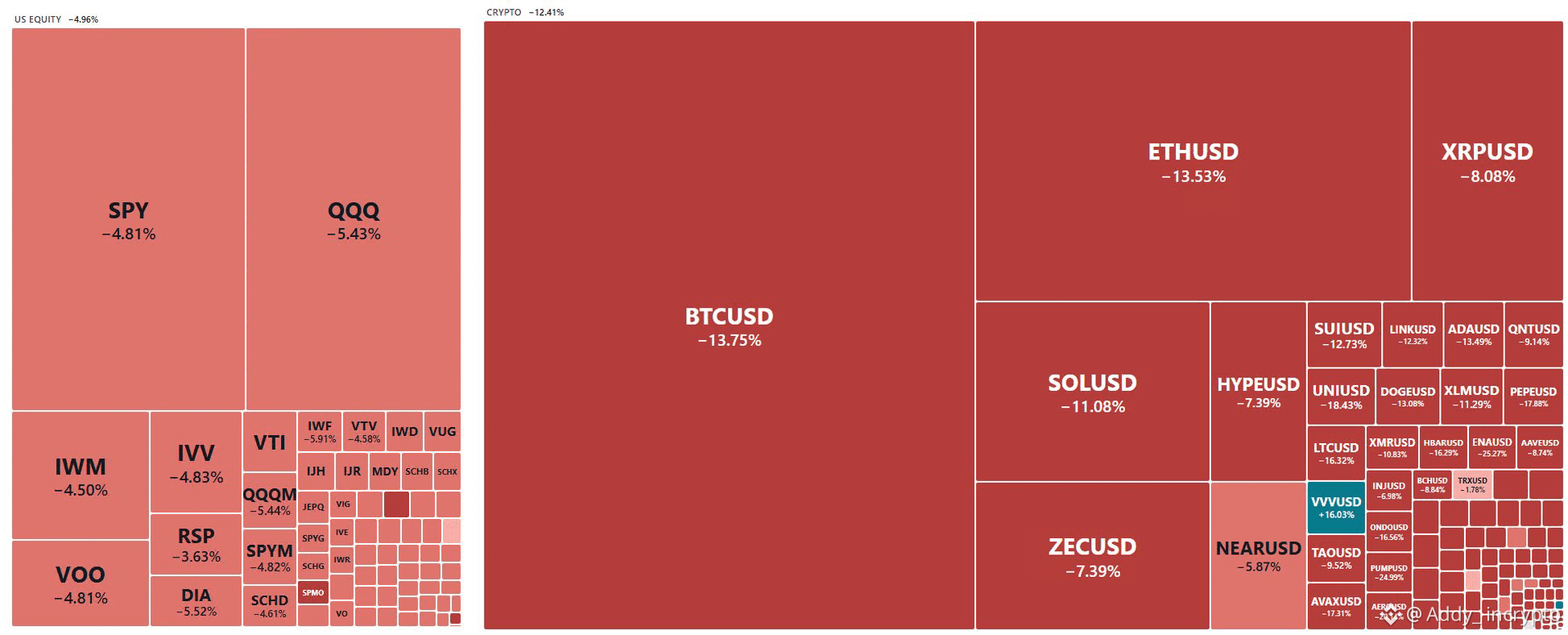
On November 20, 2026, U.S. stocks took a sharp hit:
The S&P 500 fell 3.7%, officially entering correction territory; the Dow also retreated, while the Nasdaq plunged 5.28%, wiping out its gains for the year.
There was only one core reason—the AI trade cooled across the board.
🔵Immediate signal: confidence collapses
- Anthropic shares plunged the day after their IPO, failing to lift the market and instead becoming a case of “buy the rumor, sell the news.”
- Nvidia tumbled about 14% in a single day, with chip and data-center stocks under pressure across the board.
- The market is beginning to ask: Can massive capital spending really deliver sustained high returns?
For the past two years, AI has been virtually the only super-engine powering U.S. stocks. Now that engine is slowing, and the whole market is losing momentum.
🔵Core view: One engine can’t power the world forever
At its core, this downturn is a repricing of the narrative that “AI can carry everything else.”
When overall economic momentum is weak, relying on a single sector to support the broader market is ultimately unsustainable. AI’s headlong advance had masked weakness in other areas, such as interest rates, inflation, and consumer spending. Once the market starts questioning the return on investment, selling can quickly intensify.
This is not a rejection of the technology itself, but the collapse of “sky-high valuations and fantasies of unlimited spending.”
🔵Outlook
Volatility may continue in the short term, as capital keeps pulling out of the overly concentrated AI trade.
Companies with genuinely sustainable earnings will emerge stronger after the repricing; those whose valuations were inflated by hype will remain under pressure.
AI can lift the market for a while, but not forever. Investors are voting with their feet, and the market is returning to fundamentals.
$QQQ $SPY $BTC