


Below is an approximately 5,000-character article in Vietnamese, suitable for posting on Binance Square, with a title, data analysis, and personal perspectives. The content maintains a respectful tone and does not assign blame or attack anyone personally.
BEHIND THE BILLIONS: LESSONS IN RISK, PATIENCE, AND CAPITAL MANAGEMENT
In financial markets, we often see enormous profit figures, investment portfolios worth billions of dollars, and impressive success stories. However, there is a less-discussed side: substantial losses, even when portfolios are very large.
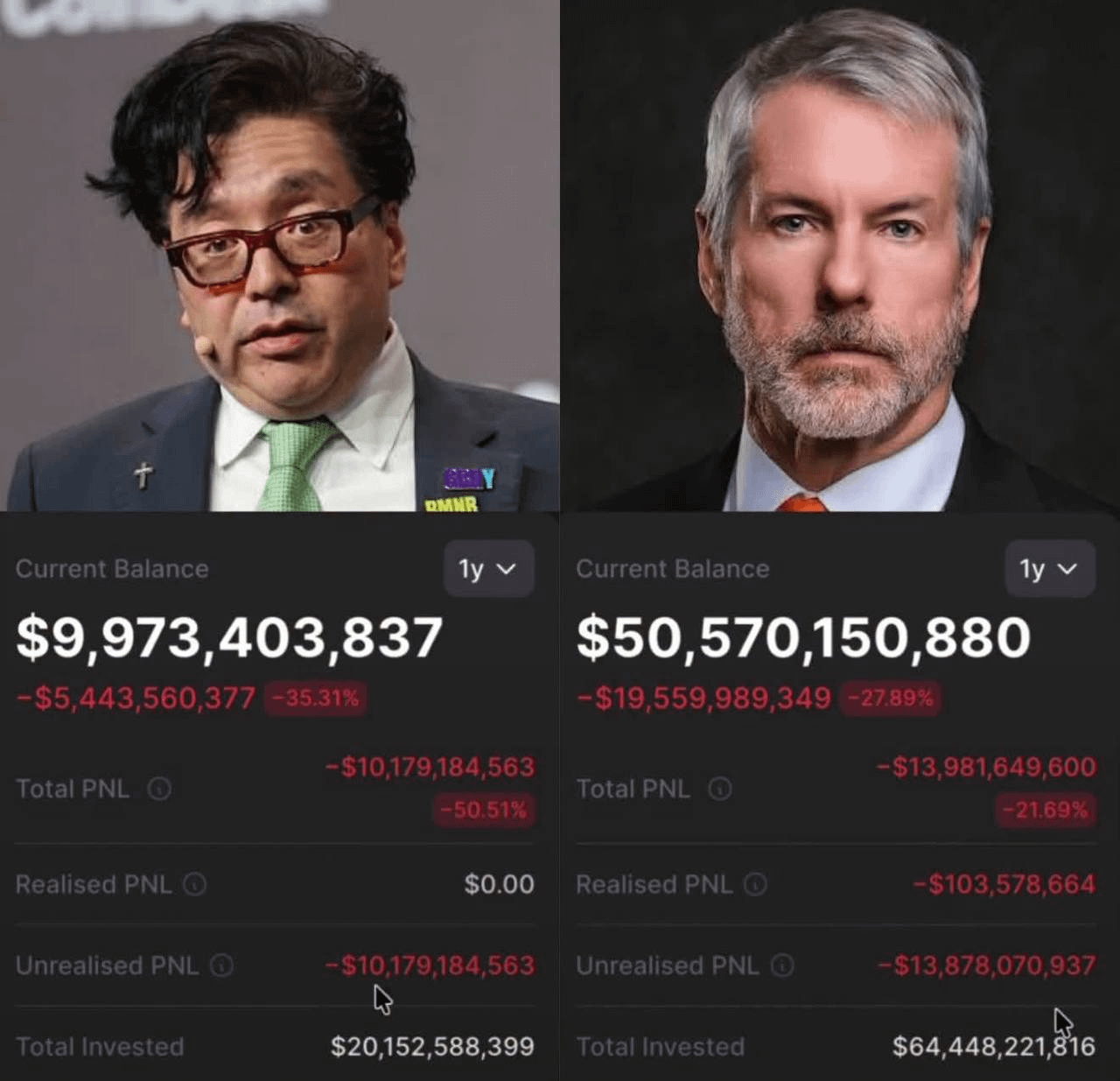
The image shared shows two account summary tables with some striking figures. If the data in the image accurately reflects the account data at the time it was taken, this is a thought-provoking example of the level of risk involved in investing.
1. Looking at what the numbers tell us
According to the image:
First account:
Current Balance: approximately USD 9.97 billion.
Total PNL: approximately -USD 10.18 billion.
Total PNL percentage: -50.51%.
Unrealised PNL: approximately -USD 10.18 billion.
Total Invested: approximately USD 20.15 billion.
Second account:
Current Balance: approximately USD 50.57 billion.
Total PNL: approximately -USD 13.98 billion.
Total PNL percentage: -21.69%.
Realised PNL: approximately -USD 103.58 million.
Unrealised PNL: approximately -USD 13.88 billion.
Total Invested: approximately USD 64.45 billion.
What's notable is not just the size of the losses, but also the loss percentage relative to the total invested capital.
The two accounts show very large figures, but that doesn't mean they are immune to market volatility. On the contrary, the larger the capital base, the more important it becomes to manage risk.
Note: These figures were read from a screenshot; no independent source has confirmed the account identities, the time they were recorded, or the accuracy of the figures.
2. Large capital doesn't mean safe investing
One common misconception in the market is that investors with large amounts of capital are always better able to control the market.
In reality, no one can predict every market movement accurately.
An investment position can move against expectations. A strategy that worked in the past may no longer suit current market conditions.
In particular, when a portfolio is large, even small percentage movements can result in differences of millions or billions of dollars.
So what matters isn't how much money you're managing, but how you plan to protect that capital.
3. Unrealised profits and unrealised losses
One notable detail in the image is that Unrealised PNL accounts for most of the displayed loss.
Unrealised PNL is the unrealised profit or loss on positions that are still open. This figure can change as asset prices fluctuate and does not necessarily represent a realised loss.
Meanwhile, Realised PNL reflects the profit or loss recorded from closed trades.
Distinguishing between these two concepts is very important when evaluating investment performance.
A portfolio showing a large loss may not end up with the same result as the figure shown at the time the image was taken. However, unrealised losses should not be taken lightly, as the market could continue moving against expectations.
Investors should assess the current value of their assets, their use of leverage, liquidity, and the risk of liquidation, if applicable.
4. Important lessons for retail investors
Based on these figures, I believe there are a few lessons worth remembering for everyone participating in the market.
First: Don't risk your entire account on a single decision.
Allocating capital appropriately helps limit the impact of a bad trade. Don't put all your assets into one position just because you believe you've found a sure thing.
Second: Always have a risk management plan.
Before opening a trade, determine how much capital you are willing to risk, what would invalidate your thesis, and what conditions would require you to exit the position.
Don't let emotions override your plan.
Third: Be cautious with leverage.
Leverage can amplify profits, but it can also cause losses to grow quickly. For beginners, using high leverage without understanding how liquidation works poses a significant risk.
Fourth: Don't chase profit figures on social media.
A screenshot shows only part of the information at a particular moment. It doesn't provide a complete picture of the overall strategy, trading history, source of funds, or the risks the account holder is facing.
Learn from the data, but don't let someone else's profit or loss screenshots become a reason to trade without thinking.
Fifth: Patience and discipline matter more than proving yourself right.
In investing, admitting that a thesis was wrong and controlling your losses can sometimes matter more than holding on to a position just to wait for the market to turn around.
5. A personal perspective: Protecting capital is also a success
In my view, investing isn't a contest to see who can make the most money in the shortest time.
An investor may earn very high returns during one period, but without the ability to manage risk, those gains can also be lost when the market changes.
I admire people who can remain disciplined, understand their own limits, and know when to stay out of the market.
Trading isn't always the best choice. Sometimes holding cash, observing the market, and waiting for a clearer opportunity is also a sound investment decision.
For retail investors, the first goal should be to stay in the market for the long term. Only then should they focus on growing their assets sustainably.
We don't need to trade constantly to prove our ability. Nor do we need to use more capital than we can afford to lose just to chase profits.
6. Conclusion
The figures in the image are a reminder that even very large investment portfolios can face volatility and significant losses.
The market doesn't care whether you're a large or small investor. Risk is always present, and no strategy guarantees absolute success.
What each investor can control is how they allocate capital, their level of risk, their trading discipline, and their ability to make clear-headed decisions.
Profits help an account grow, but risk management is what gives us the chance to stay in the market for the long term.
This is a personal perspective shared to offer experience and insights on capital management. It is not investment advice or a recommendation to buy or sell any asset.
💬 In your opinion, what's more important in investing: maximizing profits or protecting capital to stay in the game for the long term?
#Binance #Crypto #RiskManagement #TradingPsychology #Investment