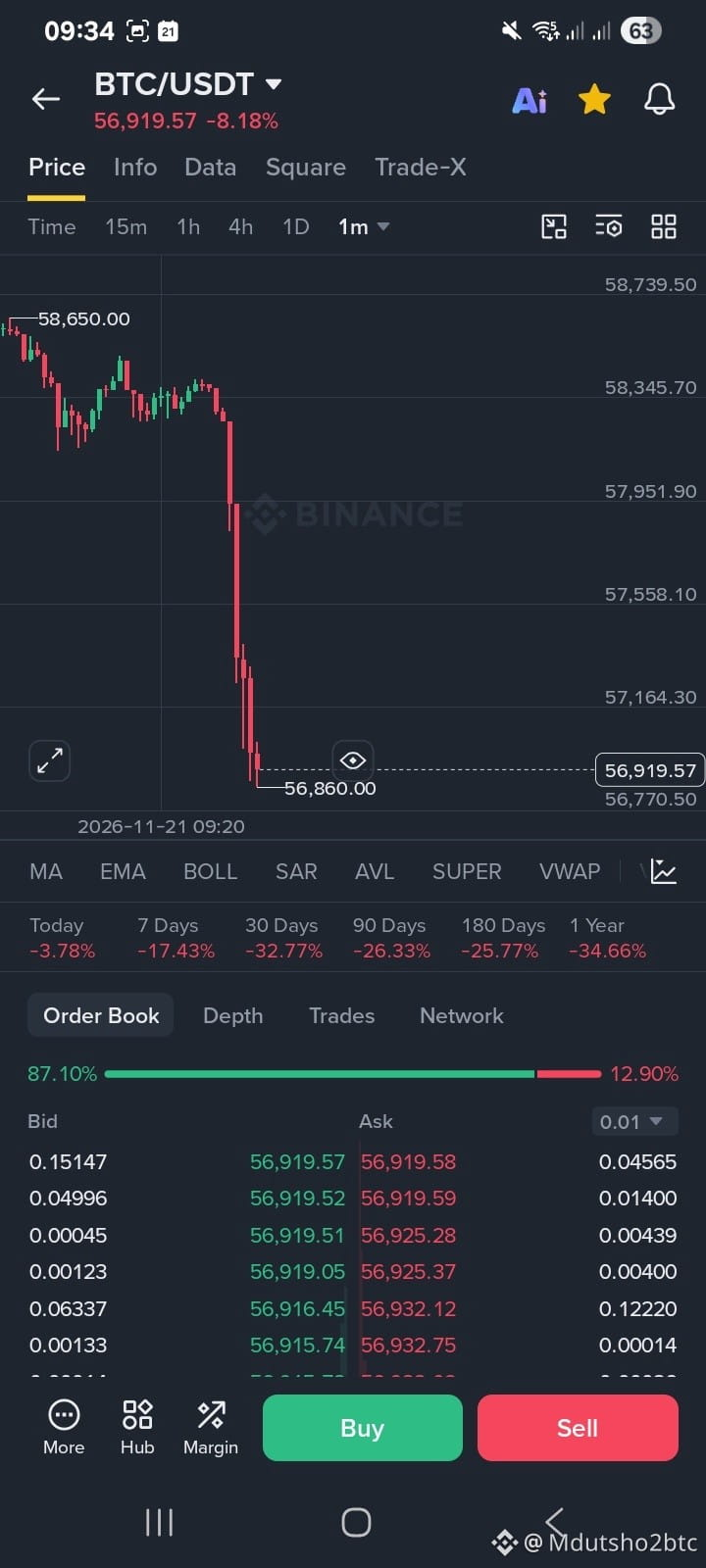
tomaA sudden crash in Bitcoin (BTC) is rarely caused by a single factor; rather, it is usually the result of a chain reaction involving several elements:
1. Leverage and Liquidation Cascade
When a large number of traders hold long positions with high leverage (e.g., 10x, 20x, or more), even a minor price drop can trigger the forced closure—or liquidation—of these positions. Each liquidation generates further sell orders in the market, causing the price to plummet—a phenomenon known in the crypto market as a "liquidation cascade."
2. Large Wallets and Institutional Flows (Whales & ETFs)
When major holders ("whales") or institutional funds suddenly lock in large profits, or when flows into spot markets or ETFs turn negative, liquidity in the order book can vanish rapidly. In such a low-liquidity environment, even a large sell order can drive the price down significantly.
3. Macro News, Regulations, or Rumors
Events such as changes in global interest rates, inflation data, regulatory actions by major nations, alerts regarding exchanges or protocols, or the spread of significant rumors can prompt traders to simultaneously reduce their risk exposure, leading to "panic selling."
4. Breakdown of Technical Levels and Stop-Losses
When a key support zone or trendline on a chart is breached, automatic stop-loss orders are triggered. Furthermore, seeing this breakdown, short sellers may open new short positions, further accelerating the price decline.
How can one identify the actual cause by looking at the charts? * Open Interest and Liquidation Charts: A rapid decline in Open Interest during a price drop indicates that leveraged positions have been liquidated.
* Spot vs. Derivatives Volume: Significant selling in the spot market suggests selling pressure from institutions or large holders, whereas pressure in the futures market often points to the unwinding of leveraged positions.
#BTC
#CryptoMarketAlert
#CryptoNewss