
When is Nvidia's $NVDA long-term bottom-fishing entry point? Can $ANT be shorted?
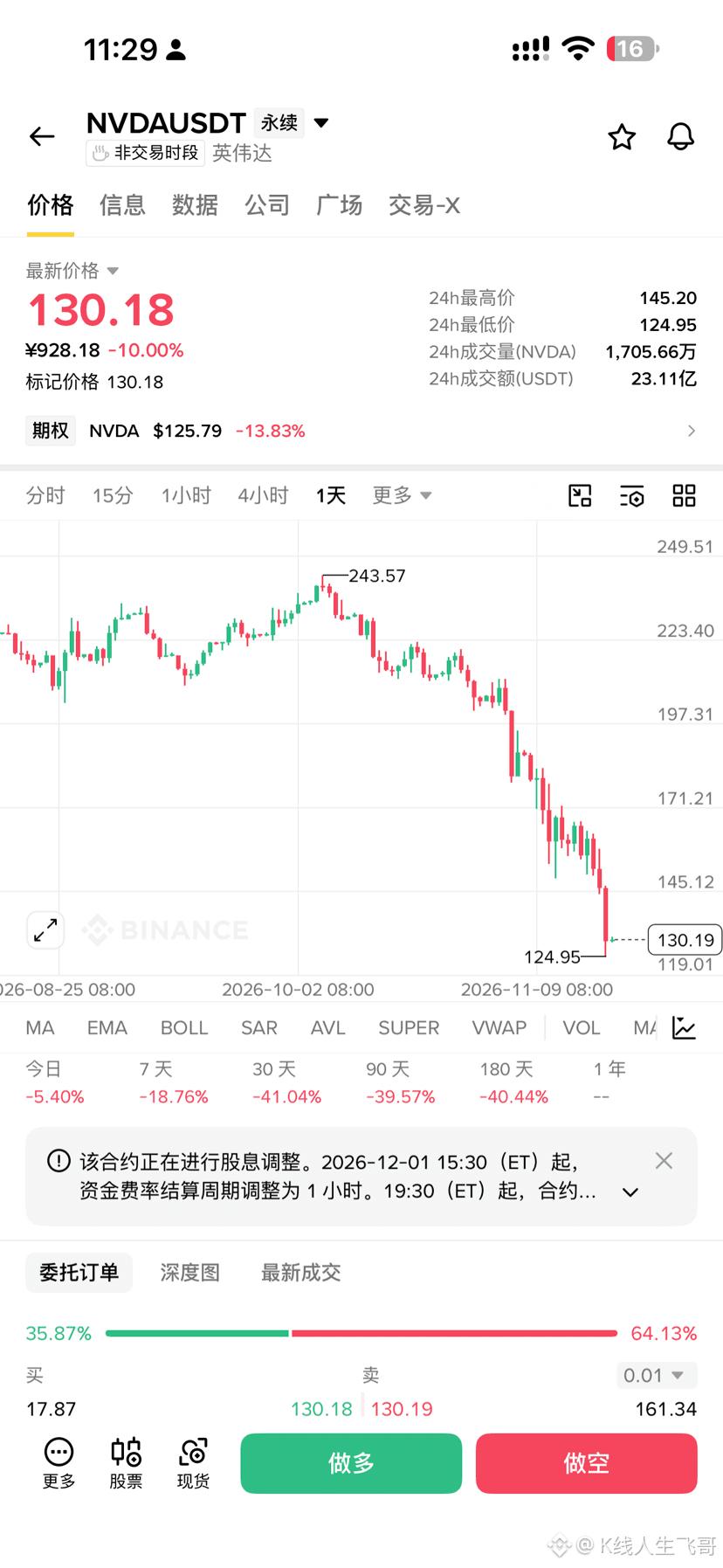
I previously told everyone that Nvidia had some support around 150 in the short term, and that this was a good level for a rebound, but for a long-term bottom-fishing entry, we had to wait until around 100. Looking back at Nvidia's trend over this period, it found brief support around 150, then rebounded to around 170, and after multiple rebounds around 150 it finally broke down effectively, and has now fallen to around 130. I previously told everyone that the long-term bottom-fishing point was 100, and if you thought I was too bold or too pessimistic, now looking back, my original view of 100 was very correct.
Nvidia's biggest advantage in the past was not just its chips and technology, but also the strategic judgment and industry influence brought by Jensen Huang himself.
If Nvidia were to lose Jensen Huang, it might still be an excellent technology company, but the certainty and premium the market was willing to give it in the past would probably not be so solid.
Without Jensen Huang, Nvidia would be missing its most important soul.
So the long-term view remains unchanged: still bottom-fish around 100.
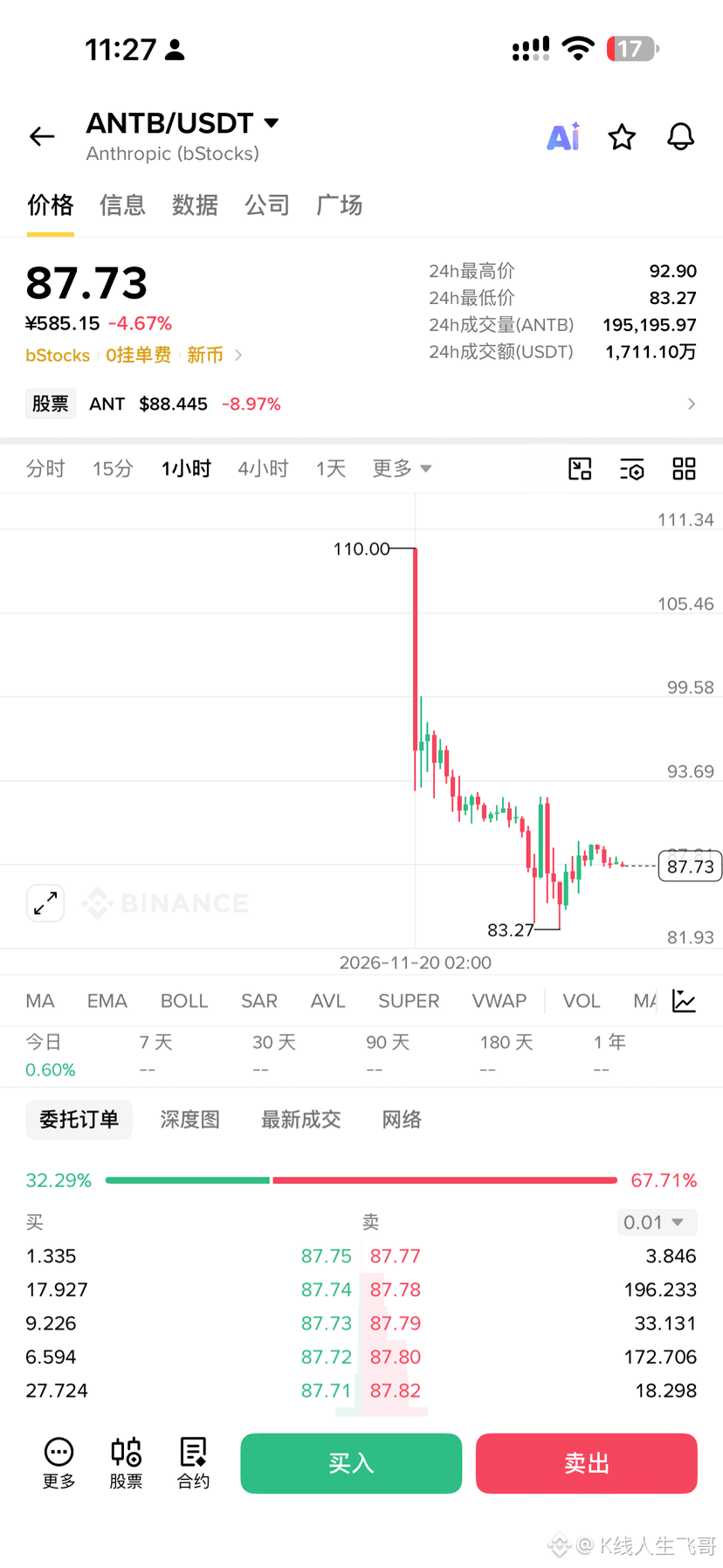
For U.S. stocks $ANTB , the next view is not to bottom-fish; look for a rebound to short. Personally, I think ANT should break below its issue price. In my mind, ANT's valuation is roughly around 800 billion, with a price in the 50s.
The retail allocation ratio for ANT is as high as 20%, far above many large IPOs. A large number of retail investors are still sitting on unrealized gains at the moment. Once the stock price continues to weaken, this portion of holdings can easily turn into selling pressure.
Institutional support may not necessarily be reliable either. During the IPO process, some institutions and industry shareholders participated in support for commercial reasons, but that does not mean they will keep buying for the market in the long run. As the stock price falls, the funds that were originally stabilizing the price may also gradually withdraw.
ANT's issuance size is too large, and institutional holdings are concentrated. It is not realistic to rely on a small amount of funds to push the stock price higher continuously. ANT is not just a single stock; changes in its valuation may also affect the risk appetite of the entire AI industry chain.
Only by breaking below the issue price can the entire AI chain be fully liquidated. ANT's decline will drive a comprehensive decline across the whole industry chain, so the selloff is not over yet. This is the fastest thing that can be realized. Going forward, you will see a high degree of synchronization between ANT's price and the AI sector.
I previously told everyone that Nvidia had some support around 150 in the short term, and that this was a good level for a rebound, but for a long-term bottom-fishing entry, we had to wait until around 100. Looking back at Nvidia's trend over this period, it found brief support around 150, then rebounded to around 170, and after multiple rebounds around 150 it finally broke down effectively, and has now fallen to around 130. I previously told everyone that the long-term bottom-fishing point was 100, and if you thought I was too bold or too pessimistic, now looking back, my original view of 100 was very correct.
Nvidia's biggest advantage in the past was not just its chips and technology, but also the strategic judgment and industry influence brought by Jensen Huang himself.
If Nvidia were to lose Jensen Huang, it might still be an excellent technology company, but the certainty and premium the market was willing to give it in the past would probably not be so solid.
Without Jensen Huang, Nvidia would be missing its most important soul.
So the long-term view remains unchanged: still bottom-fish around 100.
For U.S. stocks $ANTB , the next view is not to bottom-fish; look for a rebound to short. Personally, I think ANT should break below its issue price. In my mind, ANT's valuation is roughly around 800 billion, with a price in the 50s.
The retail allocation ratio for ANT is as high as 20%, far above many large IPOs. A large number of retail investors are still sitting on unrealized gains at the moment. Once the stock price continues to weaken, this portion of holdings can easily turn into selling pressure.
Institutional support may not necessarily be reliable either. During the IPO process, some institutions and industry shareholders participated in support for commercial reasons, but that does not mean they will keep buying for the market in the long run. As the stock price falls, the funds that were originally stabilizing the price may also gradually withdraw.
ANT's issuance size is too large, and institutional holdings are concentrated. It is not realistic to rely on a small amount of funds to push the stock price higher continuously. ANT is not just a single stock; changes in its valuation may also affect the risk appetite of the entire AI industry chain.
Only by breaking below the issue price can the entire AI chain be fully liquidated. ANT's decline will drive a comprehensive decline across the whole industry chain, so the selloff is not over yet. This is the fastest thing that can be realized. Going forward, you will see a high degree of synchronization between ANT's price and the AI sector.