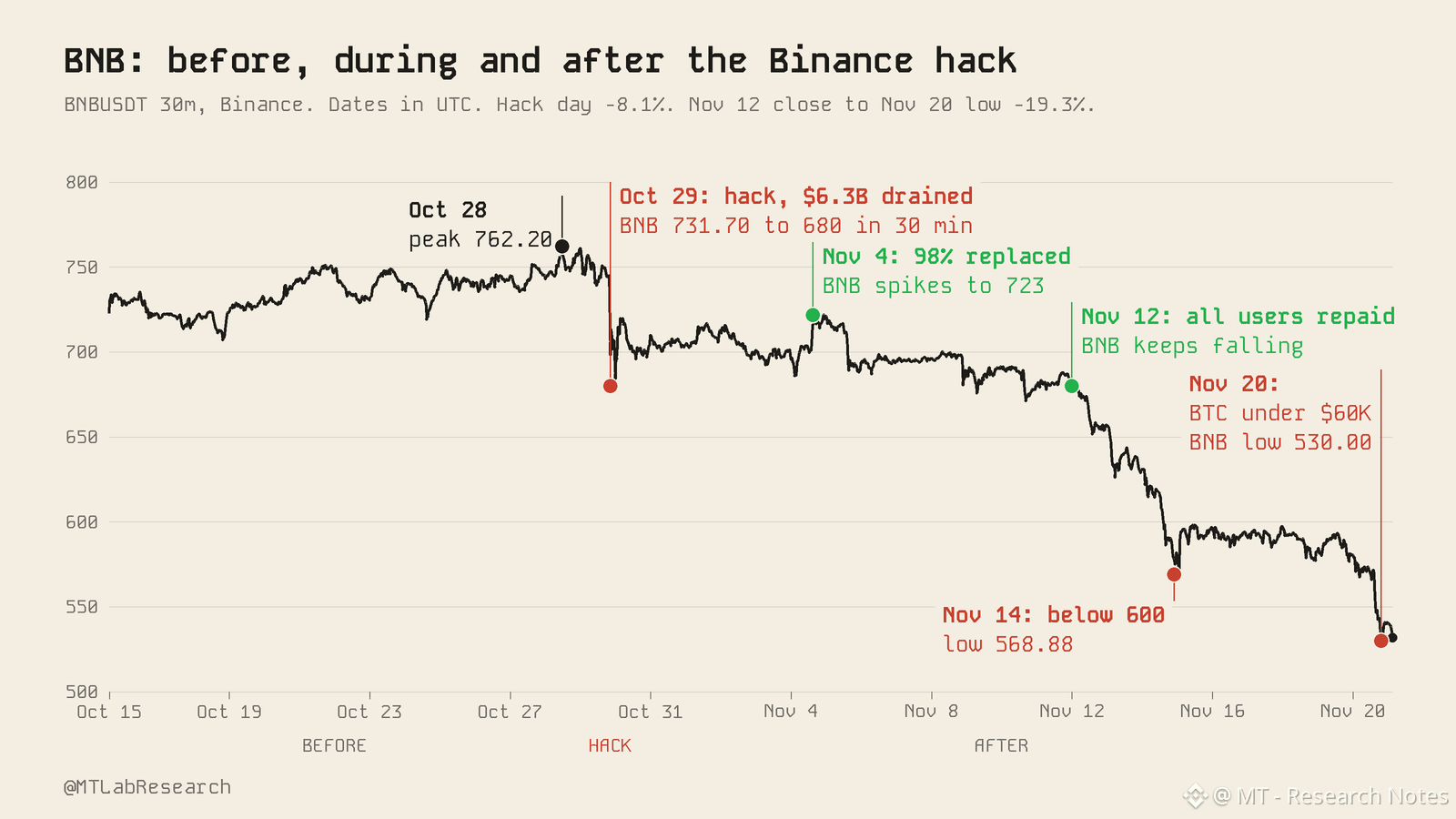
After every Binance user was repaid after hack, BNB still fell more than on the day it lost $6.3B.
BNB broke below 540 USDT on Nov 20 (UTC), down about 8% in 24 hours. The hack day cost 8%. The slide since the repayment is bigger, and it came from somewhere else.
> Oct 28: BNB tops at 762.20 after climbing from about 715 in two weeks.
> Oct 29: At 20:05 UTC attackers start draining Binance hot wallets on ten blockchains. About $6.3B leaves in roughly 20 minutes. BNB drops from 731.70 to 680 in one 30-minute candle, on 15x its usual volume, and closes the day down 8%.
> Oct 30 to Nov 1: Binance says it will cover every loss. The FBI names North Korea's TraderTraitor group. Withdrawals reopen in phases from Nov 1. BNB holds between about 681 and 723 until Nov 4.
> Nov 4: Binance says 98% is replaced. BNB spikes to 723, then closes 4% lower the next day.
> Nov 12: Binance says every affected customer is made whole, with more than $6.34B of its own funds. BNB keeps falling. Hotter US inflation, bets on a December Fed rate hike, ETF outflows and leveraged selling hit the whole market. BNB loses 600 on Nov 14.
> Nov 20: Bitcoin drops under $60,000 for the first time since July as an AI stock sell-off spreads into crypto. BNB loses 540 and touches 530.00 at 19:30 UTC.
Everyone had their own stories:
- Binance: calm users first, repay everyone, chase the money in court.
- Hack-day sellers: the loss size was unknown, so selling first felt safer.
- November sellers: reacting to rates, ETF flows and margin calls, not to Binance.
Three things this chart showed:
1. A shock is priced in minutes. The hack printed in one candle, and good news moved price for hours, not weeks.
2. Fixing the cause does not fix the chart. Binance was whole by Nov 12, the market was not.
3. BNB is one company's token, yet it trades with the whole market. Check Bitcoin and ETF flows before blaming a headline.
Which scared you more, the hack or the market? $BNB
Experience, not financial advice.
#BNBDropsBelow540USDTWith8.46%DailyDecline