


From Friday night into the early hours of Saturday, Bitcoin broke below $61,000. Then $60,000. Then $58,000. It kept falling. It plunged as low as $57,758, its lowest point since September 2024.
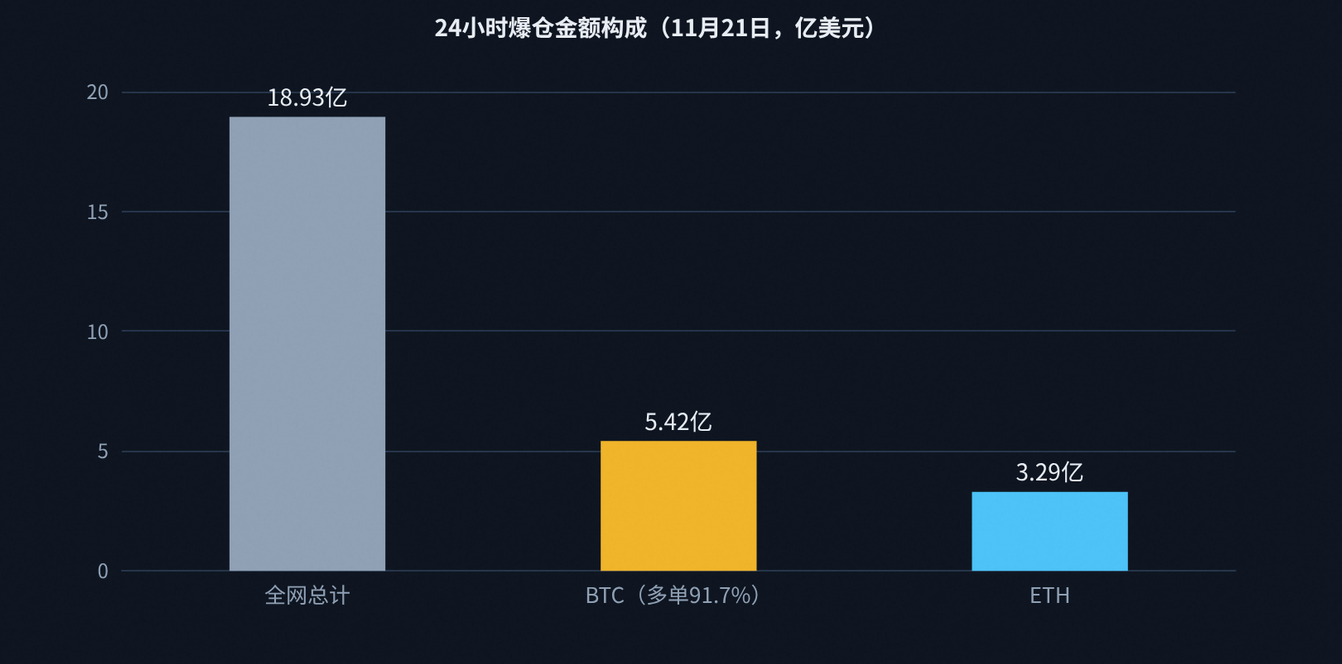
Over 24 hours, 291,972 people were liquidated, totaling $1.893 billion, with longs accounting for 91%. The largest single liquidation was on Binance's ETHUSDT. On the heatmap, BTC liquidations totaled $542 million, with longs accounting for 91.7%, while ETH liquidations totaled $329 million. The two leading cryptocurrencies took the biggest hit. Ethereum fell to $1,622, down 7.85%; SOL broke below $69, and XRP fell below $0.91.
This marks the seventh consecutive week of declines, the longest losing streak since 2022.
A single liquidation event with 91% of positions being longs could be called an accident. The fifth time in a month makes it a pattern. Looking back: on October 24, longs accounted for 82%; on October 30, 83.8%; on November 8, $913 million was liquidated; on November 15, 92%; and now, 91%. The share has consistently hovered between 80% and 92%.
With every rebound, people don’t take the opportunity to deleverage—they rush back in and pile on long positions. One wave of longs gets liquidated, and the next wave has already built up positions during the rebound.
So don’t think of the $58,000 level as “cheap.” It matters not because of value discovery, but because a dense cluster of long liquidations sits below it. Liquidations act like gravity: prices move toward dense clusters without needing a reason.
I think the most dangerous thought right now is, “It’s fallen so much—it must be time to buy the dip.” Over the past month, everyone who thought that became part of the denominator in that 91%.
When can we say the market has been fully flushed out? Don’t look at the price—look at the liquidation data. The cycle won’t be broken until a sharp drop no longer comes with massive long liquidations, and rebounds are no longer used to add leverage.#比特币跌破6万美元,短期能否企稳反弹? $BTC
