

Penicillin: Everyone Gets Lucky
In September 1928, Fleming returned from vacation to find mold growing in a Petri dish. Around the mold, a ring of bacteria had died.
He noticed it. He wrote it up in a paper, but no one paid attention. The mold juice was unstable and couldn’t be purified, so it couldn’t be used clinically. The discovery lay in the paper for ten years.
Discovery is luck; turning it into a drug is engineering.
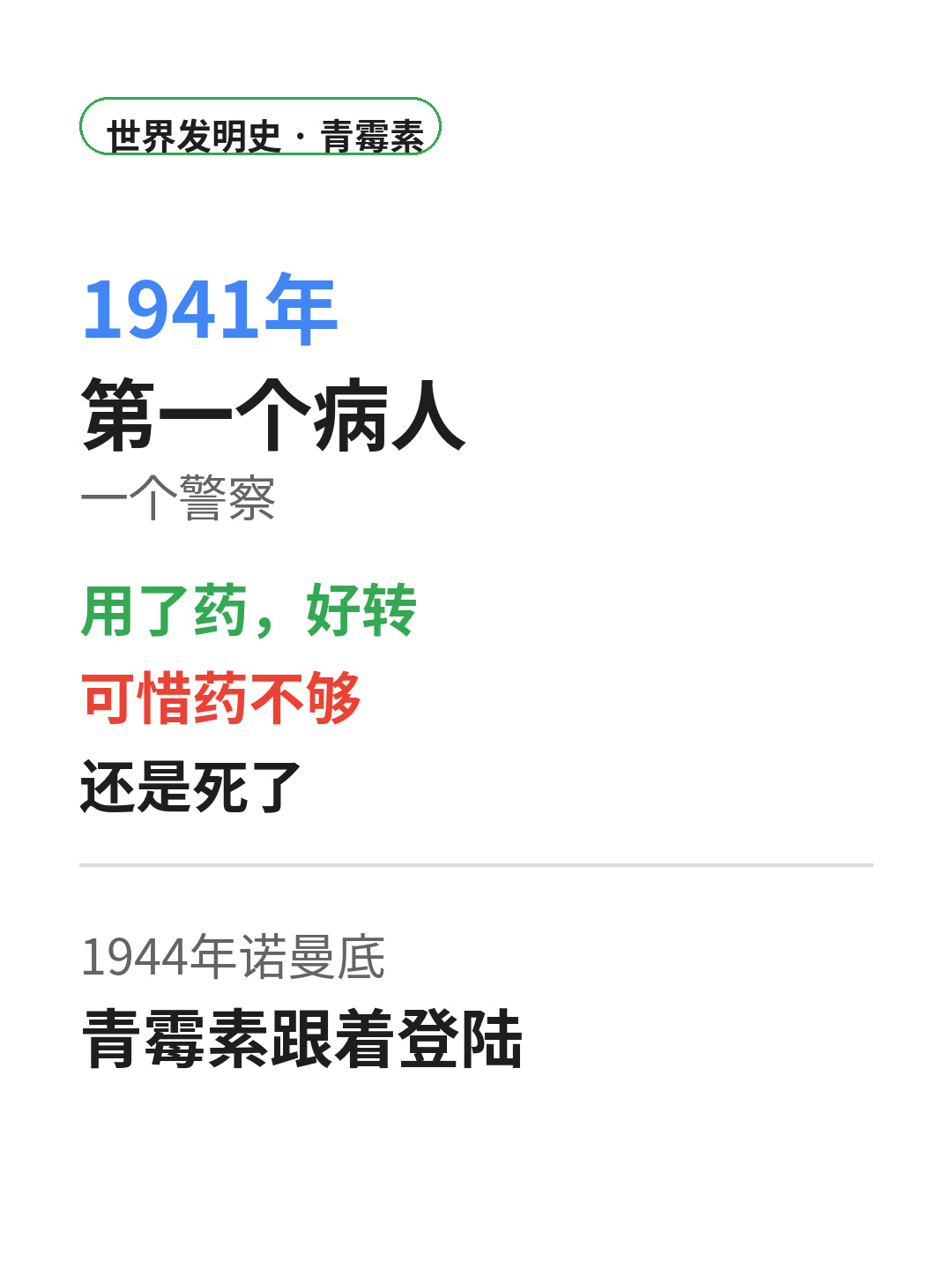
In 1938, Florey and Chain took over at Oxford. They had little money and crude equipment, using bed frames as culture racks. Someone on the team collected used culture dishes from a nearby hospital every week and extracted the mold. In 1940, the mouse experiments succeeded. In 1941, the first patient—a police officer—was given the drug and improved. Sadly, there wasn’t enough, and he still died.
In 1943, the U.S. military took over, and penicillin was produced in fermentation tanks on an industrial scale. In 1944, penicillin landed alongside the troops in Normandy. In 1945, the three men shared the Nobel Prize.
Fleming put it plainly: I was lucky—I discovered it. But without Florey and Chain, penicillin would still be sitting in a paper today.
Everyone has accidents. Contaminated Petri dishes have turned up in almost every laboratory. Fleming wasn’t the first to notice the zone where bacteria wouldn’t grow. But only Florey and Chain spent the next ten years turning that observation into a lifesaving drug.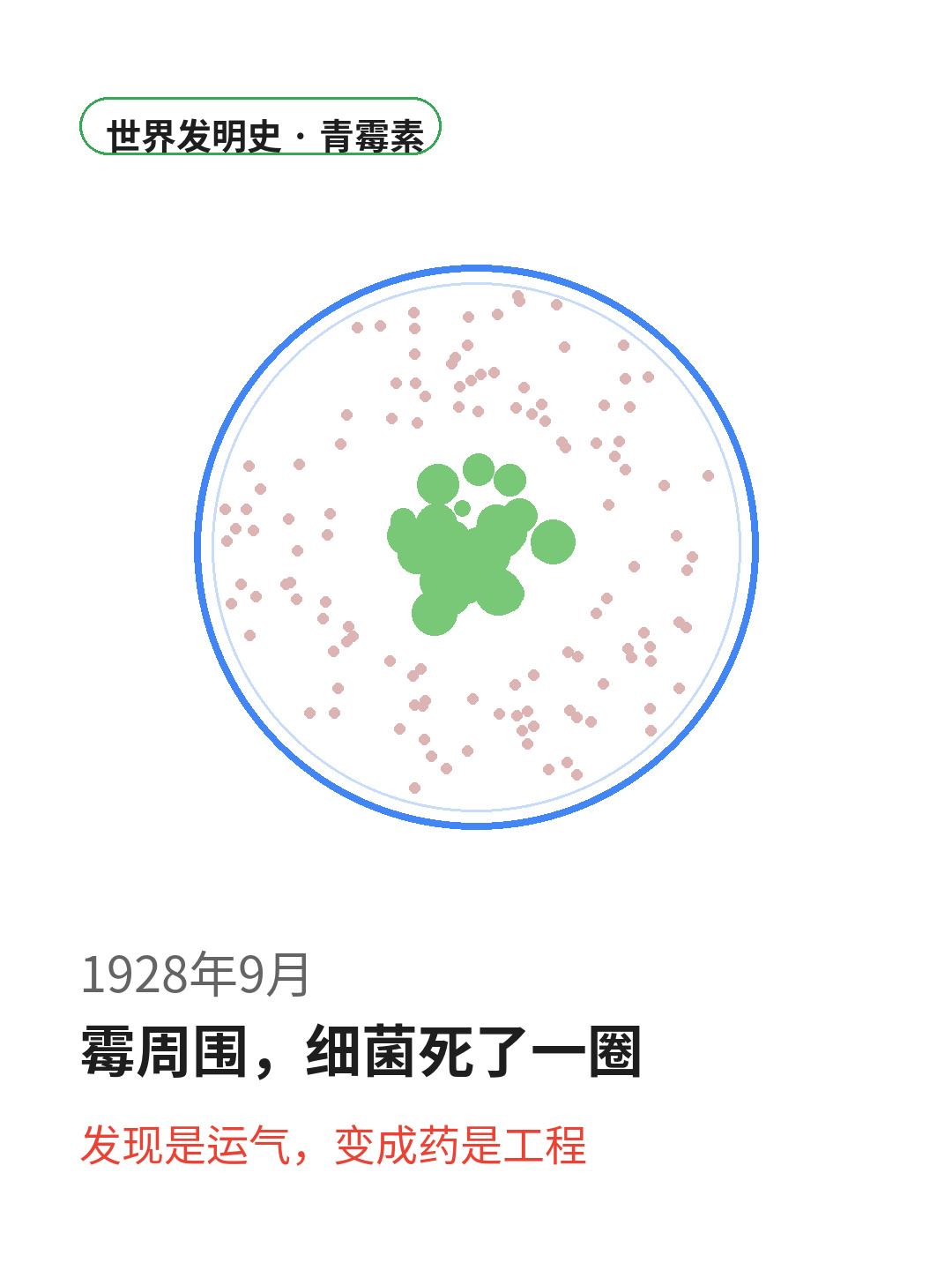
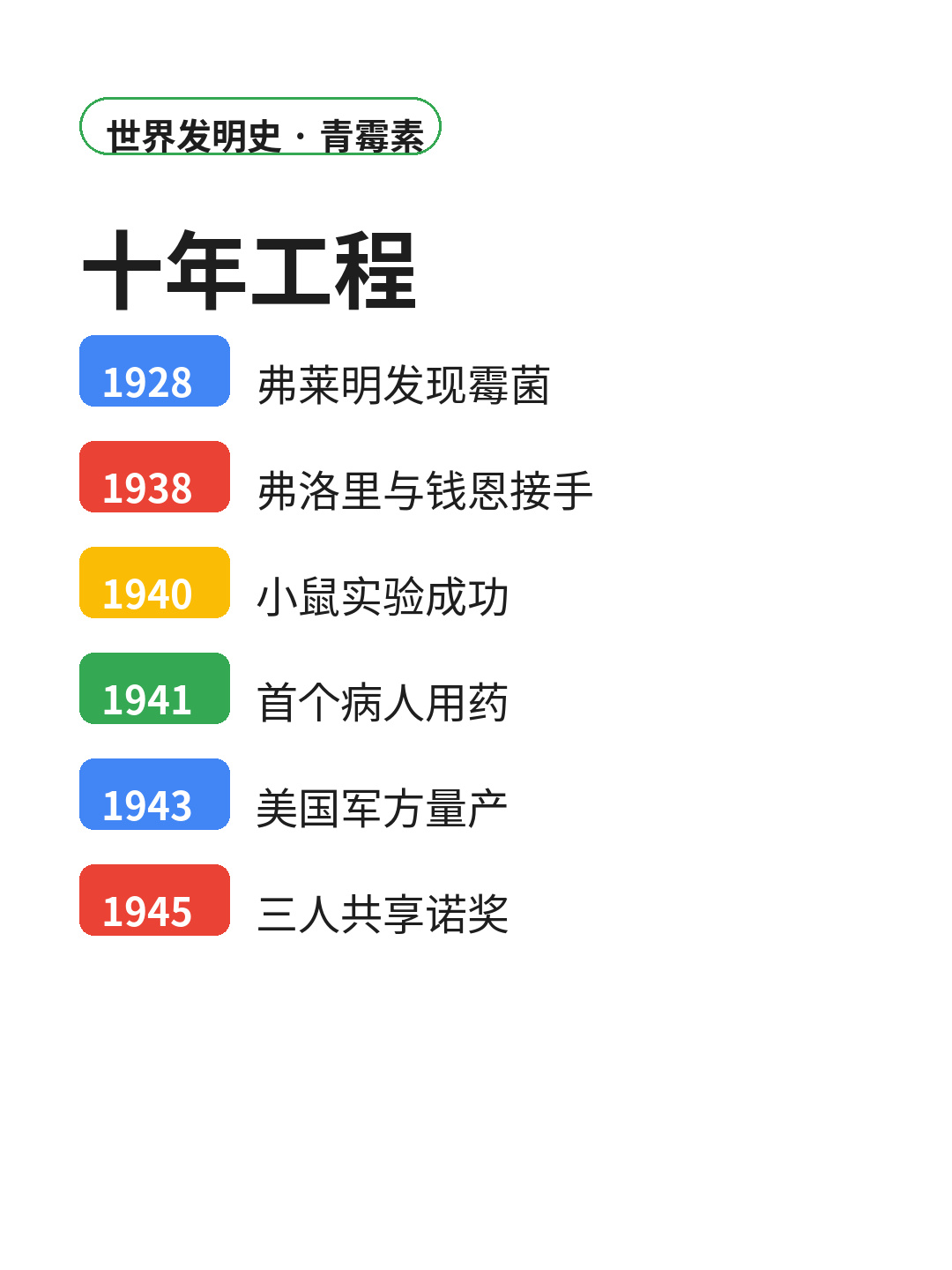
What stood between discovery and treatment? Purification, mass production, and war. The Oxford laboratory was desperately poor. Florey went to the United States for help; the military saw the potential, and fermentation tanks went up. None of these steps was a scientific breakthrough—they were advances in engineering. Science provided a starting point; engineering carried it forward for ten years.
Now consider the first patient. A policeman, scratched and infected, with a fever that wouldn’t break. He was given penicillin; his temperature fell, and he regained consciousness. There wasn’t enough medicine. The bacteria fought back, and he died. The case showed that the drug worked—and that without mass production, it was worth nothing.
The war pushed this effort to its limit. When Allied troops landed in Normandy, penicillin went with them. Wounded soldiers who would once have died from infection could now survive after a single injection. The military did the math: saving one soldier with penicillin cost far less than training a new one. Mass production became a national priority.
In 1945, Fleming, Florey, and Chain shared the Nobel Prize. In his speech, Fleming said that the story of penicillin showed that scientific discovery requires luck—and someone who knows what to do with it. Florey and Chain were the ones who did.
Later came the age of antibiotics, with streptomycin, tetracycline, and others following one after another. But penicillin came first. It proved that drugs could kill bacteria and that infections need no longer be death sentences. Three men spent ten years building that foundation.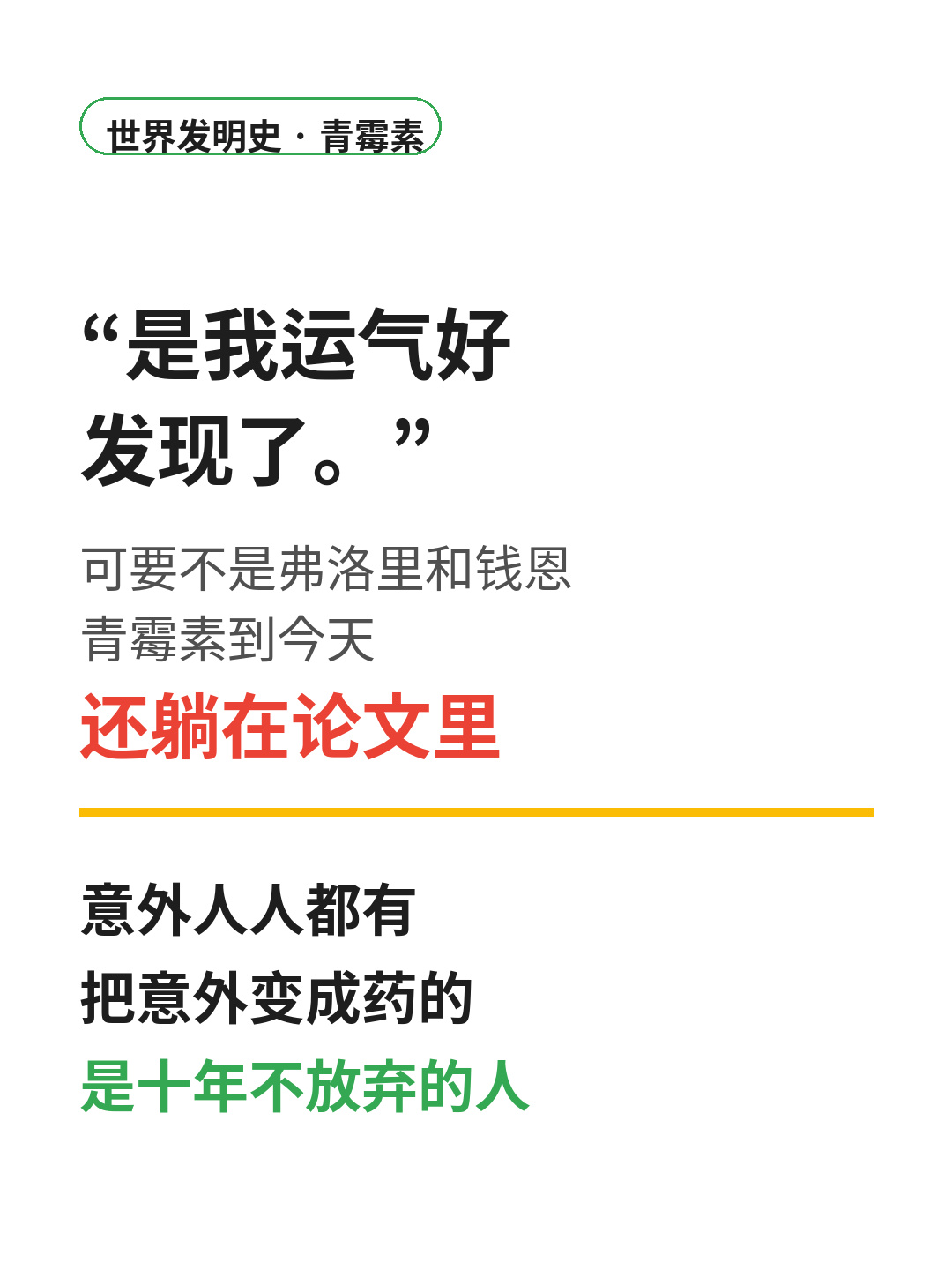
Think again about those ten years. In the Oxford laboratory, there was no heat in winter, and Petri dishes were kept warm against their bodies. Chain did most of the purification work himself, his hands cracked and bleeding from the cold. Florey searched everywhere for money, equipment, and support. These details never make it into Nobel Prize speeches, but they were exactly what turned luck into medicine.
Turning an accident into a medicine doesn’t take a flash of inspiration. It takes people who refuse to give up for ten years.