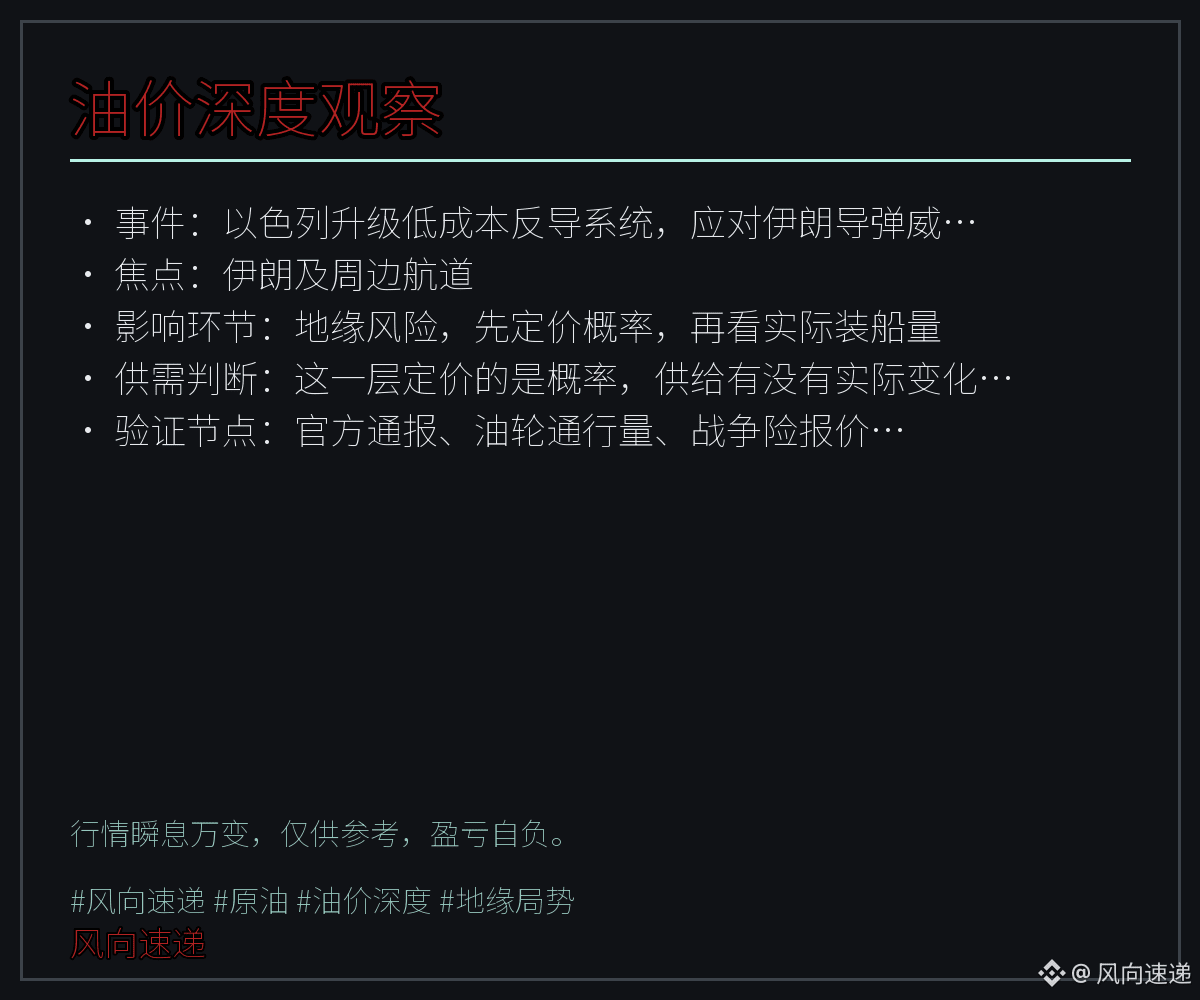
In-Depth Oil Price Watch
【Key Event】
Israel upgrades low-cost missile defense system to counter Iranian missile threat - Market Reference (5 hours ago)
【What Is Influencing Oil Prices】
Iran attacks energy facilities. Attention is focused on Iran and the surrounding shipping lanes. News of this kind changes the market’s estimate of the likelihood of supply disruptions, but does not necessarily correspond to actual production losses.
【Transmission Chain】
Rising tensions first push up the geopolitical risk premium, prompting adjustments to tanker insurance, voyage plans, and buyers’ willingness to build inventories.
Only when events affect loading, transit, or the facilities themselves will the risk premium translate into a verifiable shortfall in the supply-demand balance.
【Supply, Demand, and Pricing】
At this stage, the market is pricing in probabilities. Whether supply has actually changed will depend on subsequent loading volumes and facility operating data.
WTI is currently trading near $82.89, with a 24-hour change of +0.02%. Price fluctuations are limited, and the market is showing a mild response for now. Further data will be needed to confirm how much of this news has been priced in. The premium driven by conflict-related news is usually concentrated in front-month contracts and options-implied volatility, and can quickly unwind when sentiment shifts.
【What to Watch Next】
Watch for official updates, tanker traffic volumes, war-risk insurance quotes, and any changes to oil-producing countries’ loading plans.
【What Would Invalidate This Thesis】
If tensions ease and there is no damage to facilities or shipping, the risk premium often fades quickly.
Markets can change in an instant. For reference only; trade at your own risk.
#风向速递 #原油 #油价深度 #Geopolitical Situation