

Competition in the blockchain market is no longer limited to transaction speeds or reducing network fees. As the sector evolves, more important criteria are emerging, concerning the ability of these technologies to provide practical financial solutions beyond trading and speculation.
This is where Celo comes in. The project has chosen to focus on one of the most promising sectors in the digital asset economy: payments using stablecoins and making financial services more accessible through mobile apps.
What sets this approach apart is that the project is not simply trying to offer another blockchain network. It aims to build financial infrastructure that makes using digital currencies easier, particularly in markets that need fast, low-cost payment solutions.
With Celo’s transition to an Ethereum Layer 2 in March 2025, the project entered a new phase of development, benefiting from greater integration with the Ethereum network and its ecosystem.
But to understand why this step matters, we need to look at what Celo is actually trying to build, rather than simply classifying it as a Layer 2 network.
From Layer 1 to Ethereum Layer 2: A strategic shift in Celo’s direction
Celo began its journey as an independent Layer 1 blockchain, with a clear focus on payments and making financial services accessible through mobile phones.
But in March 2025, the network moved to Ethereum Layer 2 using the OP Stack, in a strategic step aimed at leveraging Ethereum’s infrastructure and security while maintaining its own focus on digital payments.
This step is not merely a technical change in how the network operates. It reflects a move toward deeper integration with the Ethereum ecosystem, which has become one of the leading environments for decentralized applications and digital assets.
From a competitive standpoint, this transition gives Celo the opportunity to develop financial applications that benefit from interoperability, liquidity, and Ethereum’s broader infrastructure.
The real challenge, however, remains its ability to offer use cases that set it apart from the growing number of Layer 2 networks competing to attract developers and users.
Stablecoins: The Main Driver of Celo’s Vision
One of Celo’s key areas of focus is expanding the use of stablecoins, especially USDT and USDC, as financial tools for transfers, payments, and everyday economic activity.
This strategy is becoming increasingly important as stablecoin use expands worldwide. Their role is no longer limited to providing a way to store liquidity on trading platforms; they are gradually being used for international transfers, digital payments, and financial services.
Here, Celo is trying to address a fundamental problem faced by new users: the complexity of interacting with blockchain networks.
For example, on many networks, users need to hold the network’s native token to pay transaction fees, even if their only goal is to transfer a stablecoin.
Celo offers a Fee Abstraction mechanism that allows supported ERC-20 assets to be used to pay transaction fees, reducing the need to hold CELO specifically to cover network fees.
These details may seem technical, but they make a meaningful difference to the user experience: the fewer steps required to make a financial transaction, the more likely users are to use the app regularly.
MiniPay: The Real Test of Blockchain’s Move into Everyday Use
One of the most notable apps in the Celo ecosystem is MiniPay, a self-custodial digital wallet developed by Opera that focuses on making stablecoins easier to use on mobile phones.
MiniPay matters because it targets a broader group of digital currency users, not just traders or people interested in blockchain technology.
The core idea is to make sending and receiving stablecoins simpler and reduce the technical barriers that make digital wallets complicated for everyday users.
One notable development came in November 2026, when MiniPay announced an update to its wallet infrastructure in collaboration with Privy, a digital wallet infrastructure company acquired by Stripe.
According to the announced figures, the app has surpassed 20 million activated wallets across more than 70 countries, with over 600 million transactions recorded.
This initiative aims to improve the wallet creation and access experience through email, social accounts, and passkeys, while preserving the wallet’s self-custodial nature.
However, it is important to distinguish between the number of activated wallets and the number of genuinely active users. In the long run, the more important indicators are sustained usage, transaction frequency, and how much users rely on the app for their financial activities.
That makes MiniPay’s growth one of the factors worth watching when assessing Celo’s future.
What role does CELO play in the ecosystem?
A blockchain project cannot be evaluated solely by the number of its apps or users. It is also important to understand the relationship between network activity and economic demand for its native token.
CELO plays a role in network governance and its economic mechanisms, and is also connected to the project’s fee and staking systems and ecosystem participation.
But one point should not be overlooked: growth in network usage does not necessarily mean that the token’s value will rise by the same amount.
The relationship between adoption and market value depends on how economic activity translates into actual demand for the token, as well as on tokenomics and governance and staking mechanisms.
Therefore, several indicators are worth monitoring when analyzing CELO’s future:
- Growth in the volume of stablecoins circulating on the network.
- An increase in the number of active users and recurring transactions.
- The expansion of MiniPay and its reach into new markets.
- Growth in decentralized applications and economic activity within the ecosystem.
- Developments in governance mechanisms and the economy associated with CELO.
These indicators help distinguish growth driven by promotional campaigns from growth based on genuine, sustainable usage.
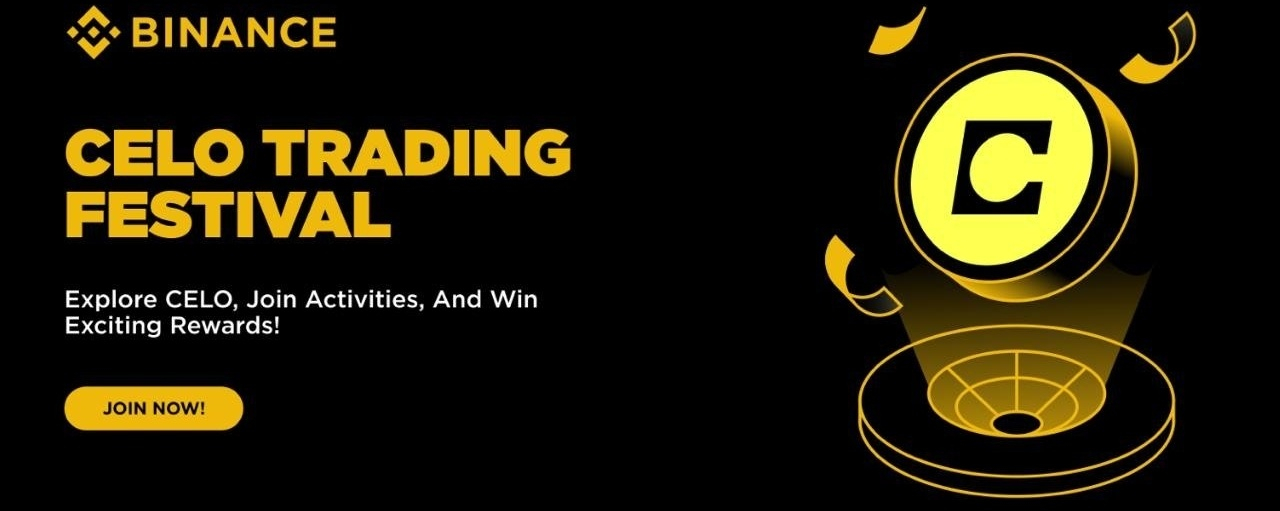
Binance launches CELO Trading Festival with prizes of up to 170 BNB
Amid growing interest in the Celo ecosystem, Binance has launched the CELO Trading Festival, featuring total rewards of up to 170 BNB, running from November 20 to December 20, 2026.
The campaign includes three main ways to participate:
First: Trading Competition – 75 BNB
This category allows eligible users to compete on the leaderboard by trading at least 500 USDT in the CELO/USDT pair on the Spot market.
Second: New User Rewards – 70 BNB
This category is aimed at eligible new Binance users. They must complete registration and identity verification (KYC), buy the required amount of CELO, and then hold it in Simple Earn Flexible for three full days.
Participation link and details:
https://www.binance.com/activity/trading-competition/ExCELOTradingFestival2026?ref=376056273
Can Celo capitalize on the wave of stablecoin adoption?
In my view, Celo’s significance lies in its choice to focus on a sector tied to real financial needs, rather than merely following the speculative cycles of the crypto market.
Digital payments, cross-border transfers, and the use of stablecoins are areas that can benefit from blockchain infrastructure, especially when cost and ease of use are essential.
But competition in this sector is fierce.
Multiple networks are seeking to attract stablecoin liquidity and offer low-cost payment solutions. Success in this field requires more than just fast transactions and low fees.
A project needs to build an active user base, provide apps that deliver real value, and create an economic ecosystem that can endure without relying on constant incentives and rewards.
That is why Celo’s success will not be measured solely by the attention its trading campaigns generate, but by its ability to turn that interest into regular, sustained usage.
Conclusion
Celo offers a relatively distinct model in the blockchain sector by combining Ethereum Layer 2 infrastructure with a focus on stablecoins and mobile payments.
MiniPay’s growth and the expansion of partnerships and infrastructure give Celo an opportunity to strengthen its presence in the digital payments sector. But continued growth will depend on its ability to achieve real adoption and turn network activity into sustainable economic value.
Meanwhile, Binance’s new campaign offers another opportunity to highlight the project and encourage users and content creators to learn about its ecosystem.
For me, the most important thing to watch with Celo is not the size of the rewards currently on offer, but whether the network can prove that stablecoins can evolve from assets used by traders into financial tools that people rely on in their everyday lives.
That is the real test that will determine Celo’s standing in the next phase.
#CeloFestival #CELO #Binance #CryptoMaxx