#TradFiForBeginners
New to crypto and keep seeing the term TradFi thrown around? Let's break it down without the jargon. 🧠👇
TradFi stands for Traditional Finance.
Think of it as the classic financial system you already use every day—your local bank, the stock market, credit cards, and government-backed currencies (like the US Dollar, Euro, or Rupee).
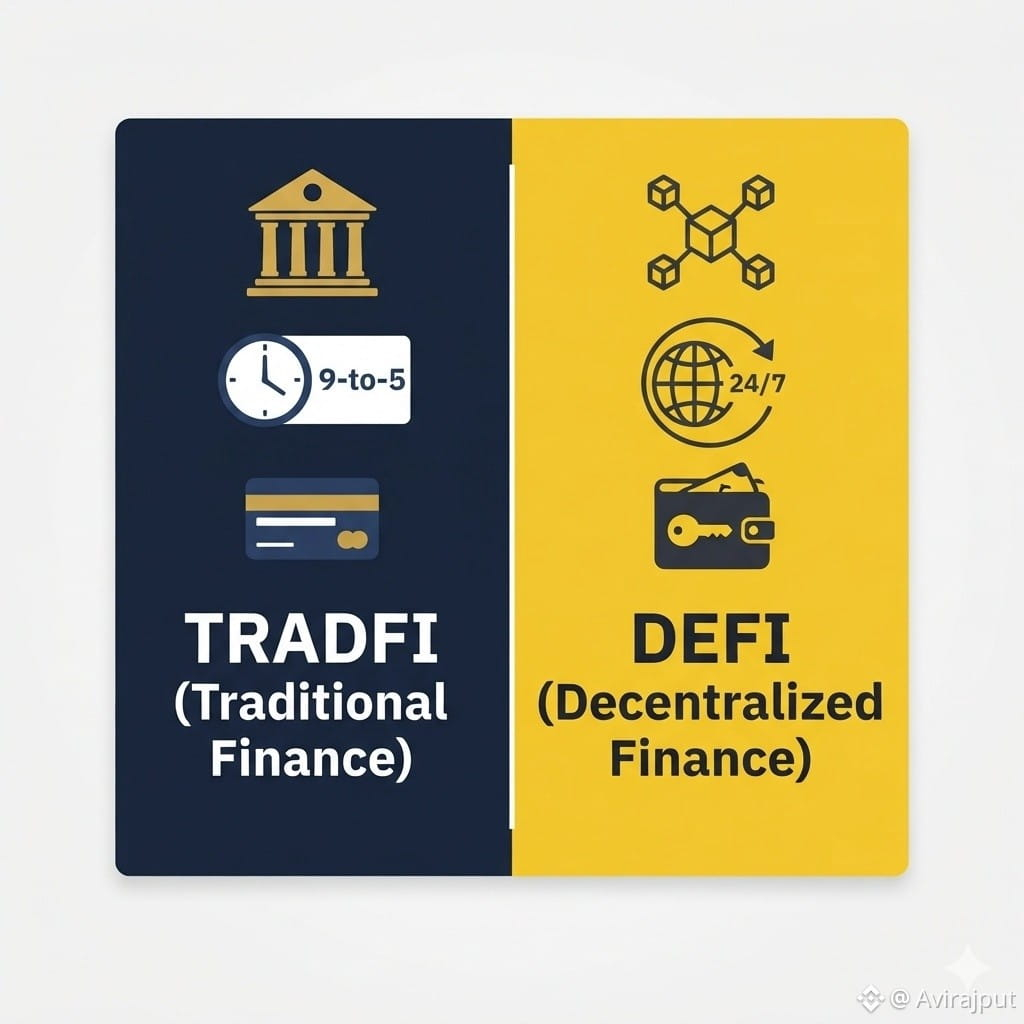
Here is how TradFi compares to DeFi (Decentralized Finance) in simple terms:
🏦 Who is in control?
• TradFi: Centralized institutions like banks, brokers, and governments manage your money and approve transactions.
• DeFi: Code (smart contracts) and blockchain networks run the show—no middlemen required.
⏰ When can you use it?
• TradFi: Operates on "bankers' hours" (usually Monday–Friday, 9 AM to 5 PM). Wire transfers can take days.
• DeFi: Open 24/7/365. Send value across the globe in seconds, even on a Sunday night.
🔑 Who holds the keys?
• TradFi: Your bank holds your funds for you. If you forget your password, customer support can reset it.
• DeFi: You are your own bank. You hold your private keys, meaning total control—and total responsibility.
Why does TradFi matter in crypto?
Today, the two worlds are merging! From $BTC ETFs on Wall Street to tokenized real-world assets (RWAs) like gold and real estate on the blockchain, TradFi and crypto are building the future of money together. 🤝
Which side do you prefer right now—the safety net of TradFi or the 24/7 freedom of DeFi? Drop your thoughts in the comments! 👇💬
#TradFiForBeginners #CryptoBasics #Web3Education