
The end of the digital journey: a scenario in which Bitcoin goes to zero by 2027-01-01
In the world of financial markets and cryptocurrencies, nothing is absolutely inevitable. However, constructing a hypothetical scenario in which the price of Bitcoin (BTC) falls permanently to zero by January 1, 2027, opens the door to a broad analysis of the factors that could drive a leading digital asset to this fate after a journey spanning many years.
How long had Bitcoin been around?
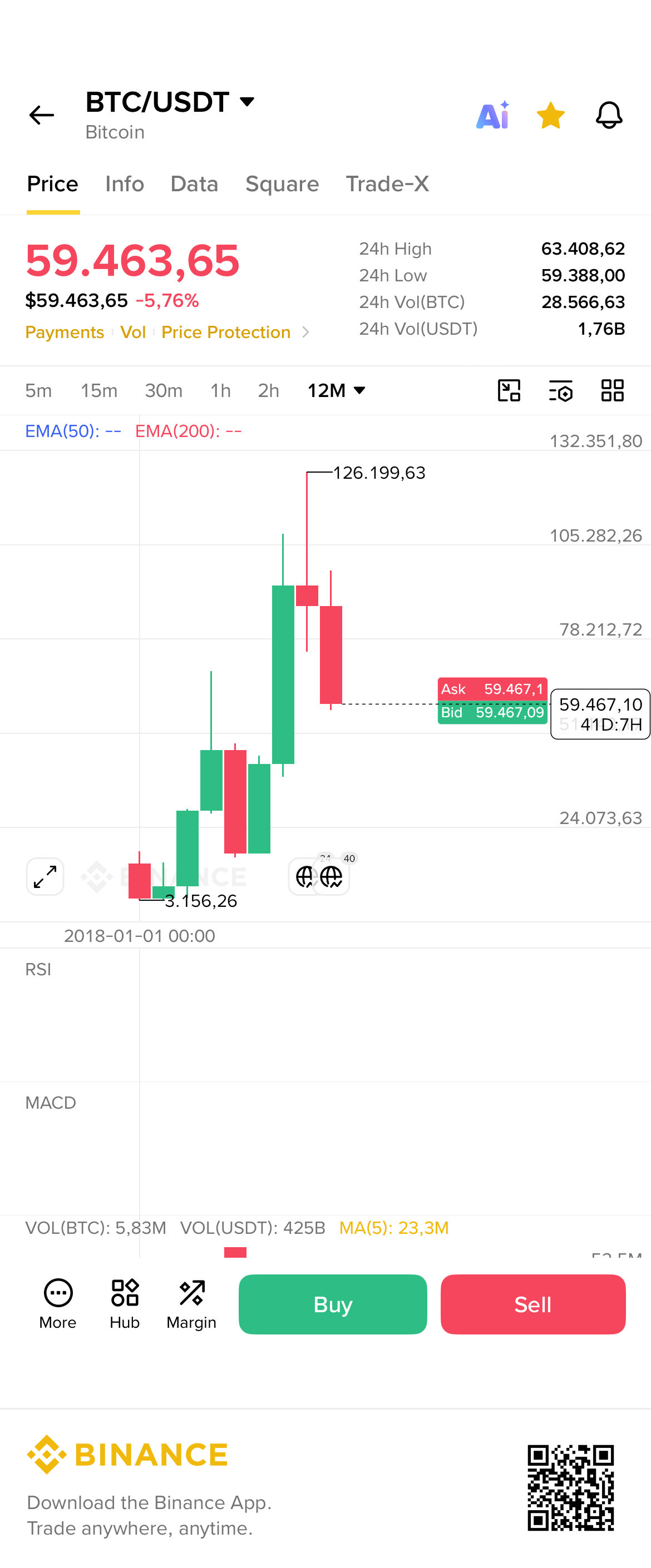
Looking at the launch of the Bitcoin network and its first block (Genesis Block) on January 3, 2009, reaching January 1, 2027 means it will have been around for nearly 18 years (specifically, 17 years and 363 days, or about 6,573 days). That is a very long time in the lifespan of modern technologies and financial markets, during which Bitcoin has seen a meteoric rise and sharp crashes, multiple halving cycles, and intense volatility—as shown in annual BTC/USDT charts that reflect record highs and steep declines after reaching elevated levels.
How is a “final collapse to zero” scenario constructed at this point?
For Bitcoin to actually reach zero by the beginning of 2027—rather than remain merely an analytical hypothesis or pessimistic scenario—extreme pressure factors would have to converge and strike at the heart of market confidence and liquidity:
* Collapse of institutional confidence and liquidity: Major traders and liquidity funds exit rapidly, creating a severe liquidity gap and causing any selling pressure to drive the price down, with no buyers able to absorb the supply.
* Coordinated global regulatory and legal crackdown: Strict restrictions are imposed on trading platforms, transfers, and links to stablecoins or fiat currencies, reducing channels for entering and exiting the market and drying up daily trading volumes.
* Severe technical or security risks: A fundamental vulnerability or large-scale attack compromises the security of the network or major wallets, undermining the core premise on which Bitcoin was built as secure “digital gold.”
* A shift in investor preferences: Capital moves toward other financial or technological alternatives that are more stable or better aligned with prevailing regulatory frameworks.
Conclusion: Between Hypothesis and Reality
Talk of Bitcoin collapsing to zero by 2027-01-01, after nearly 18 years in existence, remains a pessimistic hypothetical scenario used to test worst-case possibilities and manage risk—not a certain prediction. Bitcoin’s relatively long history has repeatedly shown the market’s ability to absorb severe shocks, while decisions to enter or exit the market always depend on capital management and an understanding of the actual risks at each stage.