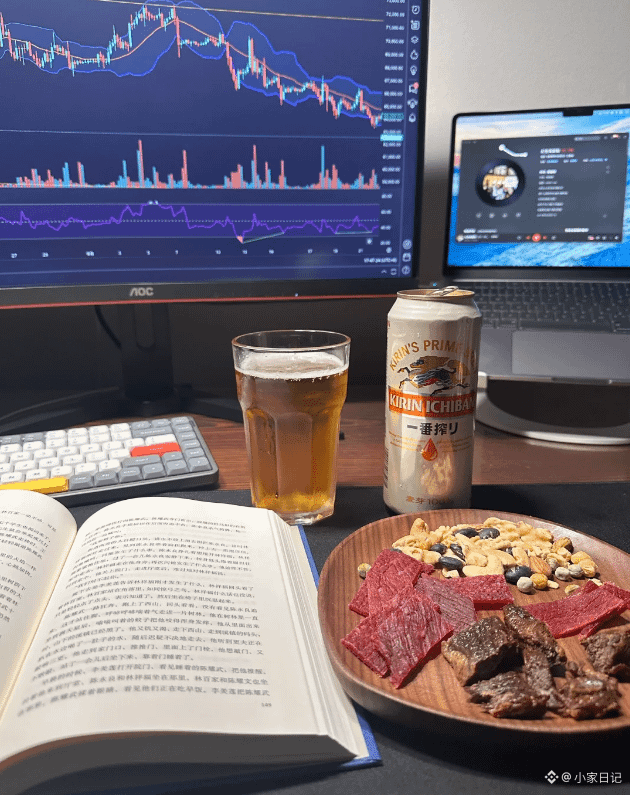
Make 80U and run, lose 6,000U and stubbornly hold on—this trading style really makes you think you’re running a charity.
Some people aren’t bad at reading charts; it’s just that when real money is on the line, their brains stop working.
They get nervous as soon as they make a little profit, afraid it’ll disappear, and close their position the moment a red candle appears. But when they’re losing money, they suddenly become patient, bringing up long-term trends, market makers shaking out weak hands, and cycles not being over yet—all to give themselves courage.
I’ve seen plenty of people trade like this: make small profits dozens of times, then give it all back in one big loss.
The problem is that they use completely different standards when making and losing money.
When they’re in profit, they can’t wait to cash out; when they’re losing, they just want to wait a little longer. Even when the reason they entered the trade no longer holds, they can still come up with ten reasons to keep holding. No amount of studying indicators can save you from making excuses for yourself in the heat of the moment.
That’s why I’ve always thought one habit is especially important in trading:
Set limits on your losses, and make a plan for your profits.
Before entering a trade, decide where you’ll exit if you’re wrong. And if things go your way, don’t rush to run at the first sign of a rise. You can take profits in stages or adjust your exit point according to the trend—but don’t let your emotions dictate your moves every time.
Stop switching indicators and learning new trading strategies every day. First, look through your own trade history and see whether you’re always quick to take small profits, but start talking about the “bigger picture” when you’re facing a big loss.
If you don’t fix this habit, all that technical analysis you learn can easily go to waste.$KERNEL