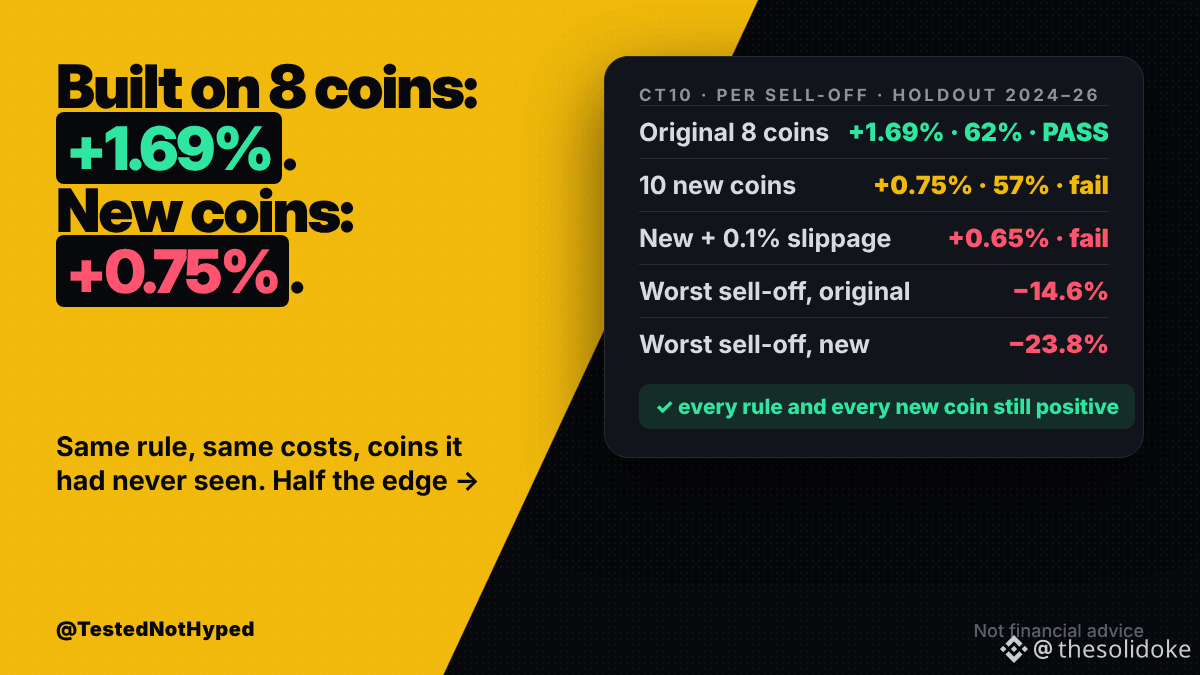
My best paper rule earns +1.69% per sell-off on the 8 coins I built it on. On 10 coins it had never seen: +0.75%.
The rule (CT10) buys when retail traders have capitulated. Same 27 settings, same costs, holdout 2024–2026, counted once per sell-off:
• original 8 coins: +1.69%, 62% positive, passes
• 10 new coins (AVAX, DOT, LTC, NEAR, UNI and 5 more): +0.75%, 57% positive, fails
• new coins with 0.1% extra slippage: +0.65%, fails
Worst single sell-off on the new coins: −23.8%, against −14.6% on the originals.
The good part: every rule and every new coin is still positive. So the effect is real. It's about half as strong on thinner coins, and slippage eats most of the rest.
So the live version stays on the original coin list. The new coins get paper at most.
Do you test a strategy on coins it was never built on? 👇
Not financial advice. Backtest, costs included.
#TradingBots #algoTrading $BTC