$BTC fell below 62,000. My biggest takeaway is this: the people who survive aren’t the ones who got the direction right, but the ones who didn’t go all in.
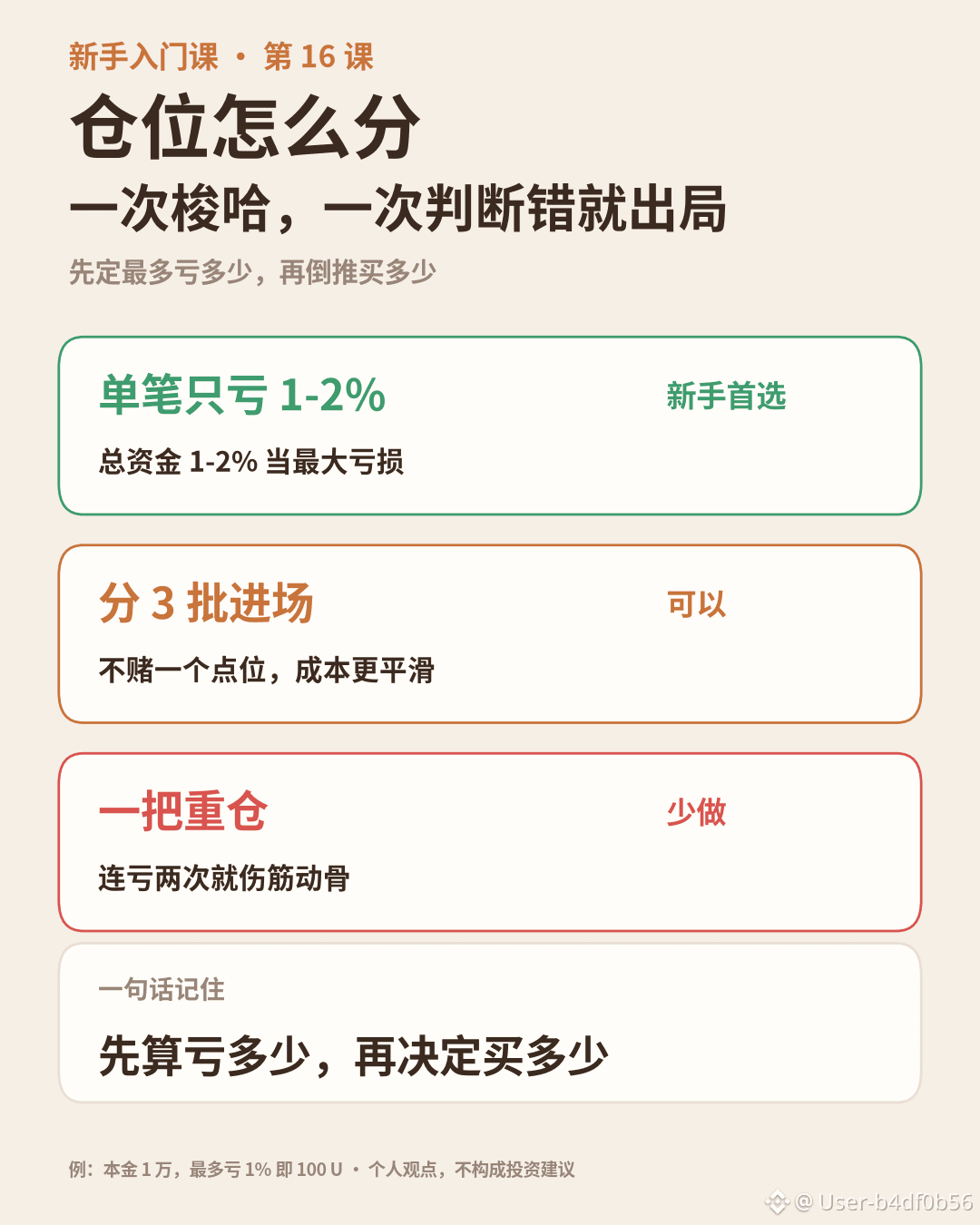
Beginner Course, Lesson 16: How to Size Your Positions
1. First decide how much you’re willing to lose at most on this trade (I usually use 1–2% of my total capital), then work out how much you can buy.
2. Don’t bet on a single price point. Enter in 2–3 batches to smooth out your average cost.
3. After two losses in a row, don’t double down to win it back. Reduce your position and take a moment to clear your head.
When $BTC and $ETH are volatile, keeping your position smaller helps you sleep at night and keeps your judgment from getting distorted.
What would you choose?
A: I’ll work out my maximum loss before placing an order.
B: I go by feel; close enough is fine.
Follow me for Lesson 16 of this beginner series. Next lesson: “How far away should you set your stop-loss?” Don’t miss it.
#新手入门 #BTC走势 #风险管理 #加密市场
These are my personal views and not investment advice. This post may earn creator rewards on the Square.