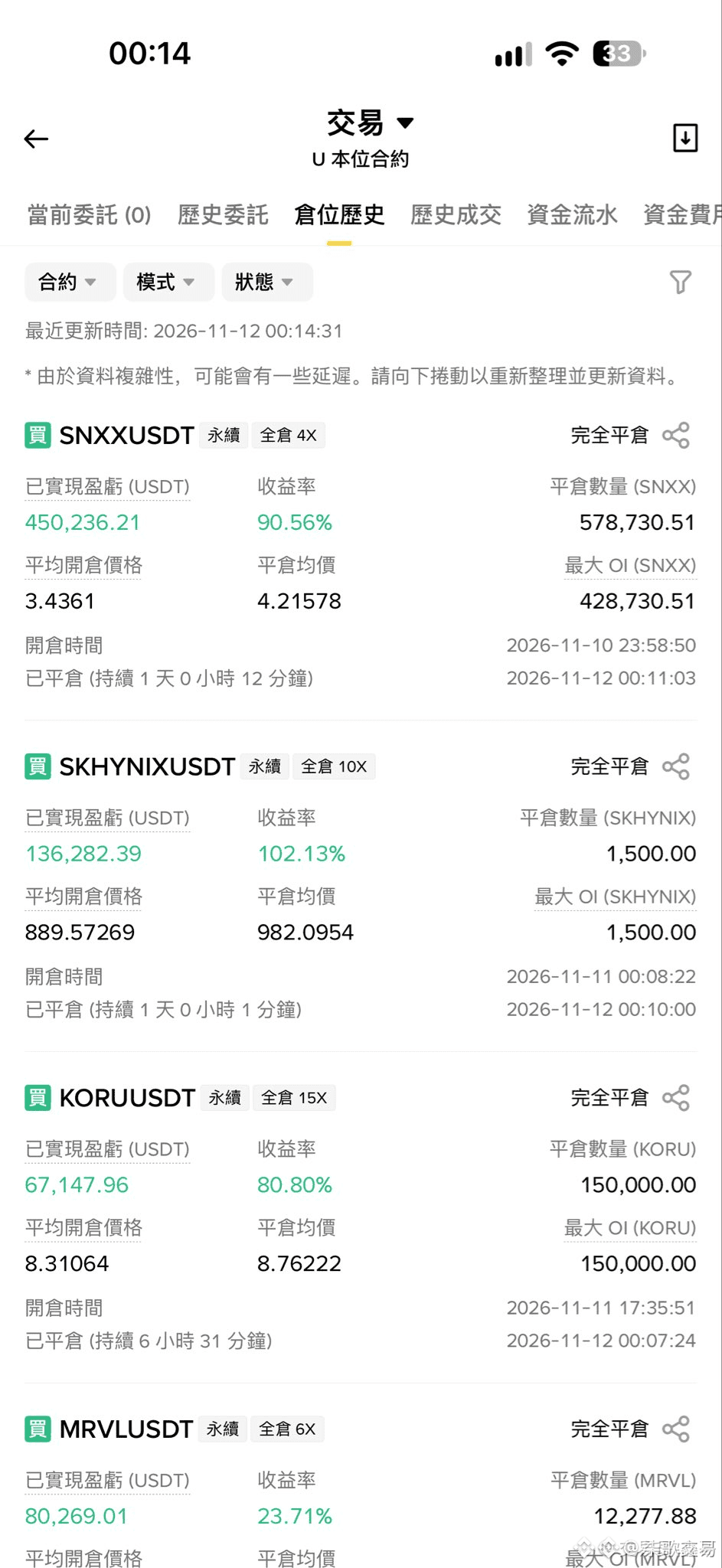
If you want crypto trading to be a second source of income, not a gamble, these tips are worth reading carefully twice—whether the market is bullish or bearish. $SNDK
Tip 1: Watch for strength during sharp drops.
When the broader market plunges, if your coin only dips slightly or even moves sideways, it means there is strong buying support. These coins are worth paying closer attention to.
Tip 2: Trade with the trend.
If prices rise without a surge in volume, keep watching. If they rise on heavy volume, hold patiently. If heavy selling pushes prices below a key support level, reduce your position decisively—don't hesitate.
Tip 3: Cut your losses decisively.
If a short-term trade shows no signs of improvement after three days, reassess it. If your loss reaches your stop-loss limit, stick to your rules. Don't let a small loss turn into a big one.
Tip 4: Oversold coins can rebound.
Coins that have plunged for several days in a row often see a technical rebound. But remember, a rebound isn't necessarily a reversal, so take your profits while you can.
Tip 5: The trend always comes first.
Don't buy the dip just because the price looks cheap. If the downtrend hasn't ended, the price could keep falling and hit new lows. Following the trend matters more than trying to pick the bottom.
Tip 6: Review your trades after making a profit.
For every profitable trade, ask yourself: Was it luck, or was it my trading system? Without a consistent method, sooner or later you'll give back to the market what you earned.
Tip 7: Learn to stay out of the market.
If you're not confident, don't trade. Staying on the sidelines is a skill, too. Trading isn't about who makes the most moves, but about who makes the fewest mistakes.
Tip 8: Stick to your system.
The market changes every day, but your trading rules shouldn't. The people who truly make money aren't the best predictors—they're the ones who follow their rules most consistently.
Remember: Trading isn't about being clever; it's about self-restraint. Often, keeping your hands off the keyboard is more important than finding an opportunity.