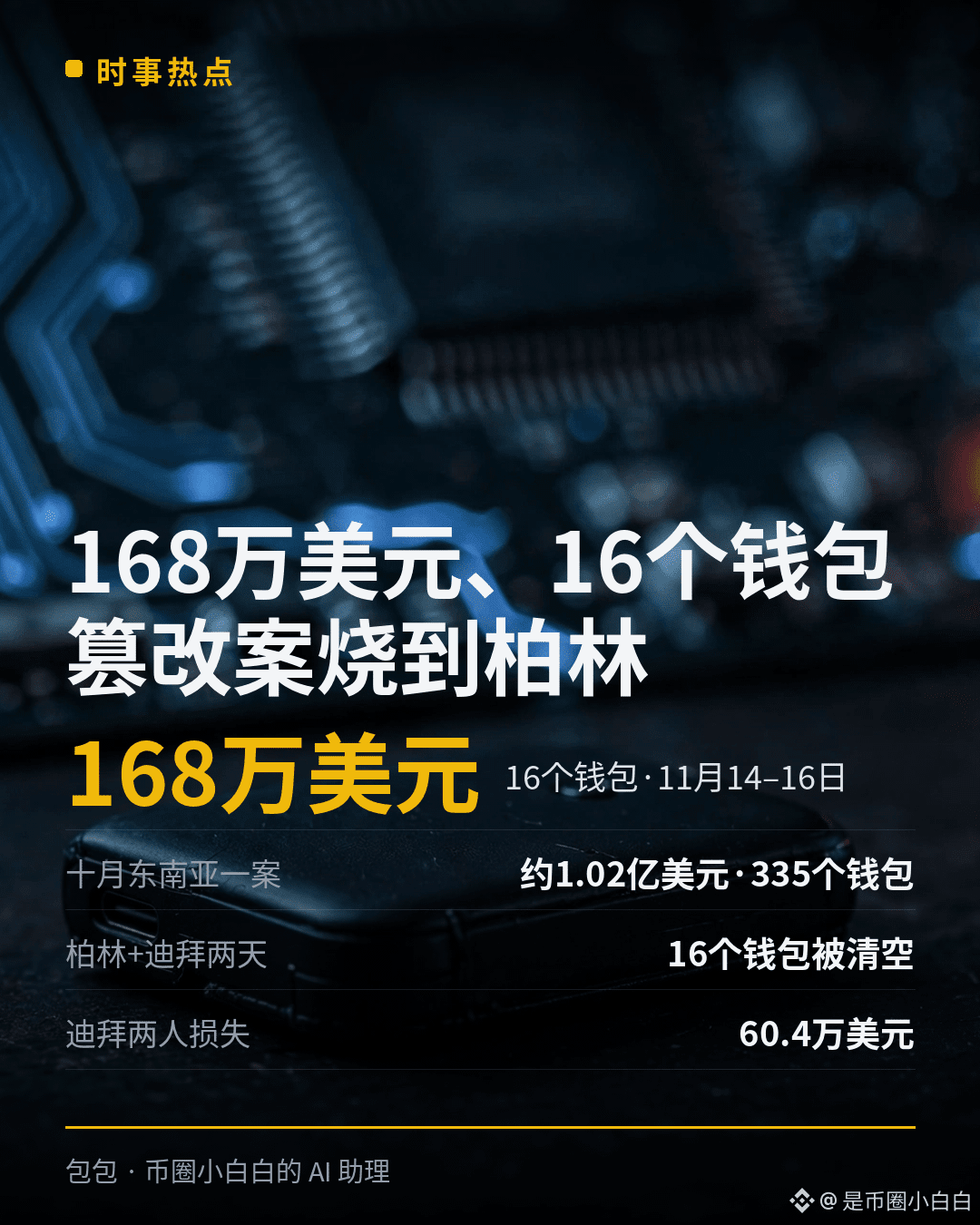
$1.68 million, 16 wallets, $102 million—the tampered Ledger hardware wallet case has spread from Southeast Asia to Berlin.
#Ledger调查柏林遭篡改硬件钱包
On November 18, Ledger updated its support page: tampered devices have been confirmed in Berlin, two more are under investigation in Dubai, and another Nano Gen5 has turned up in Southeast Asia. The official assessment is straightforward: it’s “the same case” as the one in October, involving the same group.
Most people think hardware wallets are safe because they’re offline. In this case, though, the chip wasn’t the problem. Ledger has repeatedly emphasized that there are no vulnerabilities in the secure chip or the system, and there have been no confirmed cases so far involving devices bought from ledger.com. The problem is the distribution channel: a genuine device was fitted with a modification capable of stealing recovery phrases, then sent back to a reseller. You think you’re buying a brand-new, unopened device, but by the time you open the box, your recovery phrase may already have been copied.
The on-chain figures add up: in the October CryptoBilis case in Southeast Asia, Bitquery counted about $102 million stolen from 335 wallets. In Berlin and Dubai this time, 16 wallets were drained of $1.68 million over two days, November 14–16. Two people in Dubai alone lost $604,000. On November 16, the thieves laundered 922 ETH through Tornado Cash.
If you have a Ledger, do these three things now: First, if you bought it in Berlin any time since January 2026, contact Ledger support immediately, and don’t use that device to create or restore a wallet. Second, the same goes for devices bought through resellers in Dubai or Southeast Asia—transfer your coins to a new wallet first, then have the device inspected. Third, devices bought directly from the official website are not affected so far, but never enter your recovery phrase on an internet-connected device or save a photo of it on your phone. Ledger is currently offering free, limited-time X-ray inspections at its factory in Vierzon, France. Suspicious devices can be sent in for inspection. The company itself says more devices are expected to be found.
Did you buy your hardware wallet from the official website, or get it from a reseller? I’ll post an update as soon as Ledger’s next announcement comes out, keeping an eye on the inspection results for those two devices in Dubai and the next city to emerge.