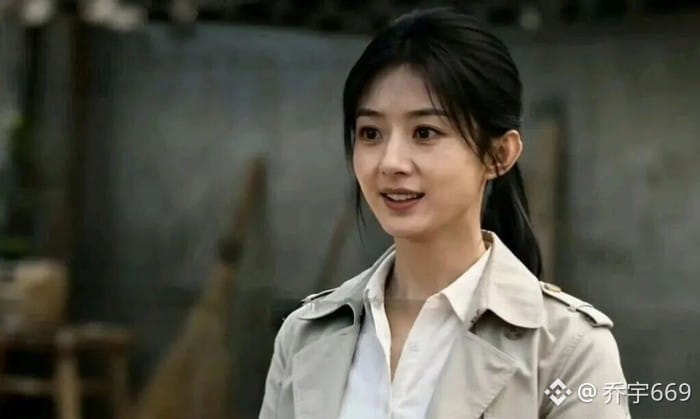
Zhao Liying has sued Hongguo Short Drama—and even Douyin’s parent company.
On November 10, the case was heard in a virtual courtroom at Beijing Mentougou District Court. She is seeking 810,000 yuan in damages, and no ruling has been issued yet. The three defendants are Hongguo’s operator, Beijing Bimo Liuxiang; its wholly owned shareholder, Beijing Douyin Information Service; and an individual named Shi某伦. The allegations are specific: short dramas on the platform used AI face-swapping and face-merging technology to composite her face onto characters without her permission, and even used her photos directly as episode covers to attract viewers. The story trended on November 12.
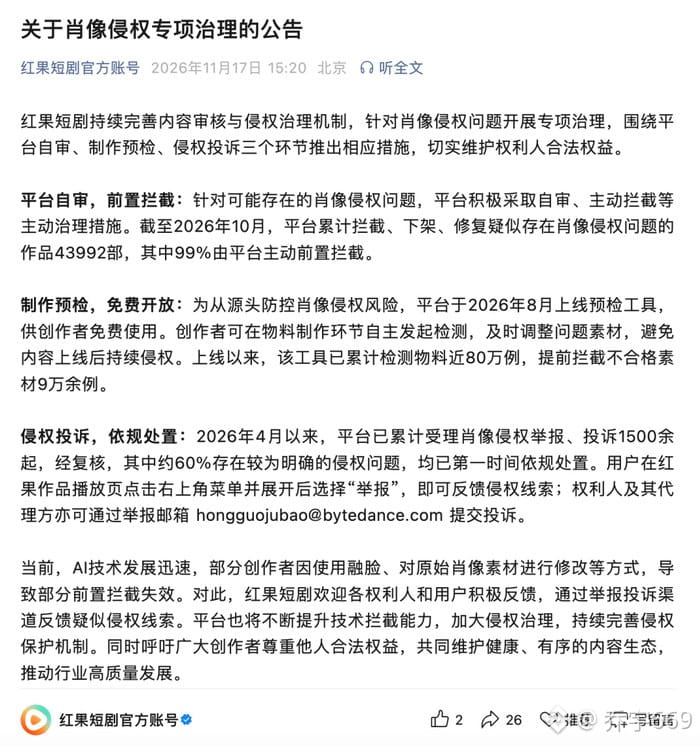
On November 17, Hongguo issued an announcement about a special crackdown: by the end of October, it had blocked, taken down, or ordered changes to 43,992 works suspected of infringing portrait rights, with 99% caught proactively by its system. A free pre-screening tool launched in August had already checked nearly 800,000 pieces of content and stopped more than 90,000 cases in advance.
In March and April this year, the faces of top stars like Jackson Yee, Xiao Zhan, and Yang Zi were also misused in AI short dramas. At the time, their studios merely issued statements. Zhao Liying is the first to take a platform operator directly to court.
I think the real significance of this case isn’t the 810,000 yuan—it’s that, for the first time, a platform’s duty to review content is being put on trial. Previously, people sued only the production companies, and the platforms got off the hook by taking the content down. This time, the parent company is being sued too, which means responsibility for AI face-swapped content can’t fall solely on the people who make the dramas. The platform has to bear some of it as well. It takes just seconds to generate a face with AI, but sooner or later, someone will come calling over making money from someone else’s face. #AIFrontier
$BTC