⚙️ BTTC 2.0: Why Could a Dynamic Reward Mechanism Improve Blockchain Incentive Design?
Blockchain networks face different operating conditions every day.
Network activity constantly changes.
Participation continues to evolve.
Ecosystem development priorities also shift.
But a fixed reward plan may not always be able to adapt to these changes.
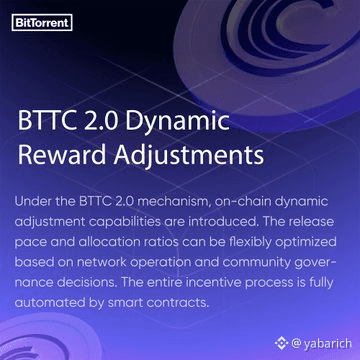
BTTC 2.0 introduces a different approach: an on-chain dynamic reward adjustment mechanism.
According to BitTorrent, this mechanism allows the pace of reward releases and allocation ratios to be flexibly optimized based on network performance and community governance decisions.
The entire incentive adjustment process is executed automatically by smart contracts.
Why does this matter?
🔹 Adaptive incentives
Reward parameters can be adjusted to changing network conditions, rather than remaining fixed at all times.
🔹 Automated execution
Once the applicable rules and parameters are determined, smart contracts can carry out the adjustments, reducing repetitive manual work.
🔹 Verifiable process
On-chain execution allows participants to check whether approved adjustments have been implemented.
💡 My take:
True innovation is about more than simply distributing rewards automatically.
More importantly, it separates governance decisions from the execution process.
Community governance can determine the direction of incentive policies, while smart contracts implement the corresponding rules.
However, automation does not guarantee that an economic mechanism is sound.
The quality of the mechanism still depends on reliable data inputs, transparent parameters, and appropriate security measures.
BTTC 2.0 reflects an important principle:
Sustainable blockchain incentives require both adaptability and accountability mechanisms.
Smart contracts can execute automatically.
Good governance is still needed to guide decisions.
@Justin Sun孙宇晨 @BitTorrent_Official
#TRONEcoStar #BTTC #BitTorrent #BTT #Tokenomics