Explaining the halvings of $BTC , $BCH , and $LTC simply as “half the selling pressure” can overlook the miners’ side of the equation. Looking back today at the three halvings of 2019–2020 is meant to add a causal link to projections for the next cycle, not to apply old price movements to the present.
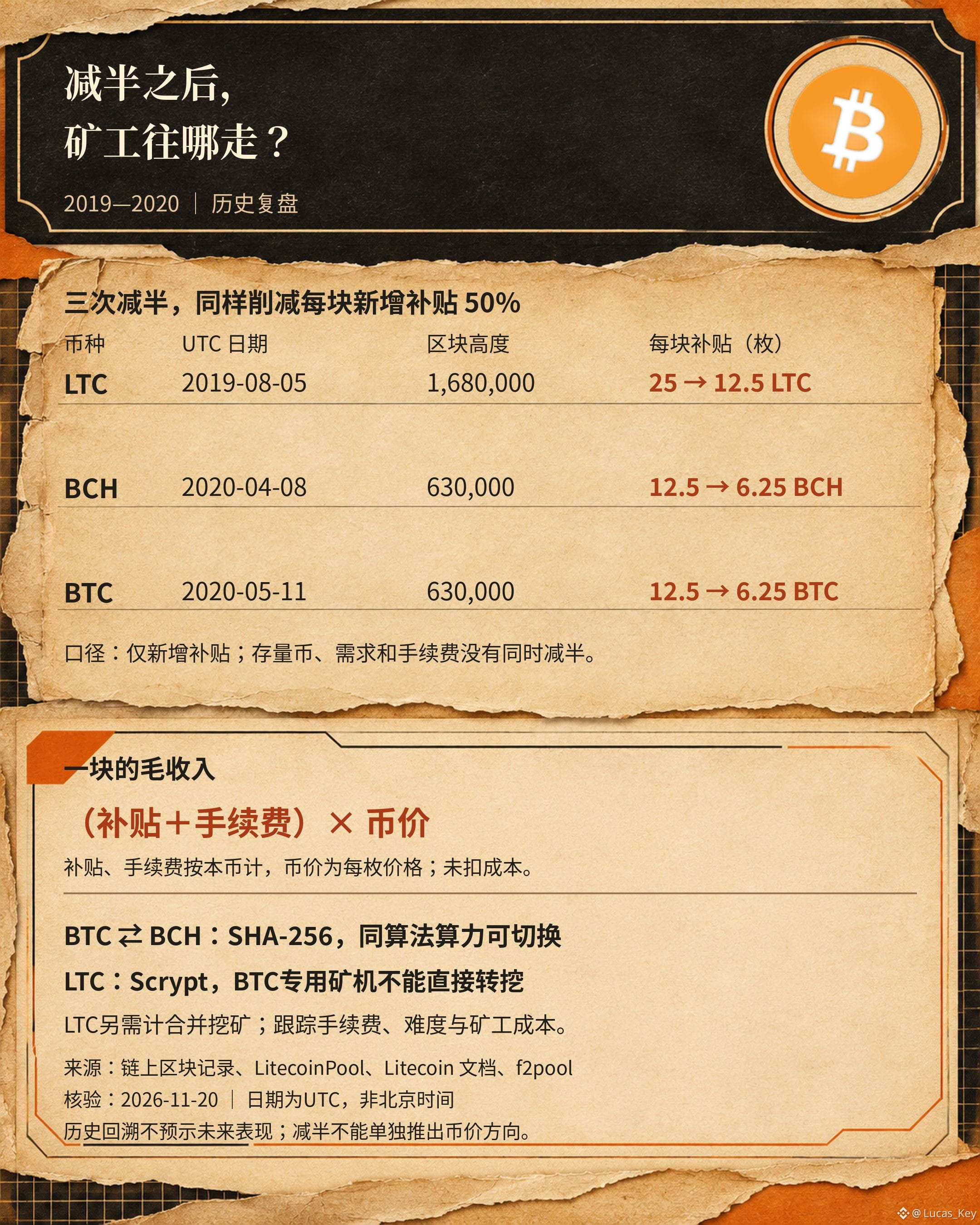
By UTC date: LTC halved on August 5, 2019, at block 1,680,000, reducing the block subsidy from 25 to 12.5 LTC; BCH halved on April 8, 2020, at block 630,000, from 12.5 to 6.25 BCH; BTC halved on May 11, 2020, at block 630,000, from 12.5 to 6.25 BTC. All three events cut the new subsidy per block by 50%. They did not halve the existing supply, transaction demand, or fees.
The basis for the scarcity narrative is sound: for the same number of blocks, fewer new coins are indeed issued. But miners have to calculate their revenue first. Gross revenue per block = (subsidy + fees) × coin price, while electricity costs and machine efficiency determine whether mining can remain profitable. A lower subsidy may reduce new supply, but it may also first squeeze less efficient miners; and miners do not necessarily sell all the coins they produce immediately.
The three cases cannot be mechanically compared. BTC and BCH use SHA-256, so some miners can switch between the two chains. In a July 2020 review, mining pool f2pool noted that after the BTC halving, some hashrate shifted to BCH and other chains using the same algorithm, with profitability differences converging within hours. LTC uses Scrypt, so dedicated BTC mining machines cannot switch over directly; assessing miner revenue also requires taking merged mining into account.
I’m more interested in whether fees can make up the shortfall, whether miner revenue can cover costs after difficulty adjustments, and whether hashrate remains stable over time. Only when these conditions are made clear does “less issuance” connect to miner behavior—and even then, it is not enough on its own to determine the direction of the coin price. Sources: on-chain block records, LitecoinPool, Litecoin technical documentation, and f2pool’s review; verified November 20, 2026. Risk warning: Historical analysis does not predict future performance. This post may receive platform creator rewards.