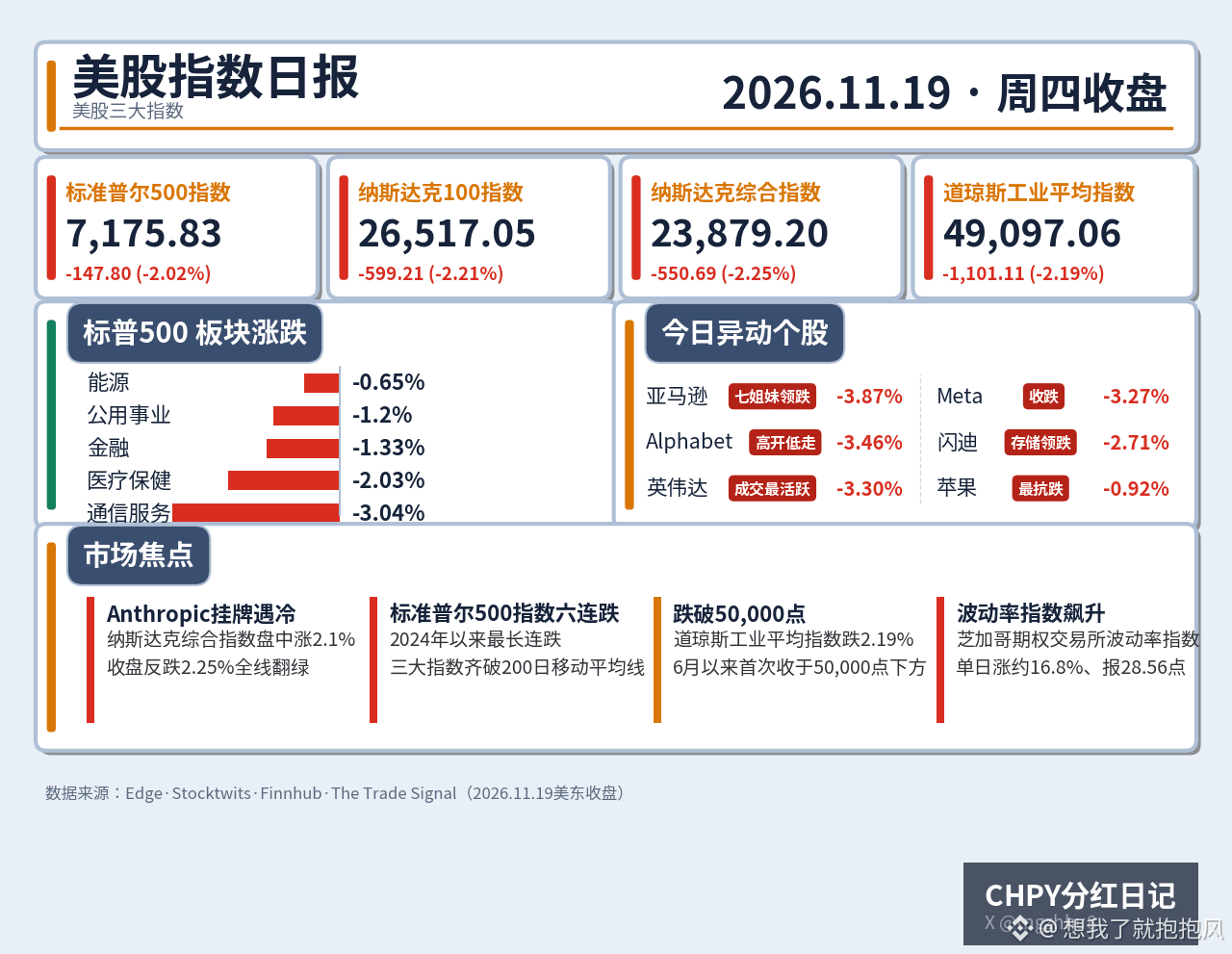
U.S. stocks staged a dramatic reversal on Thursday, opening higher before turning lower. The enthusiasm sparked by Anthropic’s first day of trading fizzled out in less than half a day. The Nasdaq Composite was up as much as 2.1% intraday but reversed to close down 2.25% at 23,879.20. The S&P 500 fell 2.02% to 7,175.83, extending its losing streak to six sessions—the longest since 2024. The Dow Jones Industrial Average dropped 1,101.11 points, or 2.19%, to 49,097.06, closing below 50,000 for the first time since June. The Nasdaq 100 fell 2.21% to 26,517.05, down 15.4% from its intraday high on October 6.
All 11 sectors finished lower. Energy was the most resilient, down 0.65%, while communication services brought up the rear, falling 3.04%. Not one of the Magnificent Seven held up: Amazon led the declines, down 3.87%; Alphabet opened at $294.30, reached an intraday high of $295.43, then reversed to close down 3.46% at $272.66; Nvidia fell 3.30% to $145.98 and was the market’s most actively traded stock, with 312 million shares changing hands; Meta fell 3.27%; Tesla dropped 2.43%; Microsoft slid 1.97%, falling back below $500; and Apple was the most resilient, down 0.92%. The three memory stocks were up more than 4% at one point before the open, but also ended broadly lower: SanDisk fell 2.71% to $755.16, Micron Technology dropped 2.10% to $690.44, and SK Hynix’s U.S. depositary receipts fell 2.67% to $119.20.
The chain of events is clear: hawkish minutes from the Fed’s October meeting and persistent expectations of a December rate hike sent the dollar to a 19-month high. Investors first pulled back from AI and growth stocks, then from risk assets across the board. The Cboe Volatility Index surged about 16.8% in a single day to 28.56. The S&P 500 tracking fund closed below its 200-day moving average. Advancing stocks numbered just 1,788 across the market, compared with 8,020 decliners. Bitcoin also fell to around $61,974, while gold dropped 1.36% to $3,674.68. Even traditional safe havens were falling, suggesting this was a broad, deleveraging-driven retreat rather than a reaction to news affecting any one sector.
After a sell-off this steep, a short-term oversold bounce could come at any time. But treat any rebound as an oversold recovery for now, not a reversal: the Nasdaq 100 is already 15.4% below its high, putting it in correction territory, and the S&P 500 is down more than 5% so far this week. Keep an eye on three levels today: whether the Dow can hold 49,000, whether Nvidia can stay above $145, and whether the Cboe Volatility Index can cool off from above 28. Until the December 8–9 policy meeting, markets will keep reacting to rate-hike expectations.
#美股 #Daily U.S. Stock Index Report
$NVDA $QQQ $SPY