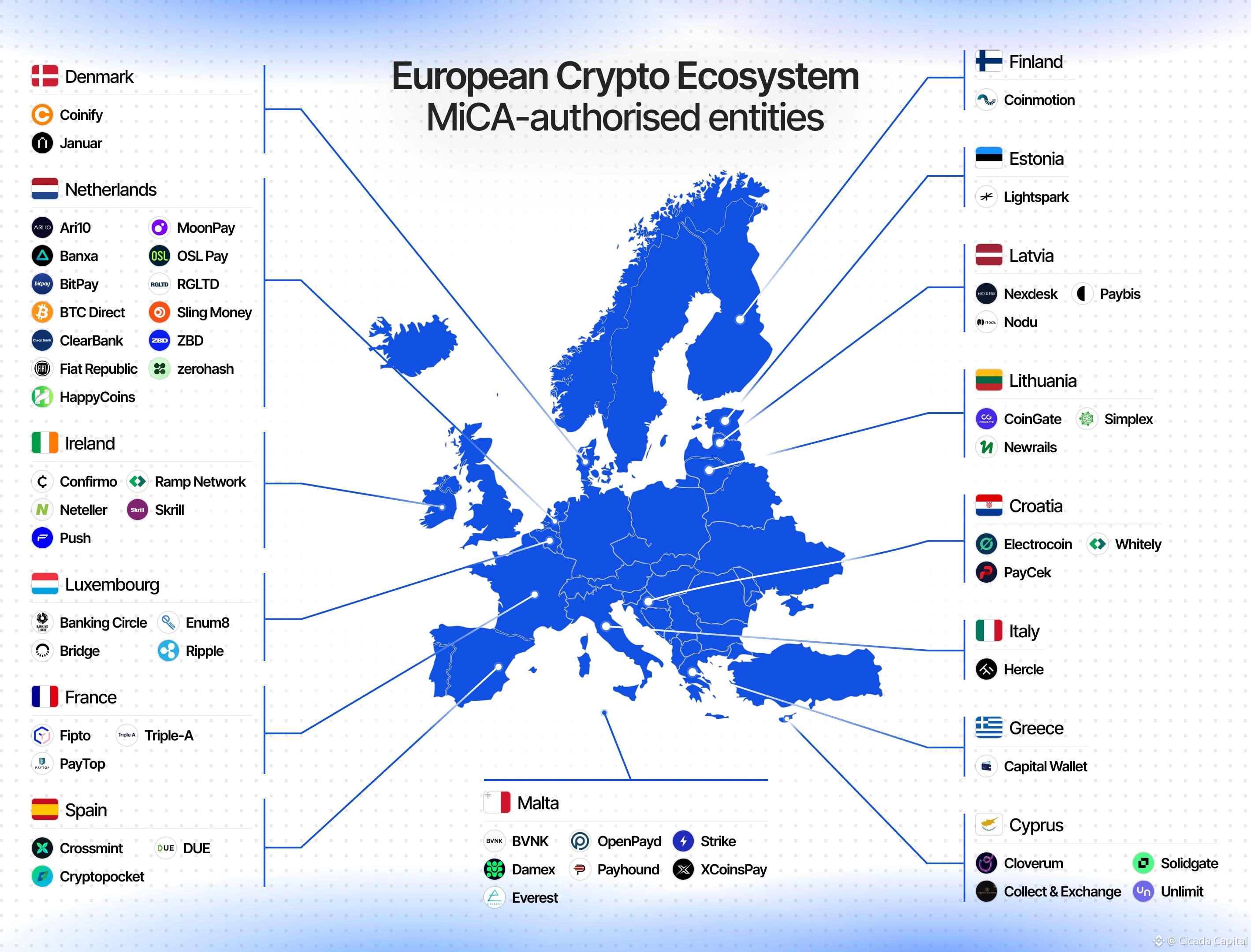

🇪🇺 404 crypto firms hold a MiCA license, 127 of them are based in Germany.
At first look, Germany leads Europe by a wide margin. But the numbers need context.
The map below shows only 54 licensed firms, most of which are payment providers. The full ESMA register tells a much bigger story.
Why does Germany have such a high count?
1. A shortcut for banks
MiCA allows institutions with existing banking licenses to notify regulators instead of going through a full application. DZ Bank, Commerzbank, Deutsche Bank and many local cooperative banks used this route.
2. Limited service scope
Many banks offer just one or two crypto services. Each still counts as a separate entry in the register.
3. An early start
BaFin began licensing crypto custody in 2020, giving German institutions a head start when MiCA came into force.
Meanwhile, many crypto-native companies chose other EU jurisdictions and passported their services into Germany.
🇲🇹 Malta attracted major exchanges including OKX, CryptoCom, Gemini and Gate. OKX alone is licensed for 9 of the 10 MiCA services.
🇩🇪 Germany’s lead is largely driven by banks adding crypto services, while major crypto-native players built their presence across other EU markets.
For founders, check the ESMA register and verify exactly which services your potential partner is licensed to provide.
127 banks with one service each. One CEX with nine. Which would you trust with your listing?