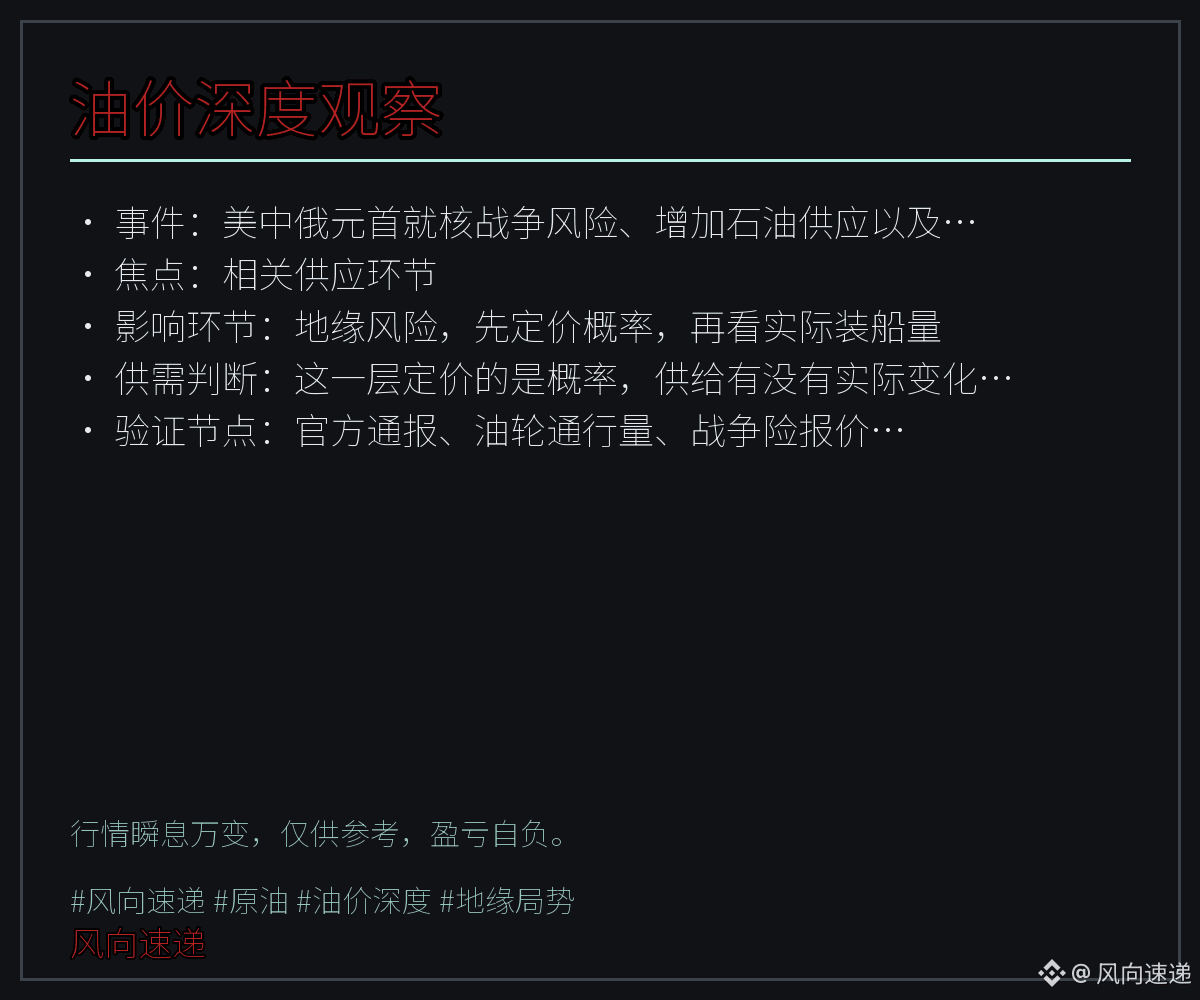
In-Depth Oil Price Watch
【Key Event】
The leaders of the U.S., China, and Russia reached a consensus on the risk of nuclear war, increasing oil supply, and the need for United Nations reform (within 1 hour)
【Who Is Influencing Oil Prices】
The regional security situation has shifted, with attention focused on related supply links. This kind of news changes the market’s estimate of the probability of supply disruptions, but does not necessarily correspond to actual production losses.
【Transmission Chain】
Tensions first push up the geopolitical risk premium, prompting adjustments to tanker insurance, voyage arrangements, and buyers’ willingness to build inventories.
Only when events affect loading, transit, or facilities themselves does the risk premium translate into a verifiable shortfall in the supply-and-demand balance.
【Supply, Demand, and Pricing】
At this stage, pricing reflects probabilities. Whether supply has actually changed will depend on subsequent loading volumes and facility operating data.
WTI is currently trading around $83.27, with a 24-hour change of +1.66%. This level can serve as a starting point for observation; future moves should be assessed alongside the verification points below. The premium driven by conflict-related news is usually concentrated in nearby contracts and options-implied volatility, and can unwind quickly when sentiment reverses.
【What to Watch Next】
Watch for official updates, tanker traffic, war-risk insurance quotes, and any changes to oil producers’ loading schedules.
【What Would Invalidate This View】
If tensions ease and no facilities or shipping are damaged, the risk premium often fades quickly.
Markets change rapidly. For reference only; you are responsible for your own gains and losses.
#风向速递 #原油 #油价深度 #GeopoliticalSituation