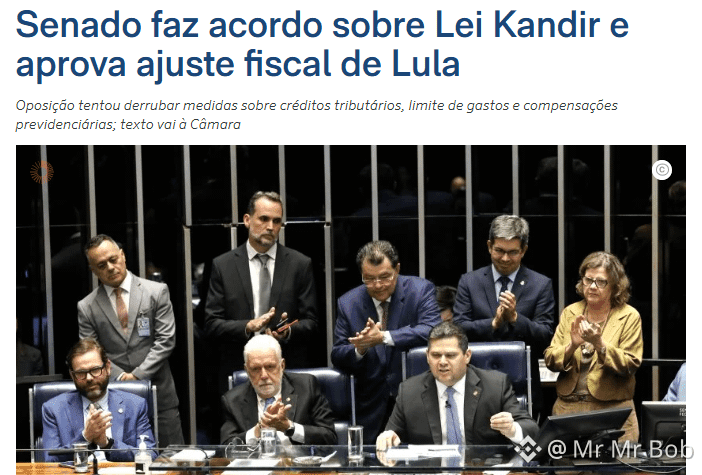
🏛️ SENATE APPROVES FISCAL ADJUSTMENT PACKAGE! 💸✅
Following an agreement on the Kandir Law, the Senate completed its vote on the government spending containment bill (PLP 299/2026), with an estimated impact of between R$ 45,1 billion and R$ 56,1 billion on the 2027 budget. The bill now goes to the Chamber of Deputies.
📌 Key points of the approval:
Kandir Law agreement: The government and opposition reached an agreement raising the minimum level of transfers to states in 2027 from R$ 1 billion to R$ 2 billion, and bringing forward full repayment of R$ 16 billion from 2037 to 2030.
Spending caps and cuts retained: Senators kept the reduction in the cap on real growth in public spending (from 2.5% to 2%) and the restriction on companies’ use of tax credits (preserving only old PIS/Cofins balances).
Next step in the Chamber: The package faces strong opposition from 119 business organizations, as well as from a faction of the governing coalition in the Chamber, which is advancing parallel bills to tax great fortunes and banks.
📊 Market watch: Senate approval removes an immediate burden from public finances, but financial markets remain cautious, watching to see whether the Chamber will water down the bill or introduce new taxes. How do you think the dollar and the stock market will react to the next steps in the Chamber? 👇💬
#BinanceSquare #Economia #Brasilmelhorparatodos #AjusteFiscal #MercadoFinanceiro