
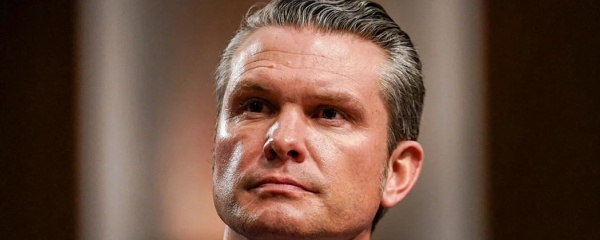

U.S. Secretary of Defense Pete Hegseth emphasized that the oil agreement “is bringing energy dominance for the benefit of Americans and Venezuelans for decades to come.”
U.S. Secretary of War (Defense) Pete Hegseth said Wednesday during his visit to Caracas that the oil agreement with Venezuela diminishes the importance of the Strait of Hormuz, a strategic sea passage controlled by Iran that has been a key theater in the war that began on February 28.
The Secretary of War stressed that Venezuela signed a historic oil agreement with the United States, announced last August, which “is bringing energy dominance for the benefit of Americans and Venezuelans for decades to come,” making the Strait of Hormuz “an irrelevant factor for Western industry.”
Tehran has kept traffic through the Strait of Hormuz restricted since the start of the war and has threatened to attack ships using “unauthorized” alternative routes, while Washington has imposed a naval blockade on its ports.
Hegseth made these remarks at the U.S. Embassy in Caracas, accompanied by officials and business leaders such as Alejandro Betancourt, CEO of North American Blue Energy Partners (NABEP), a company that the U.S. government granted a 100-year concession to exploit 17 oil fields in Venezuela.
Since the United States carried out a military incursion in Caracas, it has overseen the government led by Delcy Rodríguez and promoted the signing of multiple energy agreements.
Hegseth said on Wednesday that, in less than a year, Venezuela has gone from being “the most aggressive regional threat” to becoming “a cooperative security partner.”