
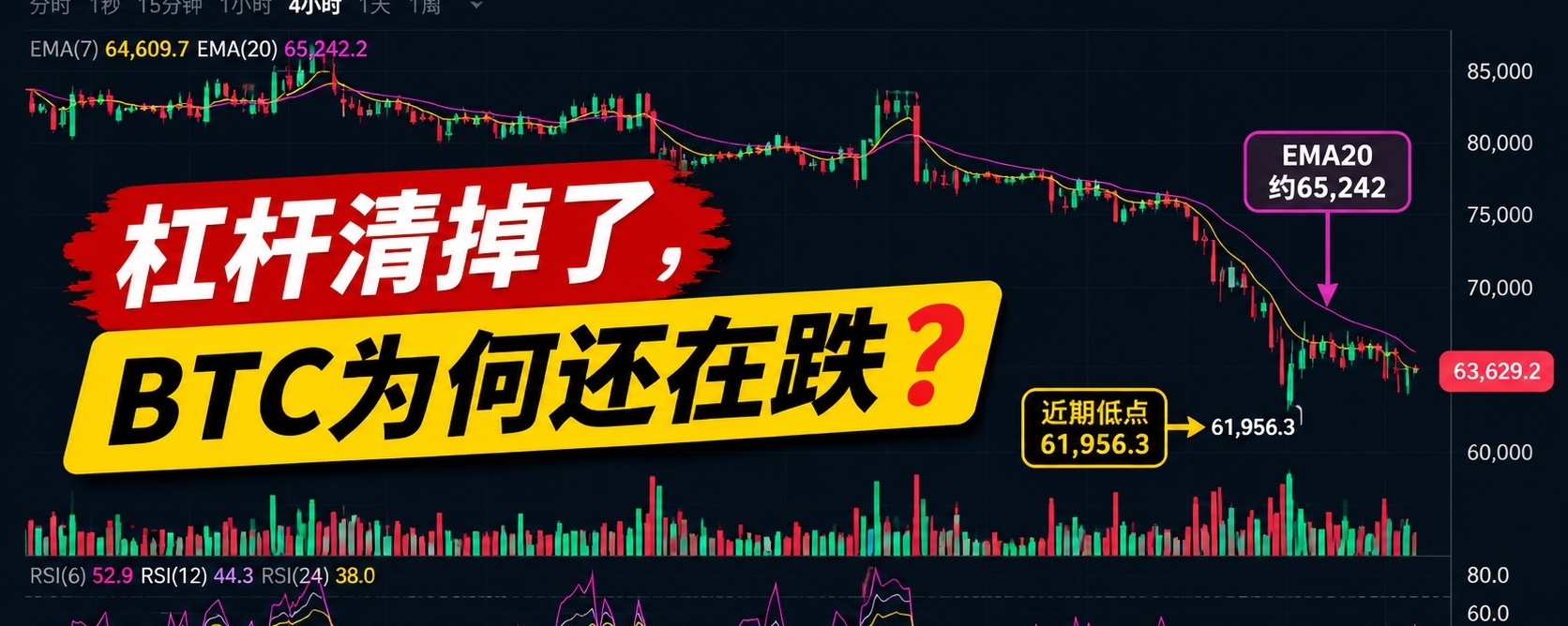

BTC is back around $63,000.
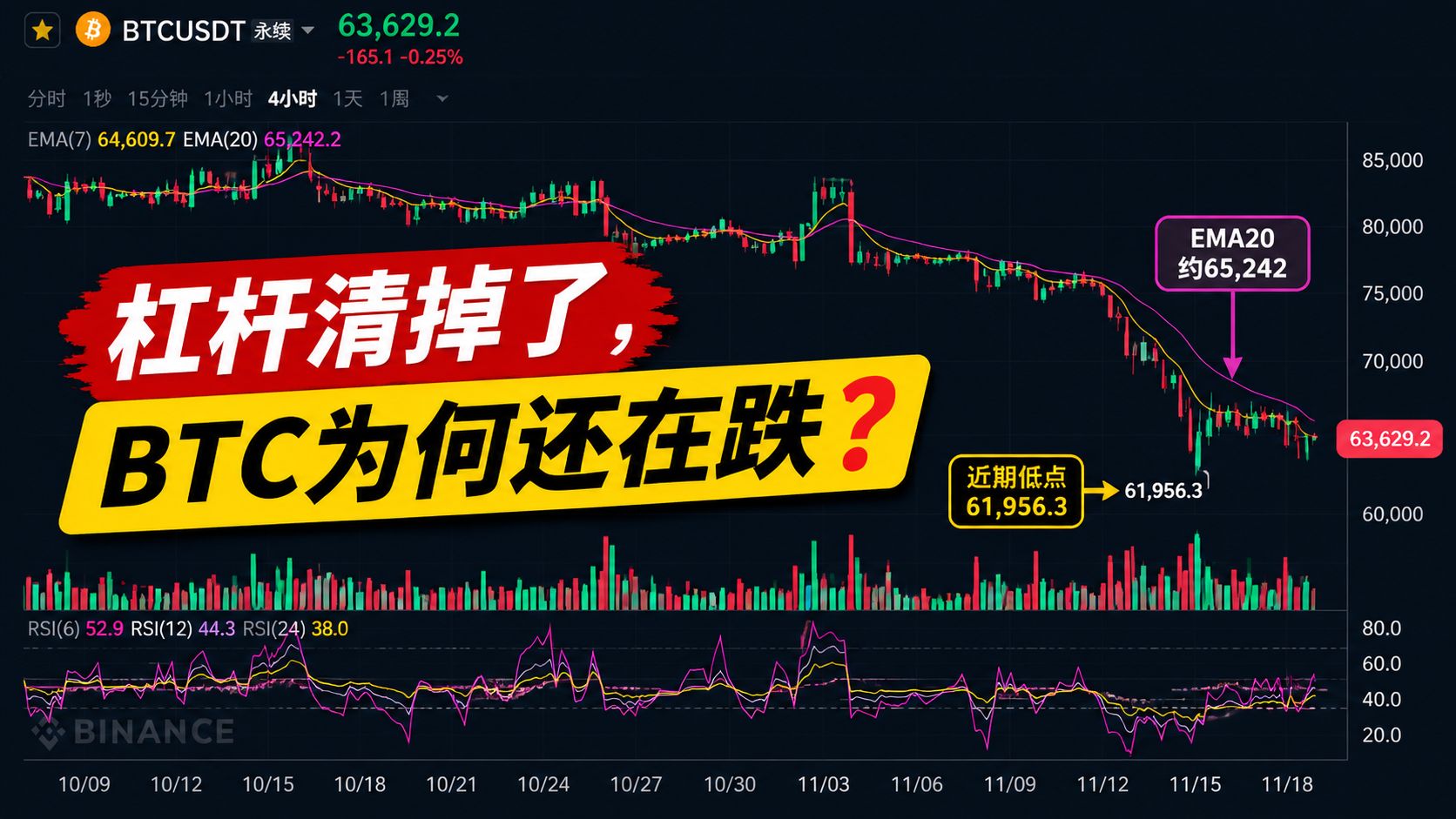
A few days ago, BTC fell to a low of $61,956, then rebounded to around $65,000 but never managed to hold above that level. The latest screenshot shows the price at about $63,629.
Today I focused on three sets of data: futures open interest, ETF fund flows, and the liquidation heatmap.
After looking at all this, I don't want to buy the dip just yet.
1. Leverage has come down, but the price has barely rebounded
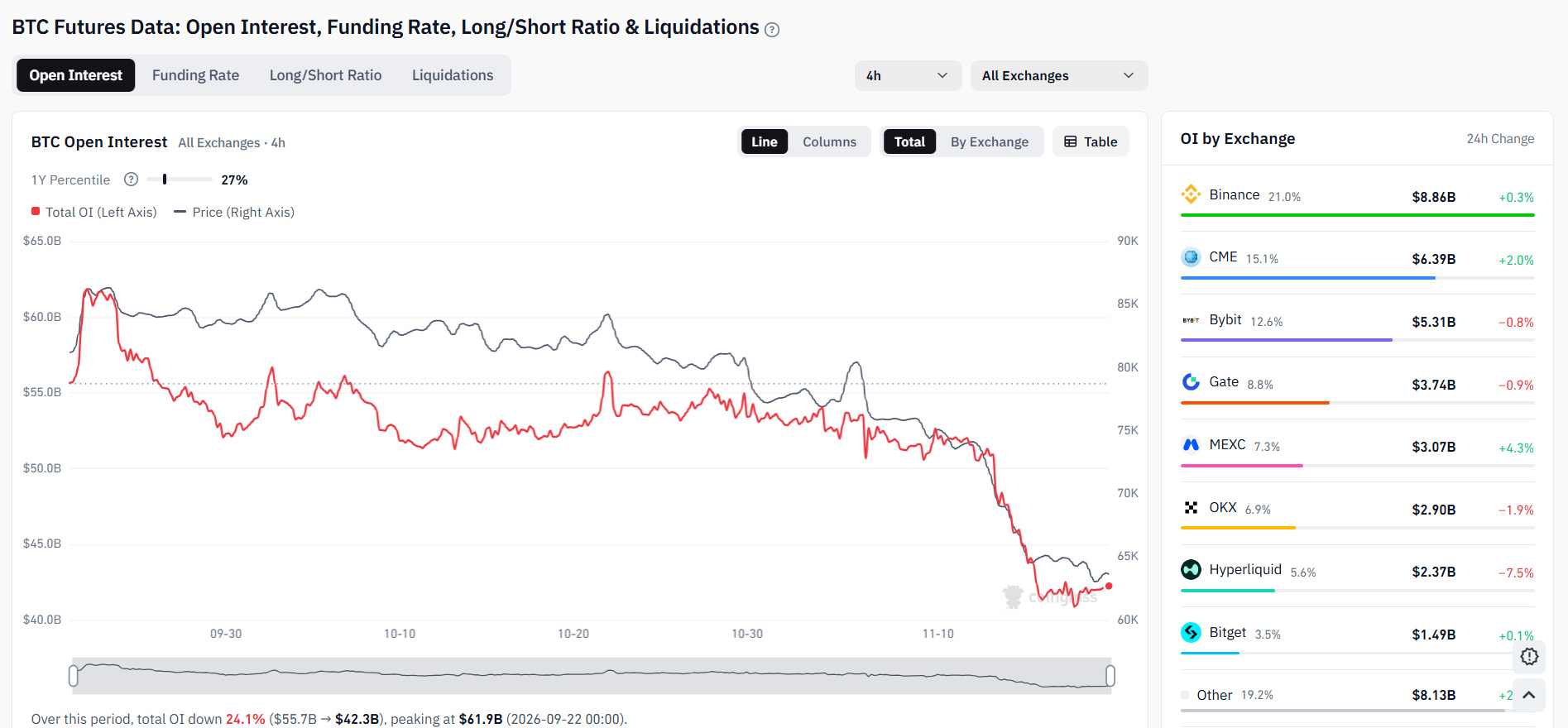
According to CoinGlass, during the period reviewed, total BTC futures open interest fell from about $55.7 billion to $42.3 billion, a decline of 24.1%.
This downturn has indeed been accompanied by significant deleveraging.
But a decline in open interest doesn't mean all selling pressure is over. Long liquidations, short covering, and investors withdrawing their funds can all cause open interest to fall.
What really concerns me is that leverage has come down considerably, yet BTC is still struggling around $63,000.
This suggests that, at least so far, new buying has not been strong enough to drive a sustained price recovery.
2. ETFs see consecutive outflows, leaving the market without an important source of buying
On November 17, U.S. spot BTC ETFs saw net outflows of about $240 million.
On the 18th, they saw another $306 million in outflows.
That's about $546 million in total over two days.
BlackRock's IBIT saw total net outflows of about $358 million over the two days.
These figures warrant caution.
ETFs were once an important source of funds driving BTC higher. Now that they've seen consecutive net outflows, the market needs to rely on other buyers to absorb the selling.
Of course, ETF outflows don't mean that all institutions are selling, but this source of capital is clearly not providing much support at the moment.
3. NVIDIA's earnings beat expectations, but U.S. stocks didn't strengthen across the board
NVIDIA's latest quarterly revenue reached $115.8 billion, up 103% year over year—a very impressive result.
But on the first full trading day after the earnings announcement, NVIDIA's share price fell by about 2.9%.
That same day, the three major U.S. indexes diverged: the Nasdaq edged higher, while the S&P 500 and Dow fell.
This reflects the significant market disagreement over tech stock valuations, future growth, and risk.
BTC also failed to mount a sustained rebound despite NVIDIA's strong earnings.
I believe the crypto market's own funding conditions are more important right now than any single piece of positive news from U.S. stocks.
4. Next, I'll be watching three key price zones
First, $64,500–$65,000.
This is the first area that a short-term rebound needs to reclaim. If the price can't get back above it, the rebound will remain limited.
Second, around $61,956.
This is the recent low. If BTC falls back to this level, I'll be watching trading volume and how well buyers absorb the selling.
Third, around $61,000.
The CoinGlass heatmap shows a relatively clear concentration of potential liquidations in the area below. But a heatmap is not a price forecast, and the presence of liquidity there does not mean BTC will definitely fall to that level.
My choice: keep waiting.
In the current market, it's easy to feel two strong urges.
One is to think that after such a big drop, it's time to buy the dip.
The other is to see the consecutive declines and feel tempted to chase the market lower.
For now, I don't want to do either.
If BTC regains and holds above $65,000, while ETF outflows narrow and trading volume improves, I'll reassess the chances of a rebound.
If $61,956 is decisively broken, accompanied by a clear increase in trading volume, we need to watch out for another leg down.
For me, the most important question right now isn't how much further BTC could fall.
It's when buyers who are genuinely willing to buy will return after this round of deleveraging.
Do you think the area around $62,000 can hold?
#BTC #Bitcoin #ETF #Cryptocurrency #MarketWatch