
November 19, 2026, marks a historic moment for global capital markets.
AI company Anthropic has officially begun public trading on the Nasdaq under the ticker symbol ANT.
The IPO was ultimately priced at $83 per share, well above the previously indicated range of $70 to $78. Based on an offering of 980 million shares, the public offering was worth approximately $81.3 billion. Adding a private placement of approximately $26 billion brings the total deal size to about $107.3 billion, with a fully diluted valuation of approximately $1.5 trillion.
In terms of fundraising, this has become one of the most closely watched major IPOs in the history of global capital markets.
More notably, U.S. technology stock futures rebounded on the eve of Anthropic's listing. Nasdaq 100 futures rose by nearly 2% at one point, while Bitcoin climbed from around $62,000 back to around $64,000. Some AI-related tokens also rose in tandem.
It seems that the AI industry has once again become a focus for investors.
But I believe the real question worth exploring is not how much Anthropic's share price might rise after listing, but something deeper:
When an AI company enters the public market at a $1.5 trillion valuation, how will global capital be reallocated?
I. The $83 offering price represents a real shift in how the market values AI companies
Let's start with the most important figures from this IPO.
Anthropic initially announced an offering price range of $70 to $78 per share, but ultimately priced the IPO at $83, above the original range.
The public offering involved a total of 980 million Class A shares, of which 956,351,354 were issued by Anthropic and another 23,648,646 were sold by some existing shareholders.
At the offering price of $83 per share, the public offering was worth about $81.3 billion.
The company also arranged a private placement of about $26 billion, bringing the total deal size to approximately $107.3 billion.
There's an easily overlooked detail here.
The $81.3 billion represents the total value of the public offering. It does not mean that all the money went into Anthropic's accounts, because some of it came from existing shareholders selling their shares.
The $107.3 billion, meanwhile, is the combined total of the public offering and private placement. The two figures should not be confused.
Why does this distinction matter?
For a large technology company, an IPO is not just a stock offering. It also involves ownership structure, fundraising capacity, strategic investors, and future capital operations.
Anthropic is entering the stock market through a public offering while also bringing in strategic capital through a private placement. This means its capital structure will connect public-market investors with large institutional investors.
From a capital-markets perspective, this arrangement can give the company access to funding from different sources, while also allowing the market to reassess its value through public trading.
However, $83 is only the IPO offering price. It does not mean every investor will be able to buy shares at that price.
After the official listing, the share price will be determined by public-market buy and sell orders.
If demand to buy shares significantly exceeds the available supply, the share price may rise above the offering price. If investors disagree over the valuation, the stock may also see substantial volatility shortly after listing.
So to judge whether this IPO is successful, we can't just look at the fact that its offering price exceeded the original range. We also need to watch trading volume after listing, the actual price-discovery process, and subsequent changes in investor holdings.
II. What does a deal worth $107 billion mean?
I think the most important thing to study about this IPO is the capital-raising capability it represents.
In the past, when large technology companies went public, the market typically focused more on the revenue, profits, and cash flow they had already generated.
But the AI industry is somewhat different.
Companies need to invest heavily in computing resources, build data centers, develop models, and expand their commercial service capabilities.
It often takes a long time for these investments to translate fully into commercial returns.
So AI companies need not only technological capabilities, but also ongoing access to capital.
Anthropic's public offering and private placement together exceeded $107 billion, reflecting the market's strong interest in the fundraising capabilities of large AI companies.
However, we need to distinguish between two types of funding here.
The first is public-market financing.
A public offering allows a company to reach a broader pool of investors, and its shares can be traded publicly on an exchange.
The second is a private placement.
Private placements are typically offered to specific investors, and the participation process, share classes, and transaction terms may differ from those of a public offering.
Anthropic's private placement involved around $26 billion. These are not publicly traded shares that ordinary investors can buy and sell directly on Nasdaq.
This means that although the overall deal is enormous, the different types of capital enter the company in different ways and come with different ownership characteristics.
It's important for ordinary investors to understand this.
The $107 billion deal size does not mean that all of this money entered the public market, nor should private investors' participation be taken to mean that the public-market share price is bound to rise.
What really matters is whether this financing can help Anthropic continue to expand its business, and whether public-market investors are willing to accept its current valuation over the long term.
III. Why can Anthropic's listing affect Nasdaq futures and Bitcoin?
There was another interesting aspect to this IPO.
Market sentiment had already begun to shift before Anthropic shares recorded their first official trade on the public market.
On November 19, U.S. stock-index futures rebounded sharply. Nasdaq 100 futures rose by nearly 2% at one point, while S&P 500 futures gained about 1%.
Bitcoin also rebounded from a recent low near $62,000, returning to around $64,000.
Some AI-related tokens also rose in tandem.
Why would an AI company's IPO affect both the stock market and the crypto market?
I believe it has to do with global investors' risk appetite.
When the market becomes more optimistic about the future of the AI industry, investors may turn their attention back to growth-oriented technology assets.
Nasdaq is home to many technology companies, so AI-related news often has a relatively direct effect on sentiment toward tech stocks.
The crypto market has its own supply-and-demand dynamics, but it is also influenced by global liquidity, investors' risk appetite, and market sentiment.
When positive developments emerge in the technology sector, some investors may become more interested in volatile assets.
That's why Bitcoin and some AI-related tokens rebounded in tandem on the eve of Anthropic's listing.
But one point here needs to be emphasized.
A rise in AI-related tokens does not mean that they have any direct equity relationship with Anthropic.
Holding an AI-themed token does not mean you can share in Anthropic's revenue, profits, or IPO proceeds.
These two types of assets have entirely different rights structures and sources of value.
So market sentiment can move in tandem, but that should not be mistaken for a direct transfer of value between the assets.
IV. Bitcoin has rebounded, so why is the broader crypto market still under pressure?
Although Bitcoin has climbed from around $62,000 to around $64,000, I don't think we can conclude from this rebound alone that the market has recovered.
The reason is that the macroeconomic environment is still under pressure.
Minutes from the Federal Reserve's October meeting showed that some policymakers remain concerned about inflation and believe monetary policy may need to be tightened further.
This has made market expectations for December's interest-rate policy more uncertain.
Meanwhile, U.S. spot Bitcoin ETFs had continued to see outflows.
According to relevant market data, U.S. spot Bitcoin ETFs saw net outflows of about $306.5 million on November 18.
This means that although Bitcoin's price has been buoyed by improving sentiment toward technology stocks, it remains to be seen whether institutional capital will resume a sustained inflow.
It's useful to distinguish between two concepts here.
A short-term rebound mainly reflects a shift in market sentiment.
A trend reversal, by contrast, requires further support from capital flows, trading patterns, and market demand.
For example, if Bitcoin rises while ETFs continue to see outflows, that could indicate that some institutional investors are still reducing their positions.
If ETF inflows resume and remain steady, while spot-market trading volumes improve, market sentiment may then receive stronger support.
So the positive impact of Anthropic's listing is better understood as a temporary recovery in risk appetite, not as a sign that the entire crypto market has entered a new bull cycle.
V. Could the AI capital boom change how funds are allocated in traditional stock markets?
Anthropic's listing also raises another interesting question.
When an AI company enters the public market at a $1.5 trillion valuation, investors gain a new large-cap technology asset to consider for their portfolios.
In the past, investors interested in AI may have focused mainly on Nvidia, Microsoft, Google, Amazon, and related chip and cloud-computing companies.
Now Anthropic has also become a publicly listed company that investors can analyze directly.
This means the range of AI investment options has expanded further.
But I think one trend will be worth watching: competition for capital among AI-related companies is likely to become increasingly apparent.
For example, some investors may prefer infrastructure companies like Nvidia, which participate directly in AI development through chips and computing platforms.
Others may focus more on model companies like Anthropic, hoping to find growth opportunities in AI software and enterprise services.
Still others may be more interested in data centers, servers, optical communications, and power infrastructure.
All of these areas are related to AI, but their business models and sources of risk are entirely different.
As new large AI companies enter the stock market, investors may reassess valuations across different companies.
One company's listing does not mean that the entire AI sector will have the same potential to rise.
On the contrary, as more AI companies enter the public market, investors will have more companies to compare. Differences in profitability, commercialization progress, and capital efficiency may also become more apparent.
This is not necessarily a bad thing for the technology sector as a whole.
That's because public markets need more than popular concepts. They also need companies that can withstand ongoing scrutiny through real transactions and financial data.
VI. On the first day of trading, the three most important signals aren't the gains
For ANT's official listing today, I think there are three things worth watching.
First, the difference between the initial trading price and the $83 offering price.
An IPO offering price is set during the underwriting and issuance process, while the trading price after listing is determined by buyers and sellers in the market.
The two can differ significantly.
This is especially true for an IPO of this scale: market interest is high before listing, and investors may have widely differing views on what constitutes a fair valuation.
As a result, the share price could be highly volatile on the first day.
Second, actual trading volume.
If the shares see a high volume of genuine trading after listing, that indicates strong market participation.
But if the price rises mainly on limited trading volume, that price movement should be interpreted cautiously.
Finally, watch whether investors continue to show interest over time.
The market excitement on an IPO's first day does not fully reflect the attitude of long-term investors.
Whether institutional investors continue to hold their shares, whether new capital enters later, and whether the company's future performance can support its current valuation are all important factors in determining its long-term performance.
New listings also typically involve issues such as newly issued shares, existing shareholders' holdings, and the subsequent expiration of lock-up periods.
Trading restrictions and arrangements for making shares available to trade may differ, so you can't simply use the total number of shares outstanding to estimate how many shares will actually be available for trading on the first day.
For ordinary investors, understanding these trading structures is more useful than simply focusing on the first-day gain.
VII. From ANT to global markets, capital management also needs to be more flexible
Anthropic's listing has once again drawn my attention to an important issue.
Global markets are becoming increasingly interconnected.
An IPO by a U.S. AI company could affect sentiment toward Nasdaq tech stocks; shifts in tech-stock sentiment could, in turn, influence Bitcoin and the short-term performance of some digital assets.
At the same time, movements in the dollar, interest-rate expectations, and global liquidity also influence how capital is allocated across different markets.
For users who follow U.S. stocks, Hong Kong stocks, and digital assets, studying just one market is no longer enough.
For example, some users may hold a certain amount of U, while also following U.S. technology companies, Hong Kong-listed internet companies, and spot BTC and ETH.
When ANT officially lists, or another technology company presents a new trading opportunity, they may need to consider how to allocate funds across different markets.
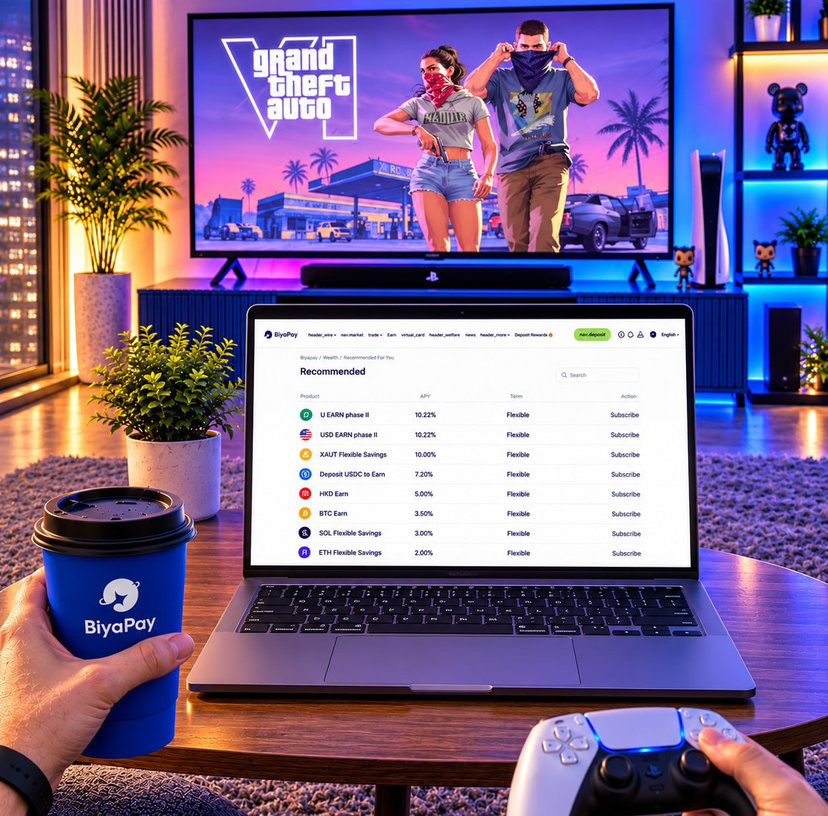
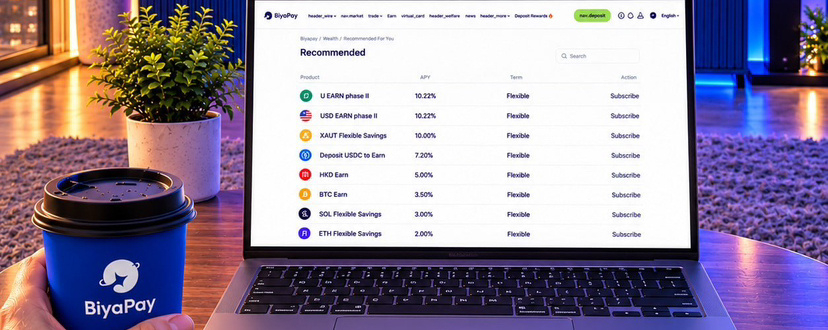
BiyaPay offers U-to-USD conversion and connects users to U.S. and Hong Kong stock markets, as well as spot digital-asset trading.
Users with cross-market capital-management needs can check the actual exchange rate, conversion process, and applicable fees for converting U to USD in advance, then allocate funds according to their own account circumstances.
For those who regularly follow U.S. technology stocks, BiyaPay offers commission-free U.S. stock trading.
This is a feature worth learning about for users comparing the costs of different U.S. stock trading channels.
The platform also supports using U to trade stocks in markets such as the U.S. and Hong Kong, making it easier for users managing digital-asset funds to explore ways to participate in traditional stock markets.
For those who also want to trade spot digital assets, the platform offers zero Maker fees.
However, it's important to note that as a newly listed stock, whether ANT can be traded on a given platform depends on that platform's actual list of available securities and trading status. Support for U.S. stock trading should not be taken to mean that every newly listed stock is already supported.
Also, zero commission and zero Maker fees do not mean that every part of a transaction is cost-free. Exchange rates, bid-ask spreads, and other applicable fees should still be checked in advance.
I believe the value of global asset allocation is not about having users chase hot topics in different markets every day, but about clarifying how their funds are intended to be used and managing them sensibly across different assets.
VIII. What does the market still need to verify after the AI IPO?
Anthropic's entry into the public market marks just one new stage in the development of the AI capital market.
The market still needs to answer several questions.
First, can AI companies continue to grow their commercial revenue?
Leading model companies already have many users and enterprise customers, but they still need to prove that revenue growth can be sustained.
Second, can investment in AI infrastructure generate reasonable returns?
Data centers, GPUs, and model training all require substantial capital expenditure.
If investment continues to grow but actual commercial revenue fails to keep pace, the market may reassess valuations across the entire sector.
Third, will the public market continue to accept the valuations of mega-cap AI companies over the long term?
A successful IPO only shows that demand was strong during the offering process.
The share price will still need to be tested against the company's operating performance and public-market trading over time.
Fourth, will the AI industry see more pronounced differences between companies?
As more companies enter the competition, those with established customers, stable revenue, and greater operational efficiency may gradually pull ahead of companies that rely mainly on market hype.
These questions will determine whether Anthropic's listing ushers in a more mature phase for the AI capital market, or whether valuations and capital flows will continue to fluctuate.
Final thoughts
The most important thing to note about Anthropic's IPO is not the $83 offering price itself, nor simply the overall deal size of $107 billion.
What really matters is that, for the first time, the AI industry has entered the public market with financing on such a massive scale, where it will be valued and tested by a much wider pool of investors.
From the rise in Nasdaq futures to Bitcoin's rebound from around $62,000 and gains in some AI-related tokens, this event has already highlighted the sentiment links between technology capital markets and digital-asset markets.
But an improvement in short-term sentiment does not mean that risks have disappeared from all markets.
Federal Reserve policy, dollar liquidity, institutional capital flows, and companies' own operating performance will continue to affect market movements.
For users who follow U.S. stocks, Hong Kong stocks, and digital assets, understanding how capital moves between different markets is more important than simply chasing an IPO's first-day performance.
BiyaPay's U-to-USD conversion, commission-free U.S. stock trading, zero-Maker-fee spot digital-asset trading, and multi-market asset-management features offer a range of tools for users with cross-market capital-management needs.
As global capital markets become more interconnected, understanding trading rules, fund conversion processes, and actual costs in advance makes it easier to manage capital across different markets.
Anthropic's listing is only the beginning. The AI industry's true value still needs to be proven over time through business performance.
This article is for informational purposes only. Please conduct your own analysis and make your own judgments. It does not constitute investment advice. Avoid unnecessary losses!