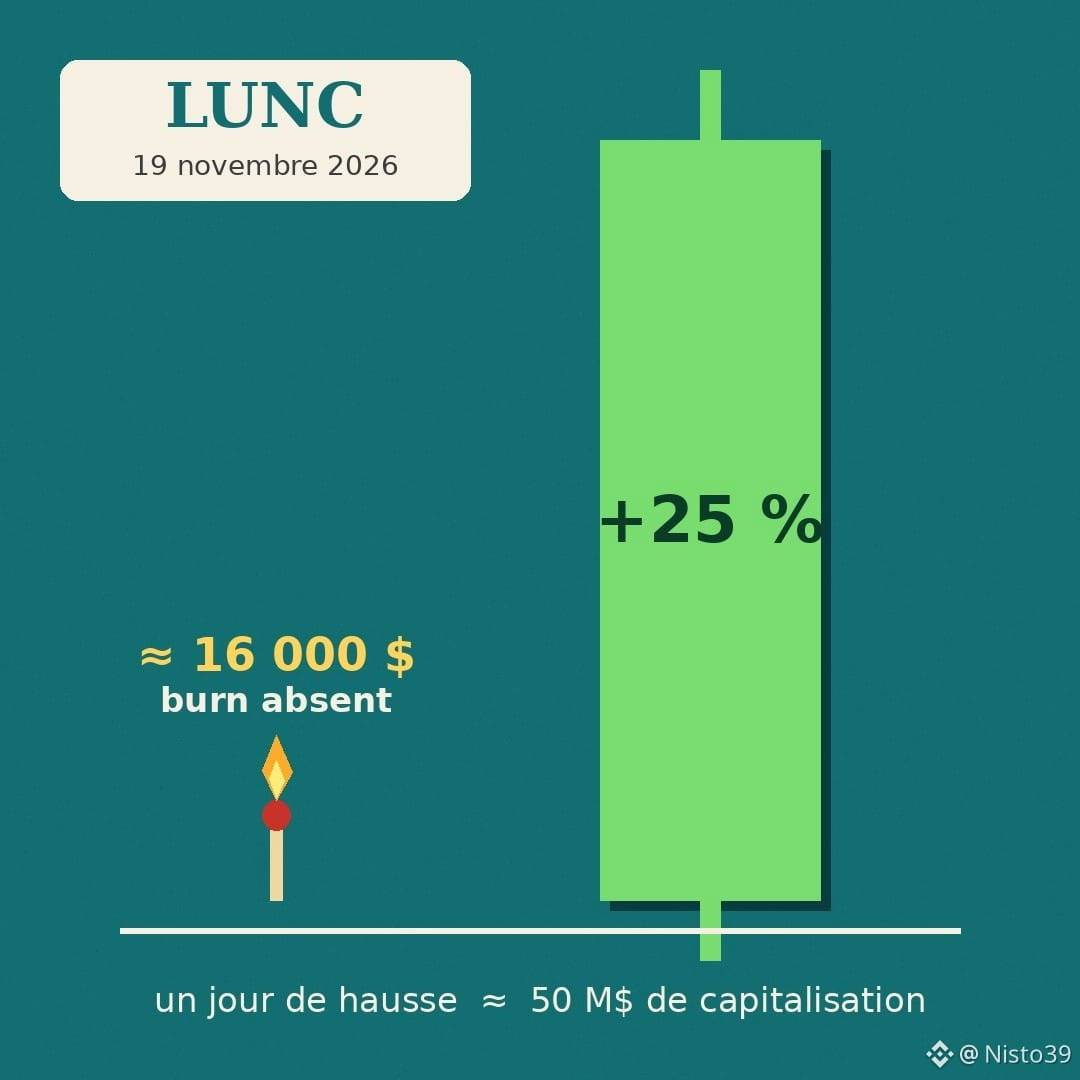
$LUNC gained 25% in 24 hours. The crypto market, meanwhile, lost 2.4% over the same period (CoinCodex, this morning).
The funniest part? This month's “bad news” for Terra Classic changed nothing. Binance didn't do its November burn, a first since March 2023.
Two figures side by side.
Binance's last burn, on October 1: 334.88 million LUNC destroyed. Sounds huge. That's 0.006% of the ~5,500 billion in circulation. At today's price ($0.000049), about $16,000.
Yesterday's rise: roughly, an extra fifty million dollars in market cap in a single day.
So the missing burn weighs more than 3,000 times less than a single day of speculation.
(A burn means sending tokens to an address for which nobody has the key: they leave circulation forever.)
Why the delay? According to Lunc Daily, LUNC withdrawals have still been suspended on Binance since the $6.3 billion hack in late October, so the exchange can't send the tokens to the burn address. No suspension of the program has been announced.
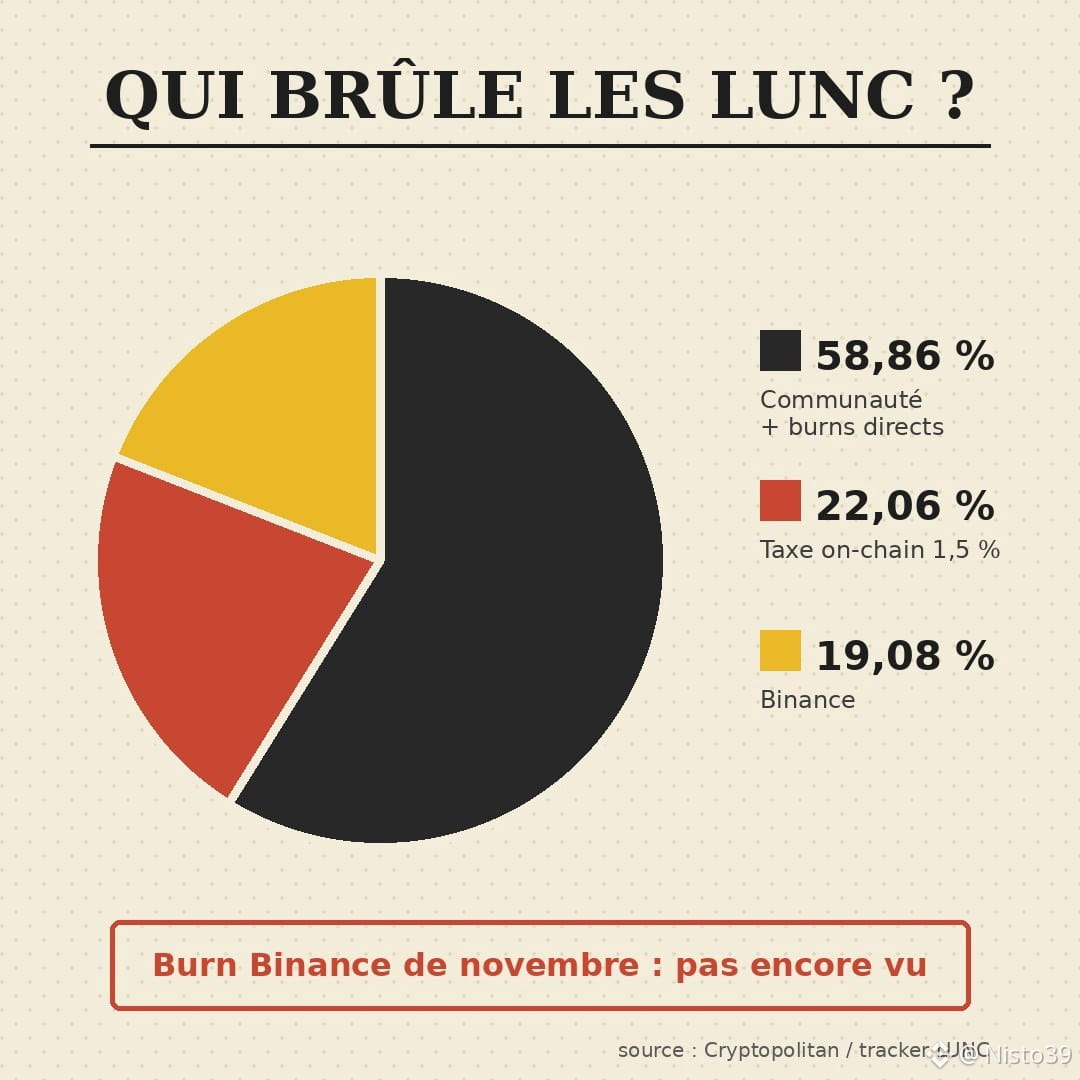
Another sobering figure: Binance accounts for only about 19% of the LUNC burned since the start. The rest comes from community burns and the 1.5% on-chain transaction tax (Cryptopolitan).
My take: the burn is a symbol of support, not a price driver. What moves $LUNC is attention. And a 25% green candle on a token that lost more than 99.99% in 2022 can just as quickly head in the other direction.
On a scale of 0 to 10, how much weight do you give burns in LUNC's price?
#LUNC #TerraClassic #Binance #Burn