Popular science #Anthropic stock code #ANTUSDT (ANT) what exactly is it for!
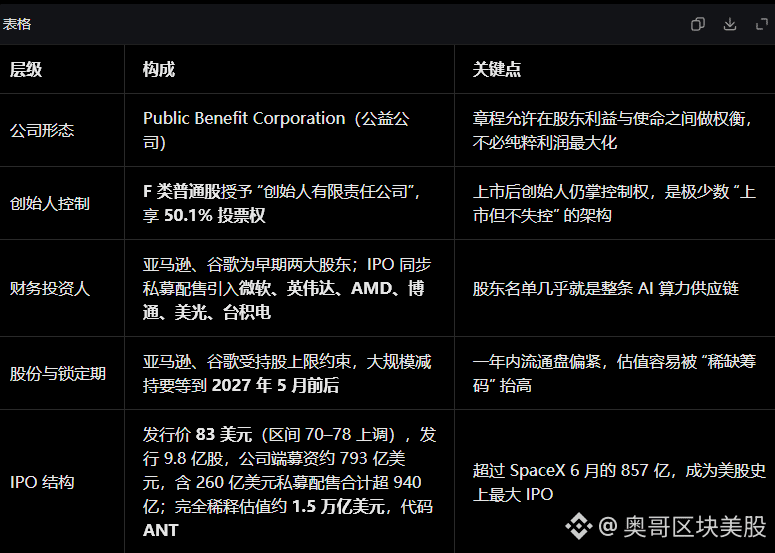
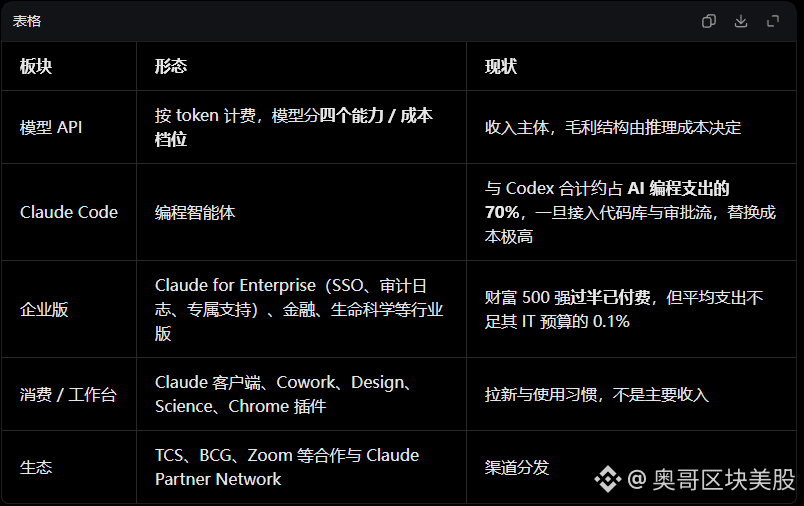
Anthropic is a public benefit corporation (PBC) founded in January 2021: externally, it is a provider of "frontier models + enterprise AI infrastructure"; internally, it insists on defining itself as a "research lab." The original text on the first page of the prospectus says: "We are first and foremost a research lab". Its product is Claude, its business is selling "intelligence" by the token, and its concern is trading nearly two decades of compute procurement commitments for current model leadership.
Business and revenue composition: enterprise token business, not advertising
In the first nine months of 2026, revenue reached $33.24 billion, about +1200% year over year; by the end of October, annualized run rate was about $81 billion; there were 11,900 enterprise customers paying more than $100,000 per year (about 950 a year earlier), and net revenue retention was 900%. This means that growth comes almost entirely from "expanding existing customers," not from acquiring new ones — one of the healthiest yet most fragile structures in SaaS: few customers, high spend per customer, and once budgets tighten, the drop is a cliff. Sina Finance Netease Finance
Three structural weak points
The tension between governance and capital: 50.1% voting power preserves the mission, but it also means outside shareholders cannot correct course when it goes wrong; the PBC identity will be repeatedly tested under quarterly earnings pressure. Excessive customer concentration: 11,900 enterprise customers contribute the vast majority of revenue; the other side of 900% net retention is that "any budget reshuffle by a major customer will directly hit quarterly revenue." The rigidity of compute commitments: the $900 billion payment obligation is rigid, while revenue is elastic; once the AI capex cycle peaks, the valuation anchor will instantly switch from "revenue multiple" to "balance sheet."
In one sentence: Anthropic can be summarized as "the skeleton of a research institute + the revenue of enterprise software + the balance sheet style of an energy company + the governance of a public benefit corporation." It has locked in the longest-term things (mission and compute) while maximizing the shortest-term thing (token revenue) — this is exactly the source of its $1.5 trillion valuation, and also the easiest place for it to be attacked after going public.
Anthropic is a public benefit corporation (PBC) founded in January 2021: externally, it is a provider of "frontier models + enterprise AI infrastructure"; internally, it insists on defining itself as a "research lab." The original text on the first page of the prospectus says: "We are first and foremost a research lab". Its product is Claude, its business is selling "intelligence" by the token, and its concern is trading nearly two decades of compute procurement commitments for current model leadership.
Business and revenue composition: enterprise token business, not advertising
In the first nine months of 2026, revenue reached $33.24 billion, about +1200% year over year; by the end of October, annualized run rate was about $81 billion; there were 11,900 enterprise customers paying more than $100,000 per year (about 950 a year earlier), and net revenue retention was 900%. This means that growth comes almost entirely from "expanding existing customers," not from acquiring new ones — one of the healthiest yet most fragile structures in SaaS: few customers, high spend per customer, and once budgets tighten, the drop is a cliff. Sina Finance Netease Finance
Three structural weak points
The tension between governance and capital: 50.1% voting power preserves the mission, but it also means outside shareholders cannot correct course when it goes wrong; the PBC identity will be repeatedly tested under quarterly earnings pressure. Excessive customer concentration: 11,900 enterprise customers contribute the vast majority of revenue; the other side of 900% net retention is that "any budget reshuffle by a major customer will directly hit quarterly revenue." The rigidity of compute commitments: the $900 billion payment obligation is rigid, while revenue is elastic; once the AI capex cycle peaks, the valuation anchor will instantly switch from "revenue multiple" to "balance sheet."
In one sentence: Anthropic can be summarized as "the skeleton of a research institute + the revenue of enterprise software + the balance sheet style of an energy company + the governance of a public benefit corporation." It has locked in the longest-term things (mission and compute) while maximizing the shortest-term thing (token revenue) — this is exactly the source of its $1.5 trillion valuation, and also the easiest place for it to be attacked after going public.