
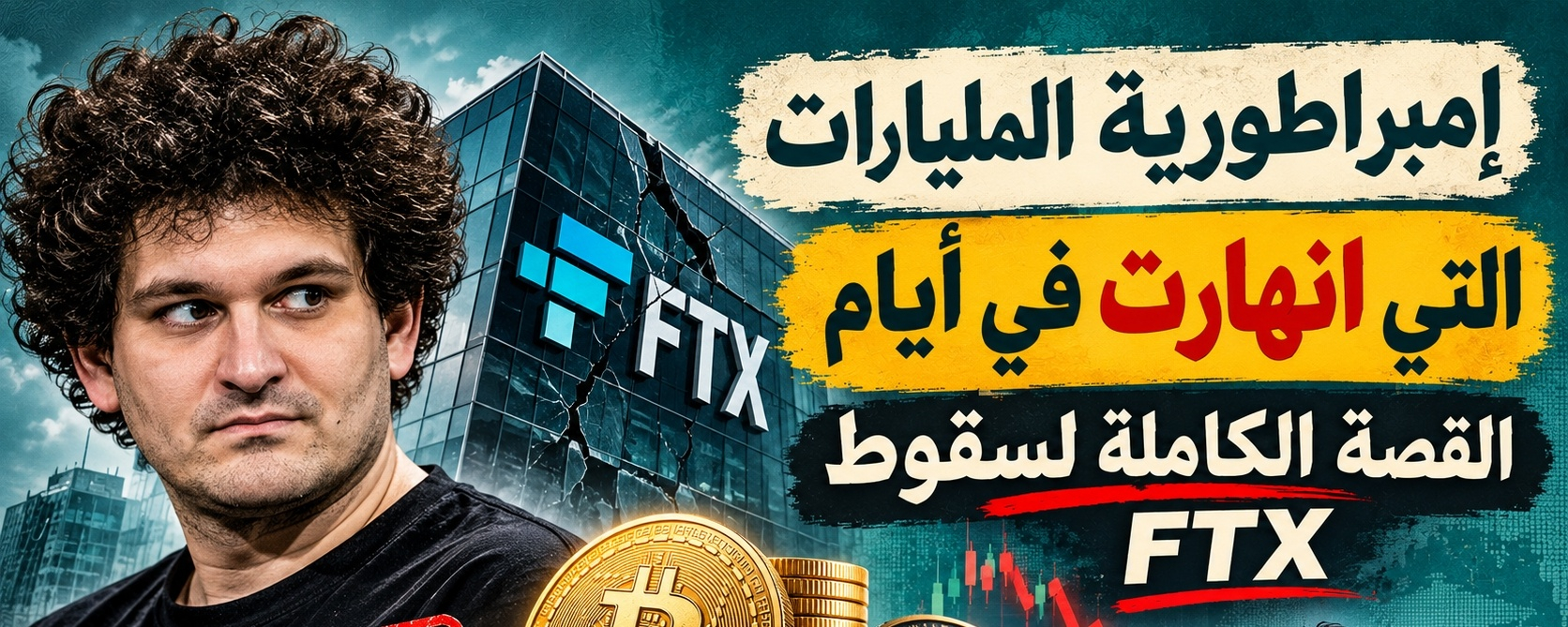
How did one of the world's best-known cryptocurrency trading platforms become the stage for the biggest financial fraud scandals in the history of the crypto industry?
In early November 2022, billions of dollars in customer funds were held by one of the world's best-known cryptocurrency trading platforms.
The owners of these funds believed they had put them in a safe place, and that they could access their accounts and withdraw their balances whenever they wanted.
The platform had a global name, sponsored major sporting events, ran advertisements on television, and was discussed by celebrities, investors, and financial institutions.
Behind it was a young man not yet thirty, who in just a few years became a billionaire and one of the best-known businesspeople in the cryptocurrency industry.
But within just a few days, this spectacular success turned into a financial catastrophe.
Users click the withdrawal button, but the money never arrives.
The platform announces that it is facing a liquidity problem.
Investors are looking for answers.
The man who had presented himself as one of the most important guardians of cryptocurrency’s future became a defendant accused of fraud and misuse of customer funds.
This is the story of FTX.
But to understand the collapse, we must go back to the beginning: to a young man who wanted to become a billionaire, a small trading firm, and a financial world that was unprepared to discover what was happening behind a glossy façade.
Chapter One: The Young Man Who Wanted to Change the World of Finance
In March 1992, Sam Bankman-Fried was born in the United States and grew up in an academic family; his parents worked in academia and law.
He studied physics at the Massachusetts Institute of Technology (MIT), then turned to the world of finance and trading.
His path was unlike that of traditional entrepreneurs, who start with a small venture and then expand gradually.
He was interested in markets, price differences between trading platforms, and opportunities that could be exploited when the price of the same asset varied from one market to another.
This idea is known as arbitrage.
Imagine that a cryptocurrency is selling for $100 on one platform and $102 on another.
If a trader can buy it on the first platform and sell it on the second, they may profit from the price difference after deducting fees, transfer costs, and risks.
The process may seem simple, but in large markets it requires speed, trading systems, capital, and careful risk management.
In 2017, Bankman-Fried founded Alameda Research, a company specializing in trading and investing in digital assets.
The company began taking advantage of opportunities in the cryptocurrency market, which at the time was experiencing rapid growth and significant volatility.
As trading activity expanded, the need emerged for a platform that could provide a suitable environment for executing trades and managing accounts and liquidity.
That led to the next step.
Chapter Two: The Birth of FTX—the Platform That Wanted to Compete with Everyone
In 2019, the FTX platform was founded and began offering cryptocurrency trading services, including spot trading, futures, and derivatives.
The platform was not just a place to buy and sell Bitcoin; it also tried to offer more advanced tools for professional traders.
The cryptocurrency market was growing, and competition among platforms was intensifying.
FTX attracted considerable attention with its products, rapid expansion, and aggressive marketing.
The company began building relationships with investors, institutions, and well-known figures.
In 2021, the company was valued at around $18 billion in a funding round, then reached about $32 billion in a later round in 2022.
That figure reflected the level of confidence investors had placed in the company.
But behind these figures was a question that did not receive enough attention:
Was there financial and accounting oversight commensurate with the amount of money the company managed?
Customers deposited money, traded cryptocurrencies, and trusted that the platform held their assets and could meet its obligations.
At the same time, Alameda Research operated within the platform’s surrounding financial ecosystem.
This is where the fundamental problem that would emerge later began.
The company that was supposed to be independent of the trading platform was deeply connected to it and received special treatment in trading systems and account management.
Most customers did not know how extensive or what the nature of this relationship was.
Chapter Three: How Did Sam Bankman-Fried Become a Global Star?
FTX’s success was not based on technology alone.
Marketing was an essential part of building the empire.
The company invested huge sums in sports sponsorships, advertising, and public relations.
In 2021, it acquired the naming rights to the Miami Heat basketball arena, which became known as FTX Arena.
The platform appeared in television commercials and became associated with famous figures from sports and media.
In 2022, it took part in an advertising campaign during the American Super Bowl, one of the most-watched television events.
The goal was clear: to build the image of a trusted global brand.
And it wasn’t limited to advertising.
Sam Bankman-Fried became a well-known figure in political and economic circles. He appeared at conferences and in interviews, speaking about the future of cryptocurrencies and market regulation.
He presented himself as a businessman committed to philanthropy and spoke about effective altruism—the pursuit of the greatest possible positive impact using available resources.
This image helped him build a broad network of connections.
But public reputation is not a financial statement, appearing at conferences is not an audit, and sponsoring a sports arena does not prove that a company can repay its customers’ money.
FTX seemed more trustworthy and far-reaching than its actual standing warranted.
This was one of the most dangerous aspects of the story.
Chapter Four: The Dangerous Relationship Between FTX and Alameda
To understand the collapse, we need to understand the difference between the two companies.
FTX was a trading platform through which customers traded cryptocurrencies.
Alameda Research, on the other hand, was a trading and investment firm with its own financial activities.
Having a trading firm affiliated with a trading platform is not inherently illegal.
But problems arise when there are no clear boundaries between customer funds and company funds, or when an affiliated firm receives privileges unavailable to other traders.
According to what came to light in investigations and trials, Alameda received special treatment within FTX’s systems, including the ability to maintain huge negative balances and access credit facilities not available to other customers on the same terms.
According to evidence presented at trial, FTX customer funds were used to finance Alameda’s activities, meet its obligations, and cover its losses.
This is the heart of the crisis.
Customers who deposit money with a trading platform expect their funds to be available under the terms of service.
Depositing money does not mean giving the company the right to use it to finance high-risk trades or repay another company’s debts.
But what the case revealed was entirely different from what customers believed.
The problem was not simply a bad investment or a poor trading decision.
It concerned how customer funds were handled and the absence of safeguards needed to protect them.
This distinction is what made the case more than the failure of a commercial company: it became a financial and criminal fraud case.
Chapter Five: The FTT Token—the Link That Exposed the Cracks
FTX had its own cryptocurrency, called FTT.
This token was part of the platform’s ecosystem. It gave holders benefits related to using trading services and was also used in some financial operations within the company’s broader ecosystem.
But a company having its own token is not automatically a problem.
The problem emerged when the token came to play a major role in Alameda’s balance sheet.
On November 2, 2022, CoinDesk published a report based on a leaked balance sheet from Alameda Research.
The report revealed that a large portion of the company’s assets was tied to FTT and other tokens linked to the FTX ecosystem.
This was concerning for a simple reason:
If a company’s assets depend heavily on a token linked to another company controlled by the same group, do those assets represent independent financial value that can be converted into real money when needed?
What would happen if a large number of investors tried to sell the token at the same time?
Could the market absorb the selling without the price collapsing?
And could the company meet its obligations if these assets lost value?
These questions were enough to raise doubts.
On November 6, 2022, Changpeng Zhao, known as CZ, the founder of Binance, announced that his platform would liquidate its remaining FTT holdings, citing concerns about the risks that had emerged around the token.
The decision dealt a major blow to confidence in FTX.
Investors and customers began reassessing the risks.
Fears spread that the company had deeper financial problems than the reports had revealed.
Then came what would turn the crisis into a full-scale collapse.
Chapter Six: When Customers Pressed the Withdrawal Button
In banking and financial crises, there is a highly dangerous moment known as a bank run, or a run on withdrawals.
It happens when a large number of customers lose confidence in a financial institution and try to withdraw their money at the same time.
Even an institution with substantial assets can run into trouble if those assets are illiquid or cannot be quickly converted into available funds.
But FTX’s situation was even more serious.
As withdrawal requests increased in November 2022, the platform could not provide the funds needed to meet its obligations.
Customers began noticing delays and problems.
Concerns were mounting.
On November 7, Bankman-Fried tried to reassure the public, writing on Twitter that FTX was fine and its assets were fine.
But the financial reality was different.
According to court proceedings, there was a huge gap between the platform’s obligations to customers and the assets available to meet them.
Customers wanted their money back, while the company was trying to find urgent sources of funding.
At that moment, the crisis became public.
It was no longer merely a fluctuation in the price of a cryptocurrency.
It had become a direct question:
Where did the customers’ money go?
Chapter Seven: Binance Enters the Picture—Then Withdraws
On November 8, 2022, a new surprise emerged.
Binance announced that it had signed a non-binding letter of intent to acquire FTX.com, after Bankman-Fried asked for help.
It seemed like a lifeline.
The world’s largest cryptocurrency exchange by trading volume at the time might step in to rescue its competitor.
But the deal was not final and was subject to due diligence and review.
After reviewing the company’s financial position and the problems that had emerged, Binance announced on November 9 that it was withdrawing from the deal.
The withdrawal dealt another blow to confidence.
If a company of this size could not save itself, and a potential acquisition could not survive an initial review, what was really happening inside it?
The answer was more alarming than many had expected.
The problem was not merely a temporary liquidity shortage.
Customer funds were no longer available, financial obligations were enormous, and questions were being raised about how the entire group was managed.
Chapter Eight: November 11—the Day the Empire Fell
On November 11, 2022, FTX and several of its affiliates filed for Chapter 11 bankruptcy protection under U.S. bankruptcy law.
Sam Bankman-Fried resigned as CEO.
John Ray III took over the company to manage its bankruptcy proceedings and restructuring.
John Ray had previous experience dealing with major companies that had collapsed, including Enron, which became a symbol of accounting scandals in the United States.
But what he found inside FTX was shocking.
In a court declaration, John Ray described the scale of the management and oversight failures as unprecedented in his career.
He spoke of a lack of centralized cash management, the absence of reliable financial records, weak spending controls, and company funds being used for expenses inconsistent with the safeguards expected of a financial institution managing billions of dollars.
The picture the world saw was entirely different from the one created by the advertisements.
An empire worth billions of dollars, yet lacking the basics of financial governance.
In December 2022, Bankman-Fried was arrested in the Bahamas, where he was living.
The era of the businessman who appeared on magazine covers and spoke about the future of the financial system had ended; the era of investigations and trials had begun.
Chapter Nine: The Trial—What Happened Behind Closed Doors?
In October 2023, Sam Bankman-Fried’s trial began in New York.
The case was not simply an accusation that someone had run a failed company.
Prosecutors sought to prove the existence of fraudulent schemes involving the misuse of customer funds and deception of investors and lenders.
Among the key witnesses at the trial was Caroline Ellison, the former CEO of Alameda Research.
Ellison was a close associate of Bankman-Fried and worked with him to manage the company.
She pleaded guilty to fraud-related charges, testified against Bankman-Fried, and explained how customer funds had been used to finance Alameda’s obligations and activities.
Gary Wang, one of FTX’s co-founders, also testified, as did Nishad Singh, who held an executive engineering role in the group.
Both also pleaded guilty to fraud-related charges.
Their testimony, together with records, messages, and financial evidence, was important to the prosecution’s case.
Bankman-Fried, for his part, took a defensive position. He acknowledged management mistakes and poor decisions but denied deliberately stealing customer funds or committing fraud in the manner alleged by prosecutors.
The trial lasted several weeks.
On November 2, 2023, the jury found him guilty on all seven counts presented to it.
The verdict marked the legal downfall of a man who, just a year earlier, had been one of the most prominent figures in the cryptocurrency industry.
Chapter Ten: 25 Years in Prison—the End of the Story or the Beginning of a New Chapter?
On March 28, 2024, a U.S. court sentenced Sam Bankman-Fried to 25 years in prison, followed by three years of supervised release, and ordered the forfeiture of assets worth approximately $11 billion.
The court had convicted him of fraud and conspiracy in connection with the collapse of FTX.
But the legal story did not end there.
In June 2026, the U.S. Court of Appeals for the Second Circuit rejected his appeal and upheld the judgment against him.
Thus, the collapse was not merely a company’s financial loss; it became a major court case in the history of cryptocurrency industry regulation.
As for customers, their funds entered bankruptcy, settlement, and distribution proceedings.
In May 2024, the bankruptcy administration announced a plan that was expected to allow customer and creditor claims to be paid in full, or nearly in full, based on the approved cash value of those claims, with potential additional amounts for some groups.
But an important point should be noted: recovering the cash value of a claim does not necessarily mean getting back the same cryptocurrencies a customer held at the time of the collapse.
The difference between returning the same number of bitcoins and paying a cash value calculated using a reference date can be very large if the asset’s price changes over the following years.
This shows that bankruptcy proceedings may return a large portion of the financial value, but they do not necessarily erase all the economic losses customers incurred.
Chapter Eleven: Was the Problem Cryptocurrency or Management?
Here we should pause for a moment.
It is easy to look at the FTX story and conclude that all cryptocurrencies are chaotic and every trading platform is at risk of collapse.
But that conclusion is not accurate.
The case exposed problems involving governance and oversight, the separation of customer funds from company funds, transparency, and risk management.
These problems are not unique to the cryptocurrency industry.
The world has seen major financial scandals involving traditional companies, banks, stock markets, and investment funds.
But the crypto industry has additional challenges.
It operates in a rapidly changing, cross-border environment with highly volatile assets and platforms that vary in their levels of regulation and oversight.
Some customers may also confuse holding cryptocurrency in a wallet whose private keys they control with depositing it on a platform that holds it on their behalf.
This is a fundamental difference.
When you keep your assets with a centralized platform, you depend on its ability to protect those assets and meet its obligations.
When you keep them in a self-custody wallet, you are responsible for protecting your keys and managing the associated risks.
No method is entirely risk-free, but understanding the nature of each one is the first step toward avoiding disasters.
Chapter Twelve: Lessons Investors Must Not Forget
Lesson One: Don’t confuse a company’s fame with the safety of its funds.
A company may have huge advertising campaigns, sports sponsorships, and famous figures endorsing it, but these things do not prove that it has sound financial oversight.
Lesson Two: Understand where your money is.
Do you hold it yourself, or deposit it with a platform? And do you know how the platform handles customers’ assets?
Lesson Three: Separate customers’ funds from the company’s funds.
This is not merely an accounting rule; it is one of the most important foundations of trust in financial institutions.
Lesson Four: Don’t place absolute trust in any institution.
Even major companies need independent oversight, transparency, and genuine financial audits.
Lesson Five: Watch out for conflicts of interest.
When one entity operates a trading platform and an affiliated investment firm, there must be clear safeguards to prevent the relationship from being exploited at customers’ expense.
Lesson Six: Don’t let high returns hide the risks.
Whenever you see promises of high profits or exceptional benefits, ask where the returns come from and what risks you are taking in return.
Lesson Seven: Understand the difference between the platform and the digital asset.
You may believe in Bitcoin, but that doesn’t mean every platform holding Bitcoin on your behalf is safe.
Trust in the asset is one thing; trust in the intermediary is another.
Conclusion: The Empire the Market Alone Didn’t Bring Down
FTX could have become one of the largest financial institutions in the digital asset world.
It had funding, customers, reach, connections, and media attention.
But none of these things was enough to protect it.
The platform that sold people on the idea of the financial future couldn’t protect one of its most important assets: its customers’ trust.
The deeper lesson of this story is not that cryptocurrency prices can crash; that is something everyone who deals in markets knows.
Rather, the greatest danger may come from somewhere an investor does not expect.
You might buy Bitcoin and then see its price fall. That is a familiar market risk.
But depositing your money with a platform and later discovering that it wasn’t holding it the way you expected is an entirely different problem.
In financial markets, prices can rise and fall, and profits can turn into losses. But once trust collapses, it cannot be restored simply by launching a new advertising campaign.
And this brings us to the question every investor should ask before depositing money with any platform:
If all customers decided to withdraw their money tomorrow, could the platform return it to them?
If you don’t know the answer, you don’t know what risk you’re taking.
Perhaps this was the most important fact revealed by the FTX story.
The danger is not always in the currency you buy; it may be in the hands you entrusted with your money.
Disclaimer: This article is for educational and analytical purposes only. It is not investment advice or an accusation against any other platform. Criminal facts are presented in accordance with court rulings and official documents.