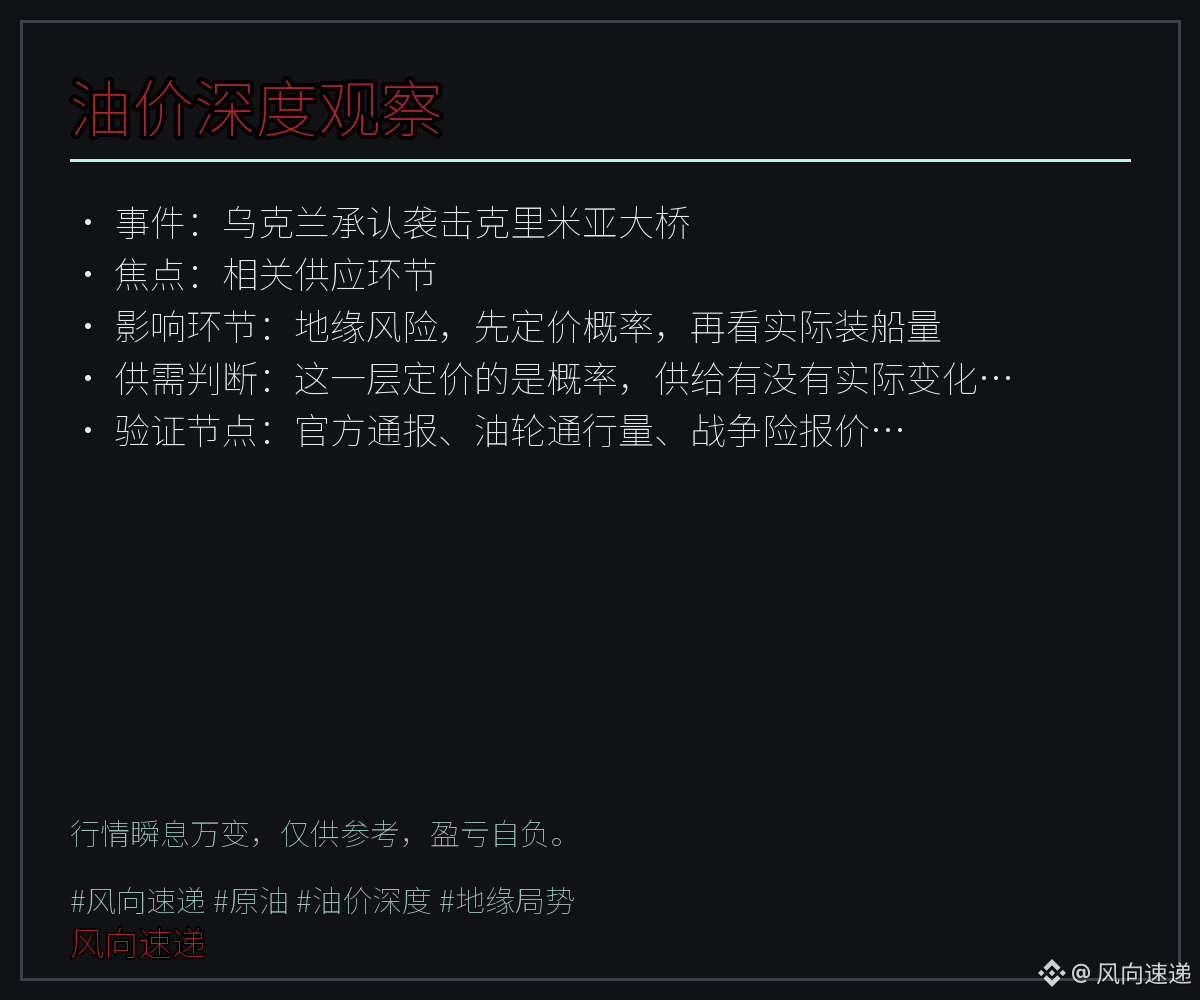
In-Depth Oil Price Watch
【Key Event】
Ukraine admits to attacking the Crimean Bridge (3 hours ago)
【Who Is Affecting Oil Prices】
Ukraine has attacked energy infrastructure. The focus is on related supply links. News of this kind changes the market’s assessment of the probability of supply disruptions, but does not necessarily correspond to actual production losses.
【Transmission Chain】
Rising tensions first push up the geopolitical risk premium, prompting adjustments to tanker insurance, voyage planning, and buyers’ willingness to build inventories.
Only if events affect loading, transit, or the facilities themselves will the risk premium translate into a verifiable shortfall in the supply-demand balance.
【Supply, Demand, and Pricing】
At this level, pricing reflects probabilities. Whether supply has actually changed depends on subsequent loading volumes and facility operating data.
WTI is currently trading around $82.44, with a 24-hour change of -2.04%. This level can serve as a starting point for observation; future moves should be assessed alongside the verification checkpoints below. The premium driven by conflict-related news is usually concentrated in front-month contracts and implied option volatility, and can unwind quickly when sentiment shifts.
【What to Watch Next】
Watch for official statements, tanker transit volumes, war-risk insurance quotes, and any changes to oil producers’ loading plans.
【What Would Invalidate This Thesis】
If tensions ease and there is no damage to facilities or shipping, the risk premium often fades quickly.
Markets can change rapidly. For informational purposes only; you are responsible for your own gains and losses.
#风向速递 #原油 #油价深度 #GeopoliticalSituation