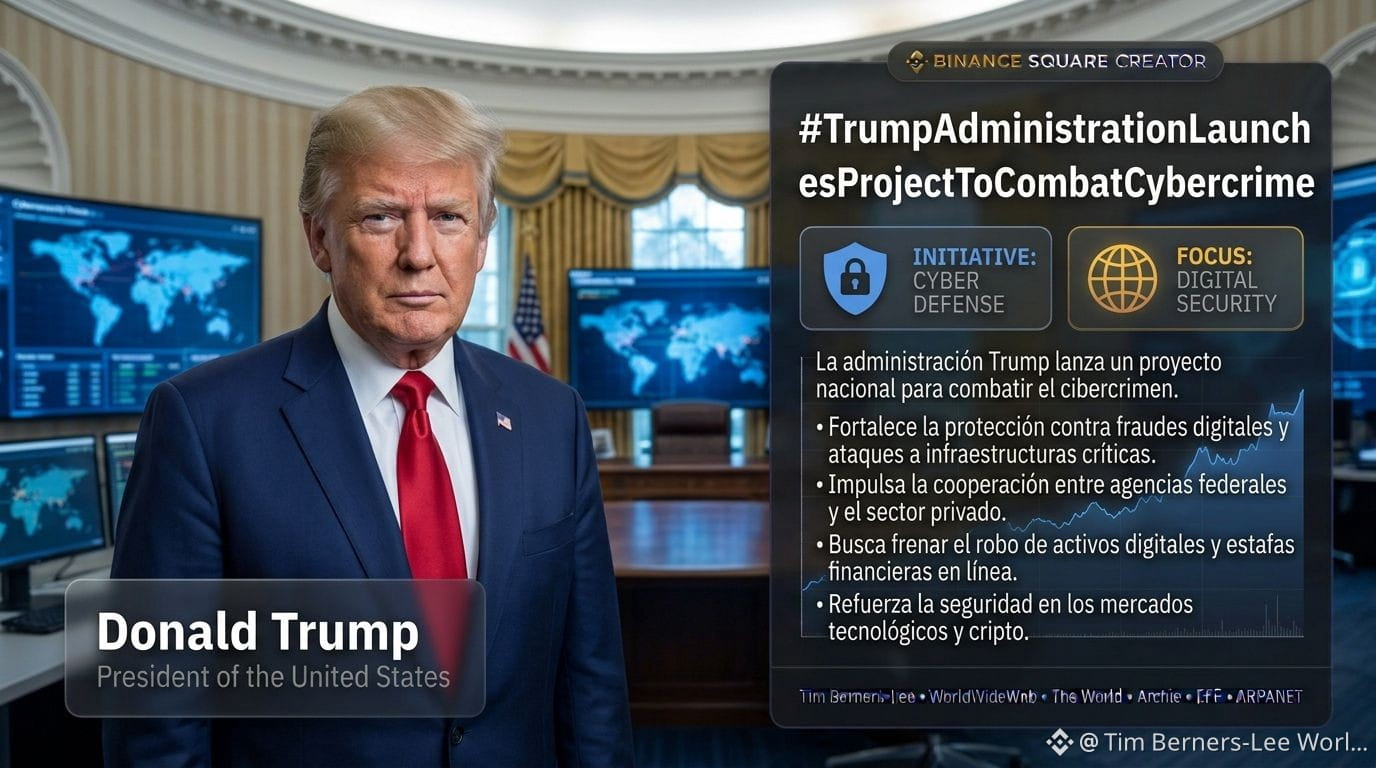
#TrumpAdministrationLaunchesProjectToCombatCybercrime
The Trump administration has activated an unprecedented legal framework to take the fight against transnational cybercrime onto the offensive. Through Executive Order 14390 (March 2026) and the National Security Presidential Memorandum issued in August, Washington has, for the first time, authorized “vetted” private cybersecurity firms to operate under the direct supervision of the DOJ and DHS, conducting surveillance and active disruption operations against cyber-enabled transnational criminal organizations (CE-TCOs)
3. Although the government emphasizes that this is not a free pass to “hack back,” the program allows private contractors to carry out operations that can “disrupt, deny, degrade, or manipulate” approved foreign systems, channeling the private sector’s speed and technical capabilities into an offensive strategic advantage.
For the crypto ecosystem, this initiative has direct and far-reaching implications. Ransomware groups, “pig butchering” mafias, and the anonymous developers behind massive rug pulls now fall into the category of authorized military-corporate targets—not merely targets of arrest warrants, but of coordinated digital kinetic operations by federal agencies. In addition, the order includes the creation of a “Victim Restoration Program” that will use funds confiscated from these actors to compensate those affected by cybercrime-enabled fraud, which could lead to far more aggressive and effective mechanisms for recovering stolen assets via blockchain
1. While this increases pressure on hostile jurisdictions that harbor these gangs, it also raises questions about privacy and the possible escalation of retaliation against U.S. infrastructure, marking a new era in which crypto security is no longer solely the user’s responsibility but has become a national defense front.
The Trump administration has activated an unprecedented legal framework to take the fight against transnational cybercrime onto the offensive. Through Executive Order 14390 (March 2026) and the National Security Presidential Memorandum issued in August, Washington has, for the first time, authorized “vetted” private cybersecurity firms to operate under the direct supervision of the DOJ and DHS, conducting surveillance and active disruption operations against cyber-enabled transnational criminal organizations (CE-TCOs)
3. Although the government emphasizes that this is not a free pass to “hack back,” the program allows private contractors to carry out operations that can “disrupt, deny, degrade, or manipulate” approved foreign systems, channeling the private sector’s speed and technical capabilities into an offensive strategic advantage.
For the crypto ecosystem, this initiative has direct and far-reaching implications. Ransomware groups, “pig butchering” mafias, and the anonymous developers behind massive rug pulls now fall into the category of authorized military-corporate targets—not merely targets of arrest warrants, but of coordinated digital kinetic operations by federal agencies. In addition, the order includes the creation of a “Victim Restoration Program” that will use funds confiscated from these actors to compensate those affected by cybercrime-enabled fraud, which could lead to far more aggressive and effective mechanisms for recovering stolen assets via blockchain
1. While this increases pressure on hostile jurisdictions that harbor these gangs, it also raises questions about privacy and the possible escalation of retaliation against U.S. infrastructure, marking a new era in which crypto security is no longer solely the user’s responsibility but has become a national defense front.