“A quantum computer could drain 35% of bitcoin in an hour.”
This phrase has been circulating since yesterday. It combines two true figures and makes up a false one.
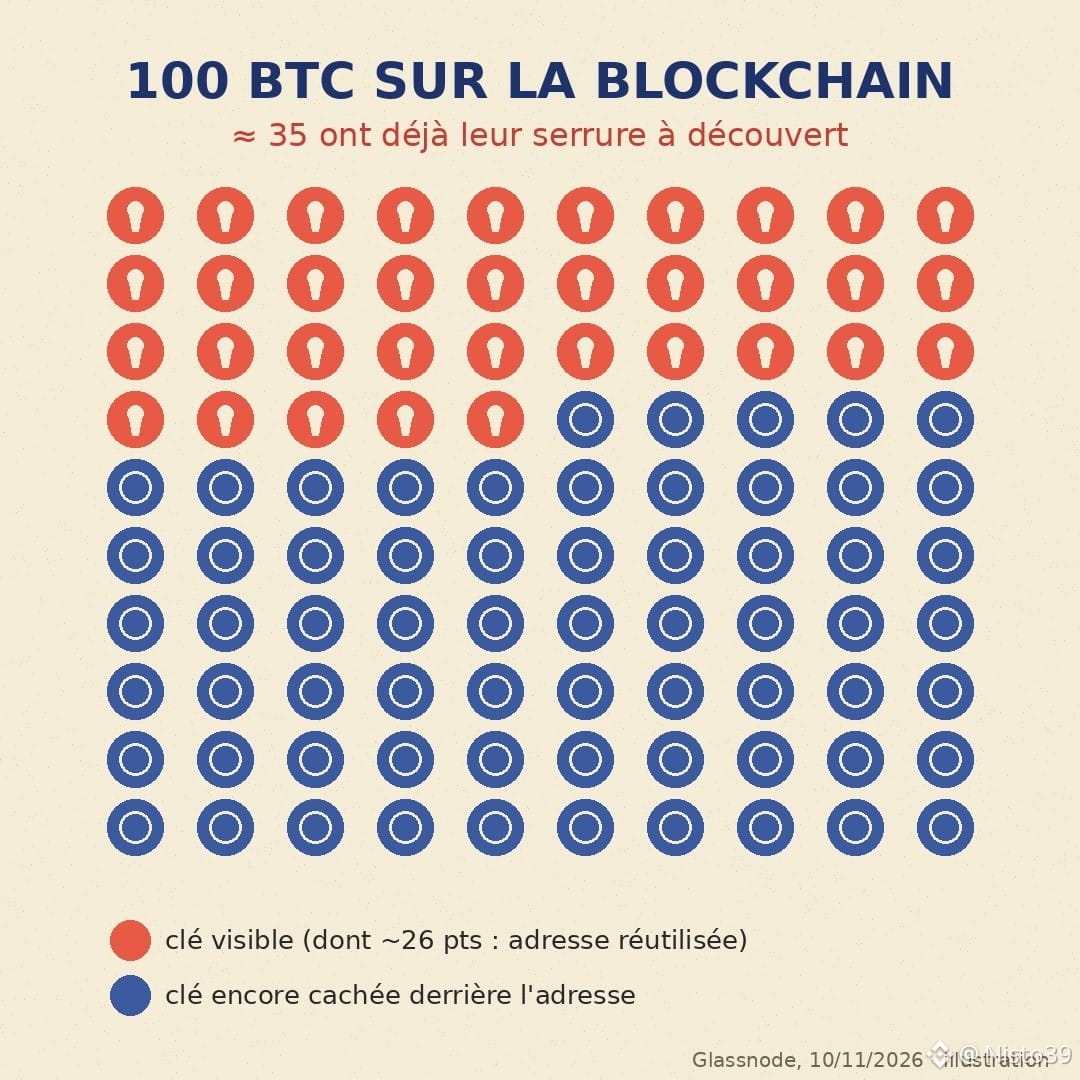
True #1: according to Glassnode (November 10), 35.4% of the $BTC supply, or around 7.12 million BTC, sits in addresses whose public key is already visible on the blockchain. A public key is like a lock that anyone can study. No computer today can work backwards from it to find the private key. A very large quantum machine theoretically could.
True #2: Jameson Lopp (Casa) ran the numbers as a thought experiment. Around 35,000 exposed keys, mostly belonging to coins that have been untouched for ~15 years, hold some 2.26 million BTC. At one key cracked per hour, it would take around 4 years to crack them all. At one per day: 96 years. At 10 minutes per key: 243 days.
“One hour” is therefore the time per key in a hypothetical scenario. Not the time it would take to crack a third of the network. And Lopp has already said he sees a greater than 50% chance that such a machine is more than ten years away.
My take: the real issue isn’t when, but who is exposed. According to Glassnode, 25.8% of the supply is exposed because of address reuse: you spend from an address, its public key becomes visible, and you keep receiving funds at that address. Most wallets offer a new address for each incoming payment. You just have to accept it.
The coins that can never be protected are the ones no one can move anymore. That’s where the debate will get heated, not over a well-managed wallet.
Do you still receive funds at the same address, or do you let your wallet change it?
#Bitcoin #Quantique #Securite #Glassnode
This phrase has been circulating since yesterday. It combines two true figures and makes up a false one.
True #1: according to Glassnode (November 10), 35.4% of the $BTC supply, or around 7.12 million BTC, sits in addresses whose public key is already visible on the blockchain. A public key is like a lock that anyone can study. No computer today can work backwards from it to find the private key. A very large quantum machine theoretically could.
True #2: Jameson Lopp (Casa) ran the numbers as a thought experiment. Around 35,000 exposed keys, mostly belonging to coins that have been untouched for ~15 years, hold some 2.26 million BTC. At one key cracked per hour, it would take around 4 years to crack them all. At one per day: 96 years. At 10 minutes per key: 243 days.
“One hour” is therefore the time per key in a hypothetical scenario. Not the time it would take to crack a third of the network. And Lopp has already said he sees a greater than 50% chance that such a machine is more than ten years away.
My take: the real issue isn’t when, but who is exposed. According to Glassnode, 25.8% of the supply is exposed because of address reuse: you spend from an address, its public key becomes visible, and you keep receiving funds at that address. Most wallets offer a new address for each incoming payment. You just have to accept it.
The coins that can never be protected are the ones no one can move anymore. That’s where the debate will get heated, not over a well-managed wallet.
Do you still receive funds at the same address, or do you let your wallet change it?
#Bitcoin #Quantique #Securite #Glassnode