$INJ: Data Provenance as a Trading Discipline
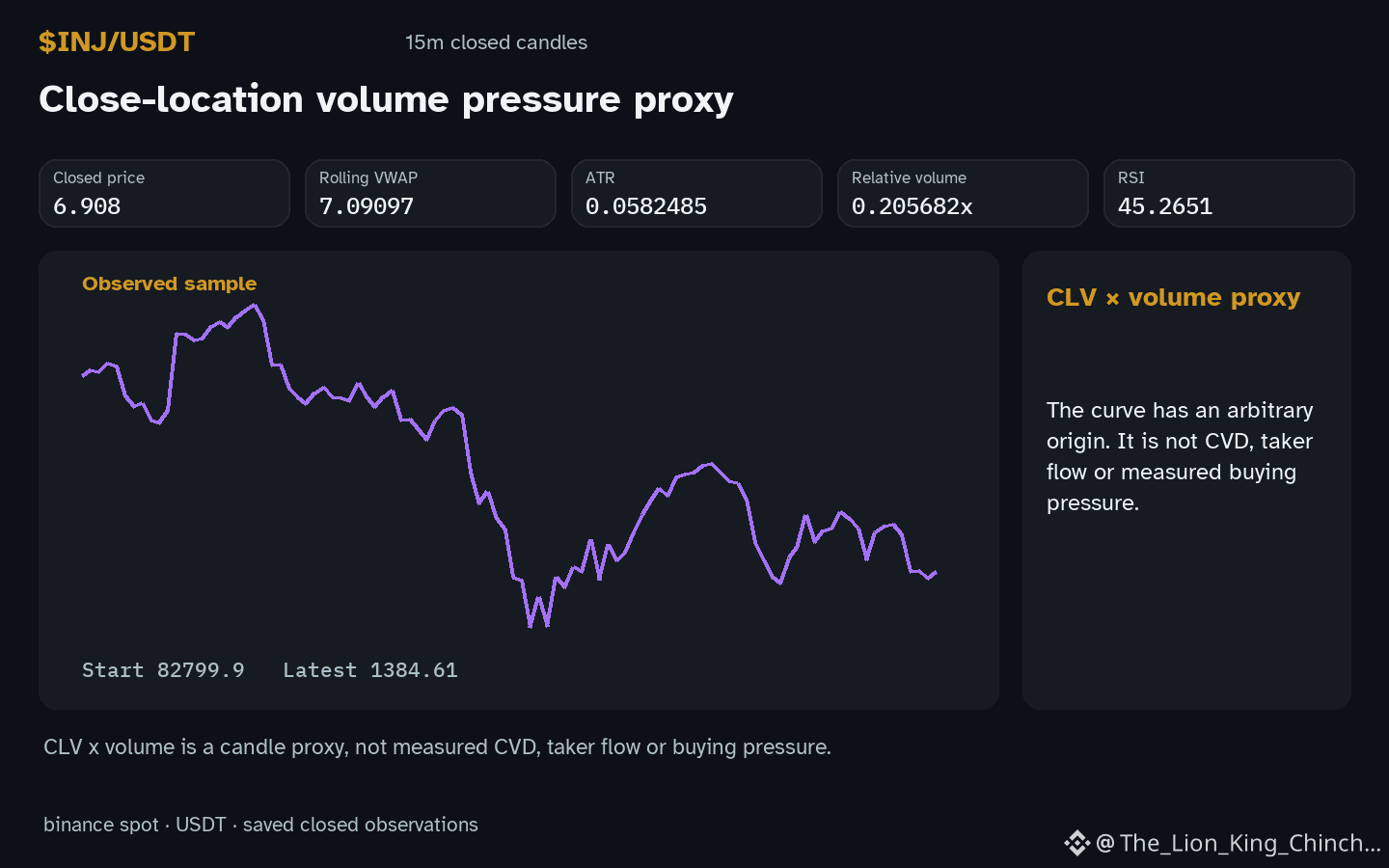
$INJ trades inside its recorded range with hourly direction down and volume not above baseline. Could this setup benefit from clearer data provenance? Most market posts mix raw readings with interpretive claims. A reader sees a metric but lacks the timestamp or baseline needed to verify it. This creates confusion between observation and persuasion. Imagine a hypothetical researcher who cites a price level without noting the specific candle window. A peer studying the same chart might use a different reference point for support or resistance. Without a shared timestamp, their conclusions diverge despite using the same raw data. This gap illustrates why anti-fabrication ethics matter. The researcher assumes the data is self-evident, but context is not stored inside the number itself. The counterexample involves a self-check routine. Before publishing a claim, the writer lists every fact and links it to a verifiable source. If a statement lacks a clear origin, it is removed or labeled as speculation. This separates evidence from rhetorical framing. For $INJ , the current observation sits within local bounds. The relative volume 0.21x baseline provides context but does not prove direction. RSI 45.3 indicates momentum state, not certainty. A future closed-candle could weaken the current reading if price moves outside these local levels. Readers can reassess the interpretation by checking if subsequent bars confirm or reject the initial range hold. This approach invites thoughtful disagreement about how much context is necessary for credibility. It treats data provenance as a shared standard rather than a hidden skill. The goal is clearer limitations, not more confidence.
Probabilistic market research, not a recommendation or guaranteed return.
#INJ #CryptoCommunity #CryptoLearning