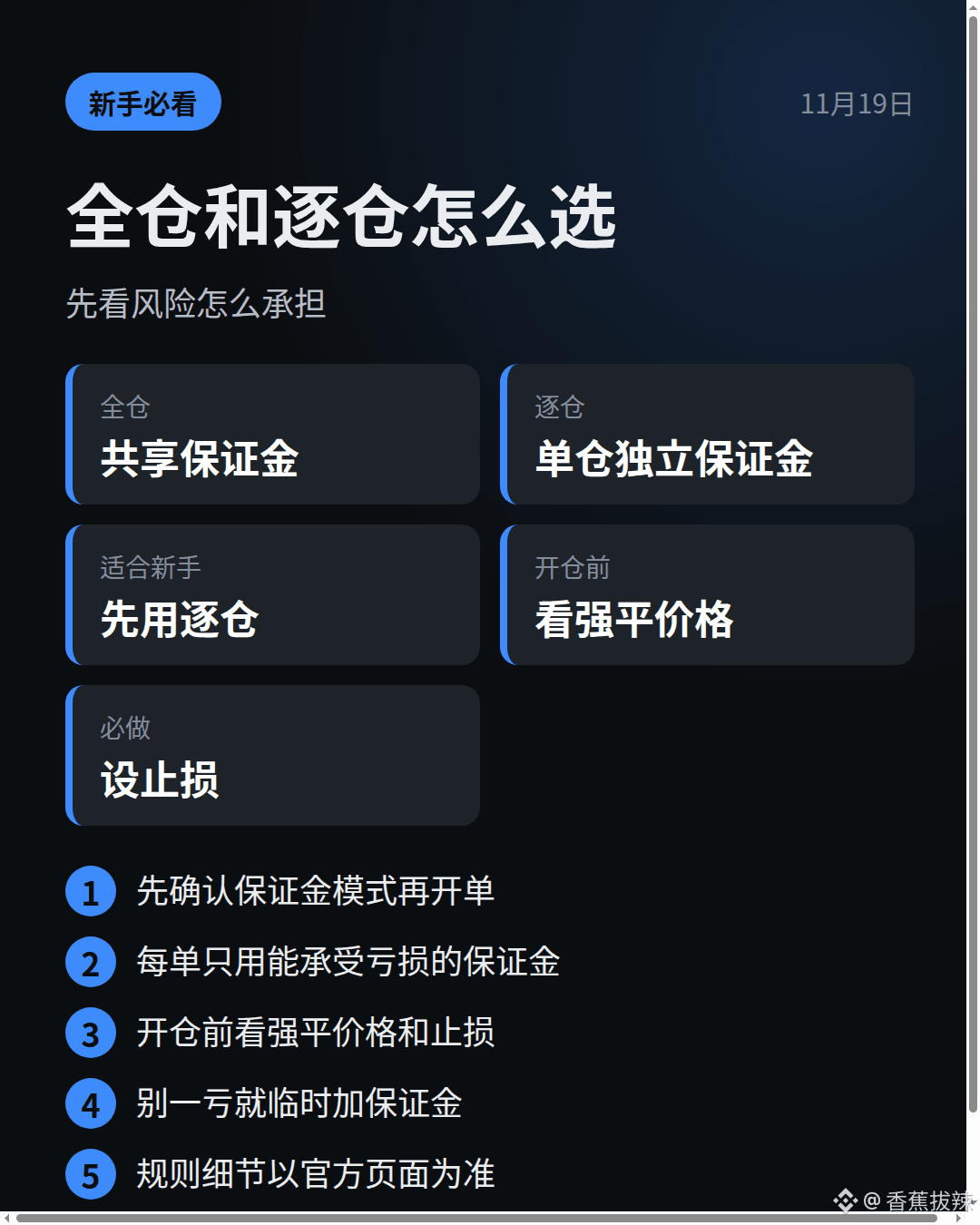
Cross margin or isolated margin—which one should you choose?
When you’re new to futures, you might see cross margin and isolated margin on the order screen and tap one at random to enter a trade. That’s where you’re most likely to get into trouble.
In simple terms, cross margin pools the available margin in your futures account to cover risk; isolated margin calculates margin separately for each position, so at worst, you lose the margin allocated to that position. Understand this first, then think about leverage and stop-losses.
1️⃣ Check your margin mode before placing an order: choosing the wrong mode changes how you calculate risk and monitor liquidation.
2️⃣ If you’re new, start with isolated margin: each trade’s risk is limited to the margin for that position, so a loss won’t drag down your other positions.
3️⃣ Check the liquidation price before opening a position: know at what price you’ll be liquidated, then decide on your position size and where to place your stop-loss.
4️⃣ Set a stop-loss on every trade: isolated margin can still be liquidated. A stop-loss lets you cut your losses proactively instead of waiting for liquidation to do it for you.
5️⃣ Don’t add margin as soon as you take a loss: with cross margin, it’s easy to keep adding more and digging yourself deeper; with isolated margin, recalculate your maximum loss before adding more.
For specific rules and button locations, refer to the official page. Don’t just copy someone else’s screenshot.
When you guys trade futures, do you check the liquidation price first or set a stop-loss first?