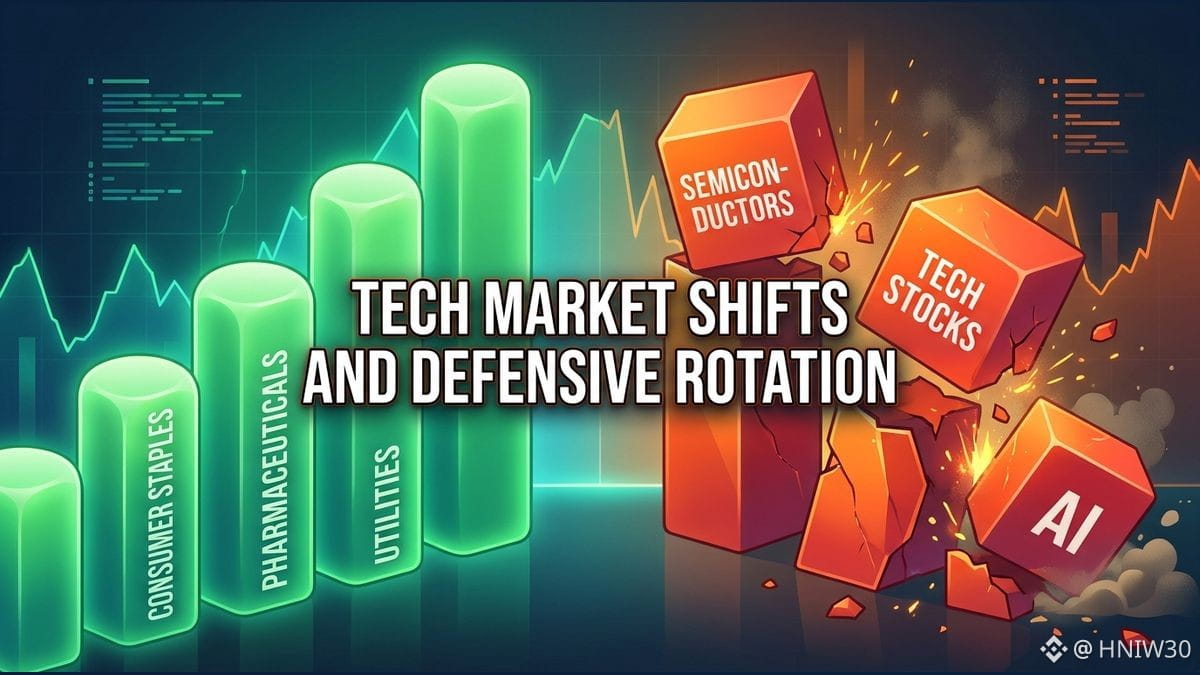
Defensive stocks have recently taken the lead from struggling semiconductor shares, but lower-growth sectors lack the market heft to carry a broader equity bull market. While capital has rotated away from high-momentum technology into defensive groups like consumer staples and pharmaceuticals, these segments lack the narrative appeal and earnings momentum required to sustain overall index gains.
The broader market dynamic displays several parallels to previous late-cycle technology episodes. Between 2023 and 2025, market leadership narrowed sharply, closely resembling the concentrated environment seen in 1998 and 1999 prior to the tech bubble peak. During that historical era, a very small percentage of companies outperformed the benchmark index.
Current macro conditions reflect similar late-cycle tensions. The Federal Reserve is working to prevent the corporate sector from overheating late in the cycle, mirroring monetary policy efforts in 1999. In addition, large technology firms face distinct headwinds, including alleged breaches of chip-export rules, while retail investors have engaged in aggressive dip-buying during recent share declines.
Market resilience now depends on whether large semiconductor and artificial intelligence firms can stabilize. A rotation into quality and low-volatility shares has helped cushion the drag of major market-cap losses across chipmakers. However, because defensive groups do not possess the earnings power or size to push major indexes higher on their own, the broader rally requires core technology stocks to avoid further substantial declines.
#SectorRotation #TechStocks
The broader market dynamic displays several parallels to previous late-cycle technology episodes. Between 2023 and 2025, market leadership narrowed sharply, closely resembling the concentrated environment seen in 1998 and 1999 prior to the tech bubble peak. During that historical era, a very small percentage of companies outperformed the benchmark index.
Current macro conditions reflect similar late-cycle tensions. The Federal Reserve is working to prevent the corporate sector from overheating late in the cycle, mirroring monetary policy efforts in 1999. In addition, large technology firms face distinct headwinds, including alleged breaches of chip-export rules, while retail investors have engaged in aggressive dip-buying during recent share declines.
Market resilience now depends on whether large semiconductor and artificial intelligence firms can stabilize. A rotation into quality and low-volatility shares has helped cushion the drag of major market-cap losses across chipmakers. However, because defensive groups do not possess the earnings power or size to push major indexes higher on their own, the broader rally requires core technology stocks to avoid further substantial declines.
#SectorRotation #TechStocks