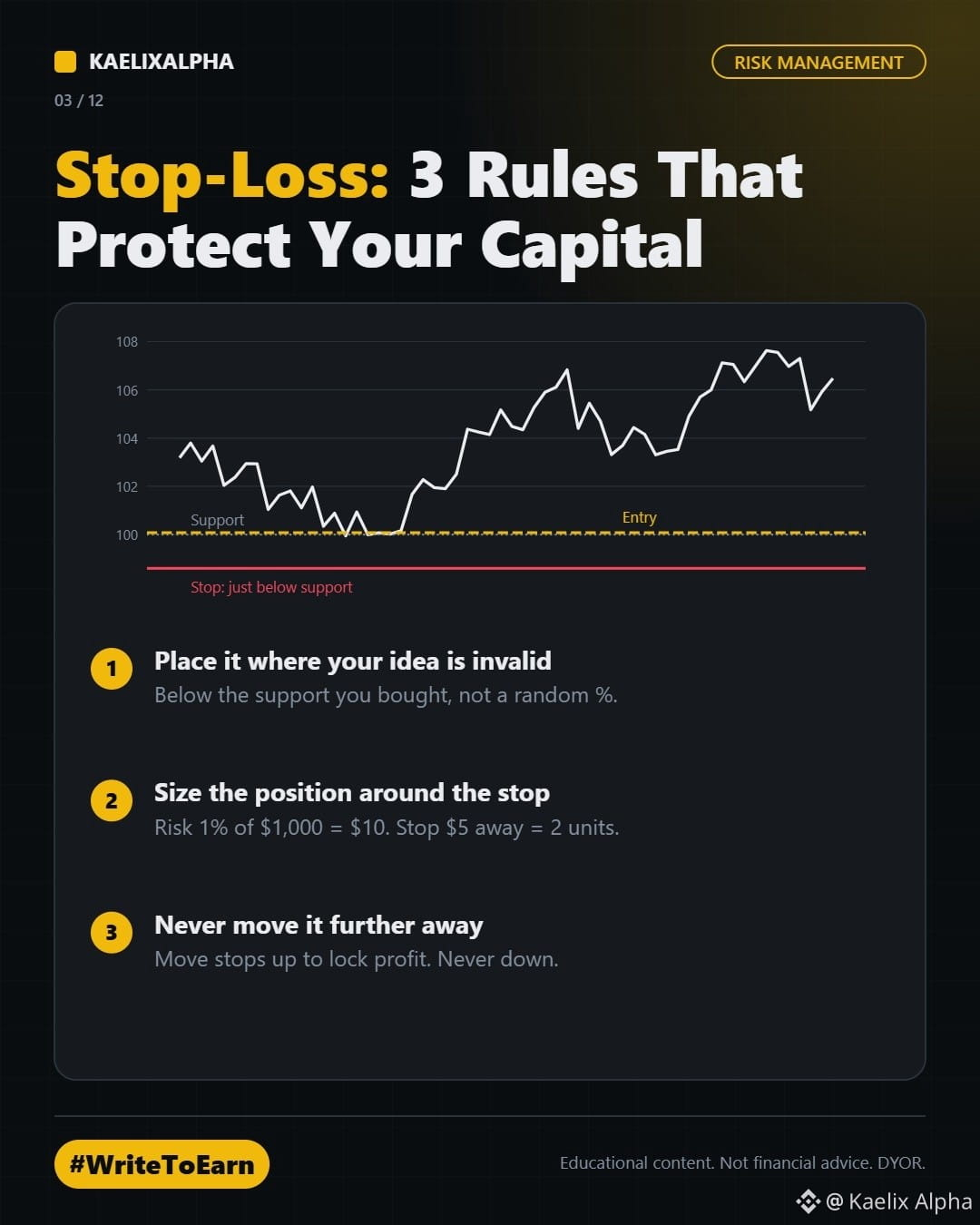

𝗦𝗧𝗢𝗣-𝗟𝗢𝗦𝗦: 𝟯 𝗥𝗨𝗟𝗘𝗦 𝗧𝗛𝗔𝗧 𝗣𝗥𝗢𝗧𝗘𝗖𝗧 𝗬𝗢𝗨𝗥 𝗖𝗔𝗣𝗜𝗧𝗔𝗟
Most traders lose money not because their analysis is wrong, but because they have no plan for when it is wrong. A stop-loss is that plan.
𝗥𝗨𝗟𝗘 𝟭 — 𝗣𝗟𝗔𝗖𝗘 𝗜𝗧 𝗪𝗛𝗘𝗥𝗘 𝗬𝗢𝗨𝗥 𝗜𝗗𝗘𝗔 𝗜𝗦 𝗜𝗡𝗩𝗔𝗟𝗜𝗗
Not at a random percentage. If you buy at support, your stop goes just below that support. If price breaks it, your reason for the trade is gone.
𝗥𝗨𝗟𝗘 𝟮 — 𝗦𝗜𝗭𝗘 𝗧𝗛𝗘 𝗣𝗢𝗦𝗜𝗧𝗜𝗢𝗡 𝗔𝗥𝗢𝗨𝗡𝗗 𝗧𝗛𝗘 𝗦𝗧𝗢𝗣
First decide how much you are willing to lose, for example 1% of your account. Then calculate position size from the distance to your stop. This is how professionals manage risk.
𝗥𝗨𝗟𝗘 𝟯 — 𝗡𝗘𝗩𝗘𝗥 𝗠𝗢𝗩𝗘 𝗜𝗧 𝗙𝗨𝗥𝗧𝗛𝗘𝗥 𝗔𝗪𝗔𝗬
Moving your stop lower "to give it room" turns a small, planned loss into a big, unplanned one. You can move a stop up to lock in profit. Never down.
𝗕𝗢𝗡𝗨𝗦: 𝗔𝗩𝗢𝗜𝗗 𝗢𝗕𝗩𝗜𝗢𝗨𝗦 𝗥𝗢𝗨𝗡𝗗 𝗡𝗨𝗠𝗕𝗘𝗥𝗦
Stops cluster at levels like round numbers and exact lows. Leaving a small buffer helps you avoid being taken out by a quick wick.
𝗤𝗨𝗜𝗖𝗞 𝗘𝗫𝗔𝗠𝗣𝗟𝗘
Account: $1,000. Risk per trade: 1% = $10.
Entry: $100. Stop: $95. Distance: $5.
Position size: $10 / $5 = 2 units ($200 position).
Do you trade with a stop-loss every time? Yes or no?
$BTC $ETH $BNB
#WriteToEarn #BinanceSquare #TradingTips #CryptoTrading