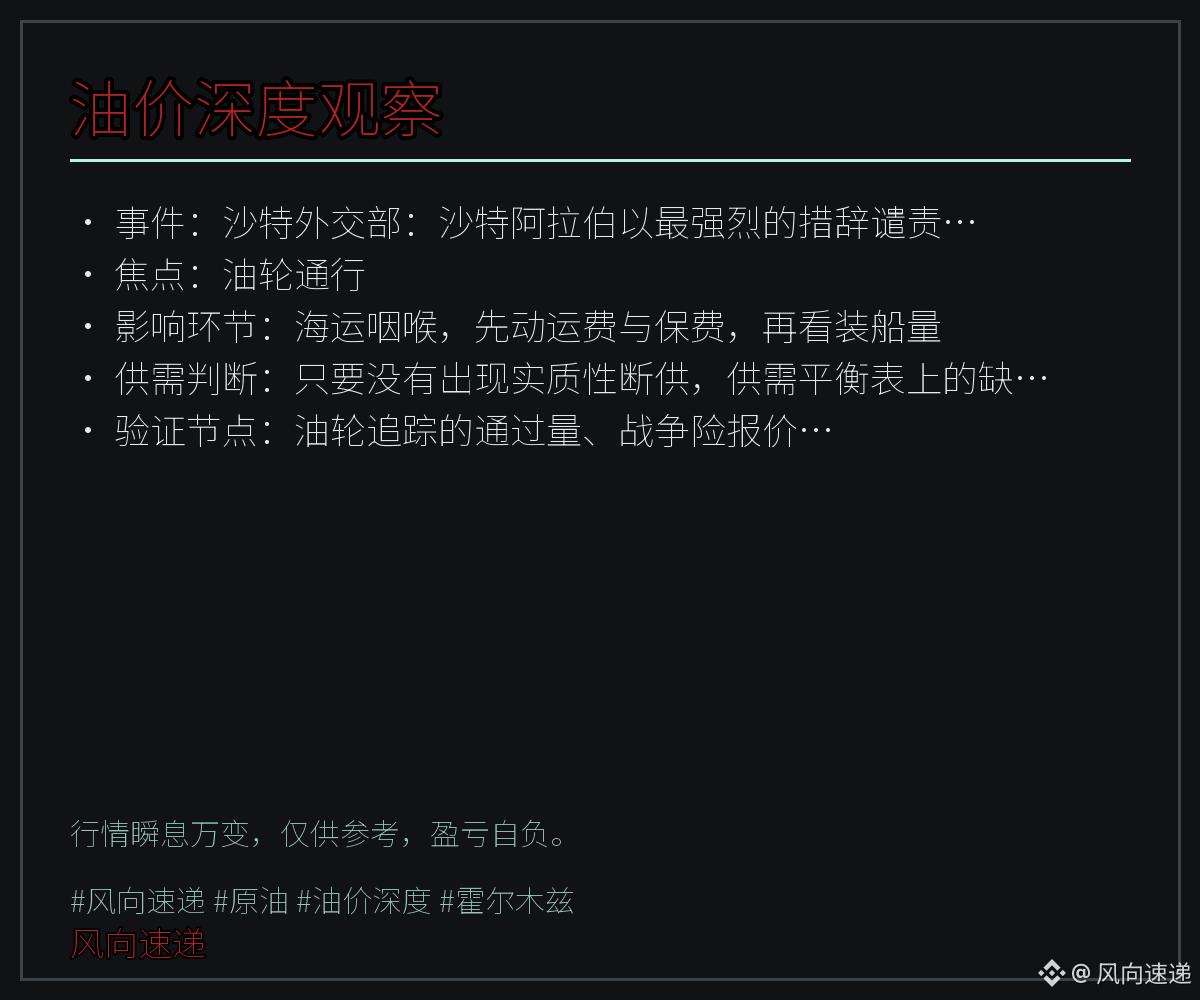
In-Depth Oil Price Watch
【Key Events】
Saudi Foreign Ministry: Saudi Arabia condemns in the strongest terms Iran’s attacks on Kuwait and Bahrain… (2 hours ago)
【What’s Affecting Oil Prices】
Iran has attacked energy infrastructure. The focus is on tanker traffic. The Strait of Hormuz handles about one-fifth of the world’s seaborne crude oil. If Red Sea and Suez Canal routes are diverted around the Cape of Good Hope, voyages from the Middle East to Europe take more than ten extra days.
【How the Impact Is Transmitted】
If tanker passage is restricted, shipowners reroute, voyages lengthen, and war-risk insurance premiums rise, pushing up landed costs.
When this feeds into crude pricing, the market typically prices in a risk premium first, then assesses whether actual loading and transit volumes have really declined.
【Supply, Demand, and Pricing】
As long as there is no actual disruption to supply, any shortfall in the supply-demand balance will be limited, and price reactions will be reflected more in the forward curve and regional price differentials.
WTI is currently trading near $83.86, with a 24-hour change of -2.75%. Volatility has increased, indicating that this type of risk is being priced in rapidly. Going forward, it will be especially important to see whether actual supply and demand data confirm the move. Risk premiums often rise quickly and are just as quick to unwind; their staying power depends on whether vessels are actually damaged or transit data continues to fall.
【What to Watch Next】
Track tanker transit volumes, war-risk insurance quotes, and changes in the price spread between Brent and Dubai crude.
【What Would Invalidate This View】
If transit quickly returns to normal and premiums fall, the previously priced-in risk premium will typically fade over time.
Markets can change in an instant. For reference only; you are responsible for your own gains and losses.
#风向速递 #原油 #油价深度 #Hormuz