Nvidia’s earnings are out—did the chief successfully lead retail investors in taking on Wall Street?!⁉️
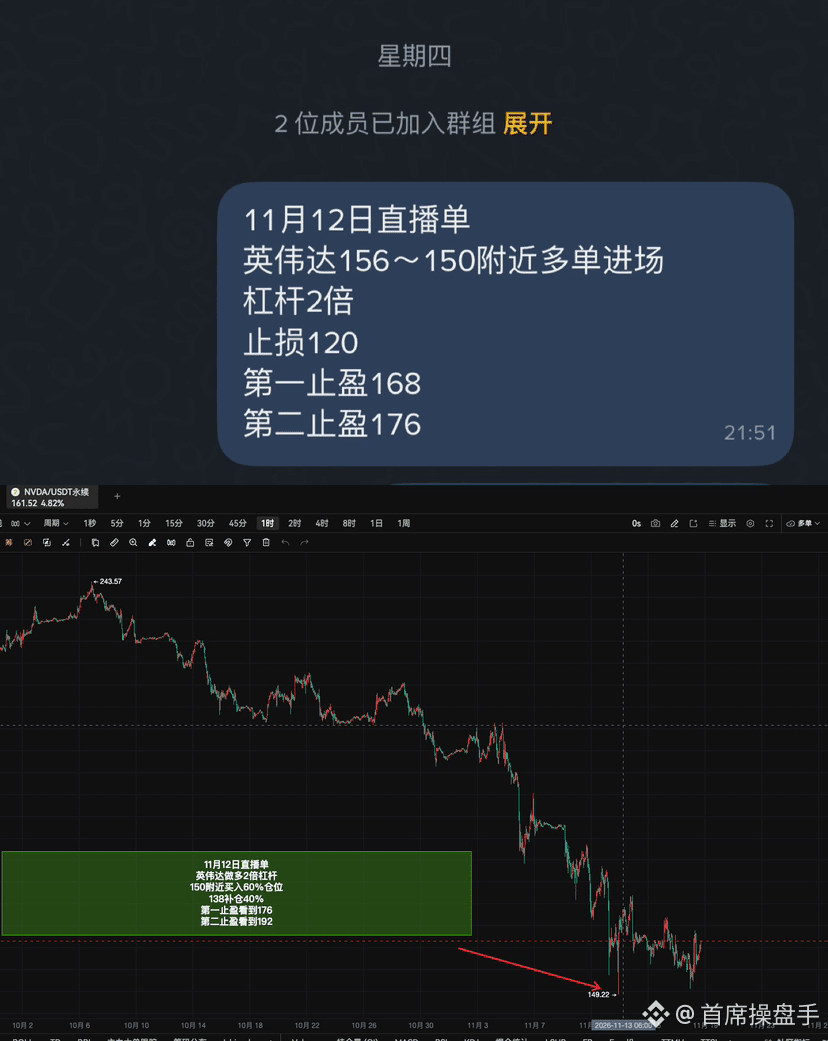
While the whole internet panicked and sold Nvidia, I publicly posted that I was buying the dip at $150!
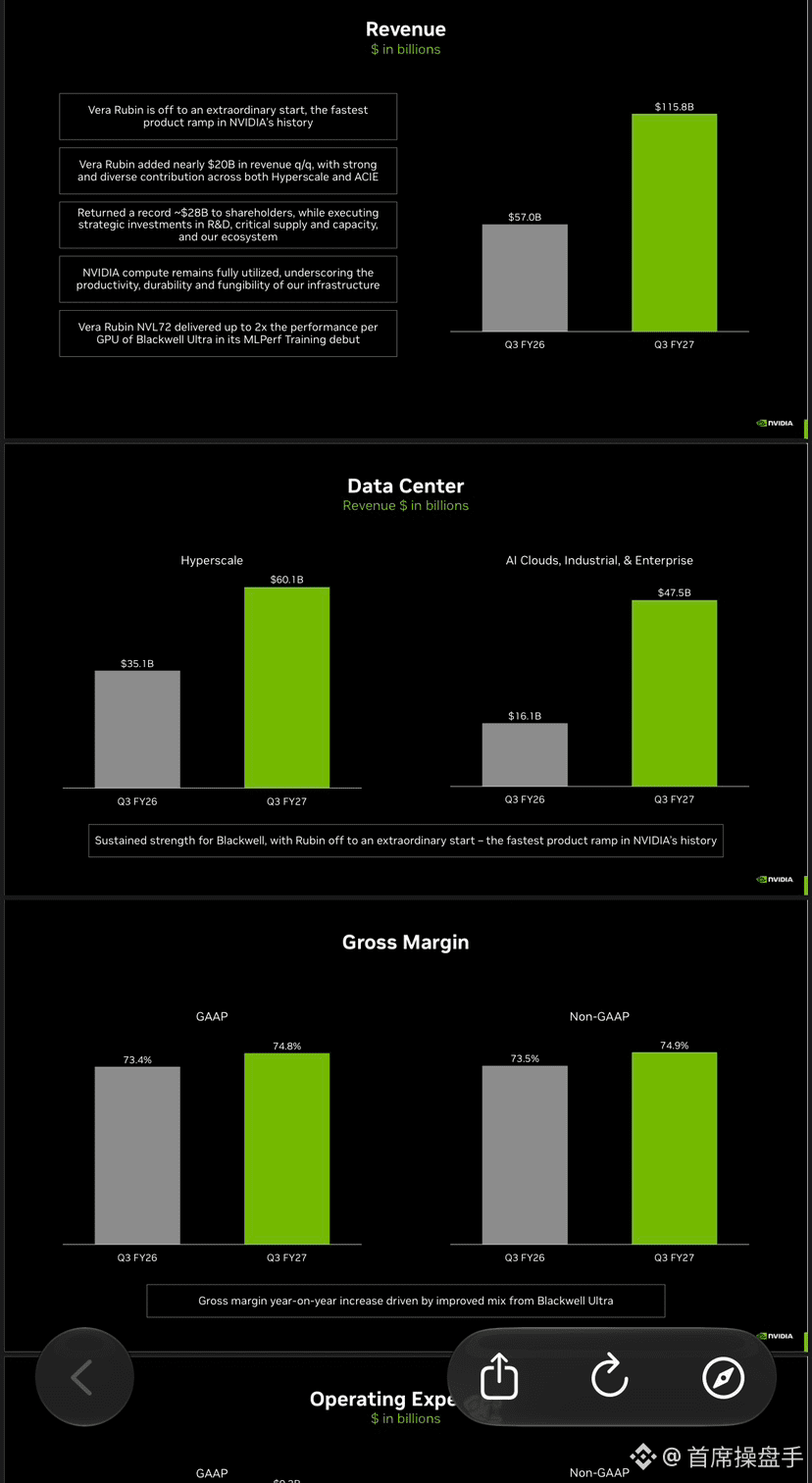
Third-quarter revenue hit $115.8 billion. Whether Jensen Huang stays or goes, nothing can stop Nvidia from making money at this pace 📈
I. Nvidia plunged nearly 40%—have its fundamentals really collapsed?
Quite the opposite!
On November 17, Nvidia released its latest quarterly earnings, and several key figures were astonishing:
Quarterly revenue of $115.8 billion, up 103% year over year!
Data center revenue of $107.6 billion, up 110% year over year!
Non-GAAP earnings per share of $2.68, beating Wall Street expectations!
Do you know what this means?
Nvidia’s stock has plunged nearly 40%, but the company’s core business is still growing rapidly!
The market is worried about an AI bubble, but the earnings report shows that demand for computing power remains very strong.
That’s why I believe Nvidia’s plunge is worth looking at as a chance to buy the dip.
II. Why am I willing to buy the dip near $150?
The logic is simple.
I’ve always stressed that the most important thing in trading isn’t chasing rallies or panicking and selling—it’s finding opportunities with a favorable risk-reward ratio.
Nvidia has fallen from $243 to $150, and the market has already priced in a considerable amount of risk.
At the same time, tech giants like Microsoft, Google, and Meta are continuing to invest in building AI infrastructure.
As long as the AI industry doesn’t undergo a fundamental reversal, Nvidia’s long-term growth prospects remain worth watching as a core company in the computing-power supply chain.
III. What’s next for Nvidia?
My trading plan is still to watch whether a short-term bottom forms near $150.
If it can gradually recover the $165–$170 range, the rebound structure could improve further.
I’ll continue watching $176 as the first target and $192 as the second.
A truly valuable trade isn’t one where someone tells you where to buy after the price has already gone up. It’s about publicly sharing your entry, position size, and profit-taking plan in advance when the market is gripped by fear!
On November 12 and 17, I publicly told everyone—twice, before the earnings release—to buy at $150, right at the low. Not only did we make money, we bought the exact bottom—spot on.