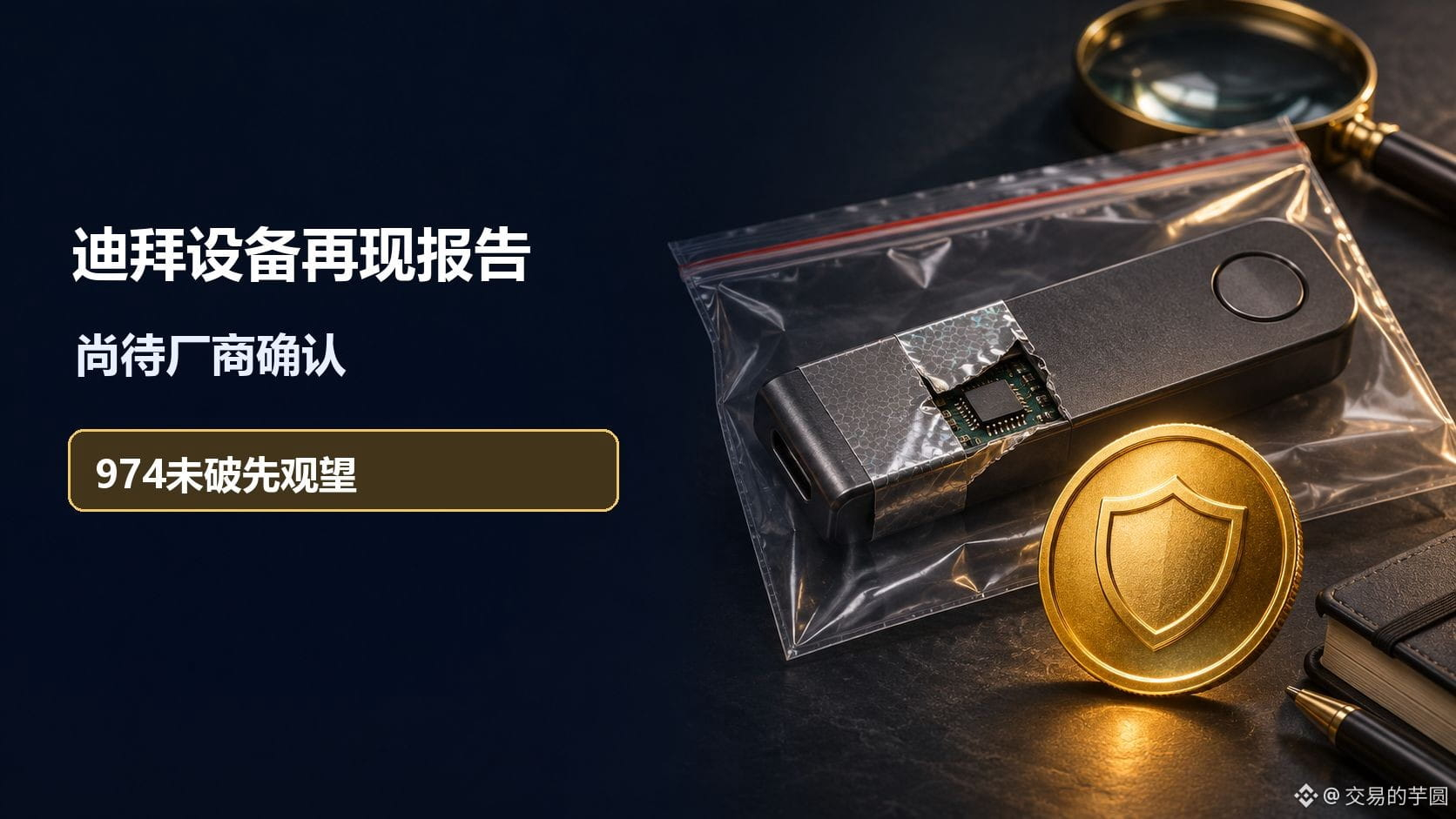
Hardware Wallet Implant Reports Resurface in Dubai | Verify ZEC Self-Custody | 974 Holds, So Wait and See
My stance is to verify first and act second. We shouldn't infer that something has gone wrong with the Zcash network just because a security topic is trending on Square. During this observation period, discussion of #LedgerHardwareImplantReportsExtendToDubai on Binance Square rose from 63 to 102. Cointelegraph reported today that two users said their assets were stolen after they bought Ledger devices at retail stores in Dubai; a photo of one Flex device was flagged on an independent OSINT registry page as showing a suspected implant. What we can confirm here is “user reports” and “researchers’ assessment of a photo.” We cannot state outright that Ledger has officially confirmed the two Dubai cases, identified the cause of all losses, or that the entire Dubai sales channel is compromised. The reported losses involved SOL and USDT; I have seen no evidence of ZEC being stolen.
The earlier Southeast Asian case is the one officially confirmed by the manufacturer. Ledger said that genuine devices passing through some local resale channels had been disassembled, fitted with hardware that captured recovery phrases, and then returned to the sales chain; its chips, operating system, and servers were not compromised as a result. Ledger’s security threat model also explicitly states that authenticity checks can verify the original secure chip, but cannot detect every additional physical implant when the chip remains unaltered. These two primary sources explain the risk mechanism, and show that “the device passes an authenticity check” is not the same conclusion as “the entire supply chain has remained untampered with.” The new Dubai reports still need further verification from the manufacturer, retailers, or law enforcement.
This matters in practical terms to ZEC holders because self-custody also depends on reliable devices and careful recovery phrase management; but this is not a Zcash consensus vulnerability. For devices already in use, I would keep purchase records and monitor manufacturer announcements. If the source seems suspicious or there are unusual transfers, stop using the original recovery phrase to manage funds, migrate to a new wallet through a trusted process, and retain the transaction hashes. Never enter a recovery phrase on a webpage or a so-called “security check” site, and don't claim that all hardware wallets are compromised based on unverified rumors.
The market does not show a separately identifiable ZEC move caused by this report. ZEC/USD recently traded at around $952.74 on Kraken, below the trading day's open of $967.74; the intraday range was about $944.04 to $969.18, with a 24-hour high of about $972.69. This pullback may also reflect broader market conditions and earlier fund and project news, so it cannot be directly attributed to the Dubai device report. I view 944 as short-term support and 970 to 974 as the range that needs to be reclaimed for renewed strength; if price stays below 944, my bullish view is invalidated. Only a move back above 974 followed by a successful retest of 969 would show that buyers are willing to take on risk amid the current information environment.
If I were trading this myself, I would sit out for now and wouldn't short just because of a security story. The only direction I would consider is a small spot long after confirmation: if the one-hour candle closes above $974 and a retest holds $969, I would enter with 2% of total capital. The first target is $1000; I would take half off there and watch $1015 with the rest. The initial stop would be below $960; if, after entry, two consecutive one-hour candles close back below $969, I would exit the entire position even if the hard stop hasn't been hit. If price breaks below 944 first, I would cancel the long setup and wait for new information and a new structure. If the setup doesn't trigger, I stay out—this plan is not a trade until executed.
#LedgerHardwareImplantReportsExtendToDubai #ZEC
The above is solely my personal market observation and does not constitute investment advice.
My stance is to verify first and act second. We shouldn't infer that something has gone wrong with the Zcash network just because a security topic is trending on Square. During this observation period, discussion of #LedgerHardwareImplantReportsExtendToDubai on Binance Square rose from 63 to 102. Cointelegraph reported today that two users said their assets were stolen after they bought Ledger devices at retail stores in Dubai; a photo of one Flex device was flagged on an independent OSINT registry page as showing a suspected implant. What we can confirm here is “user reports” and “researchers’ assessment of a photo.” We cannot state outright that Ledger has officially confirmed the two Dubai cases, identified the cause of all losses, or that the entire Dubai sales channel is compromised. The reported losses involved SOL and USDT; I have seen no evidence of ZEC being stolen.
The earlier Southeast Asian case is the one officially confirmed by the manufacturer. Ledger said that genuine devices passing through some local resale channels had been disassembled, fitted with hardware that captured recovery phrases, and then returned to the sales chain; its chips, operating system, and servers were not compromised as a result. Ledger’s security threat model also explicitly states that authenticity checks can verify the original secure chip, but cannot detect every additional physical implant when the chip remains unaltered. These two primary sources explain the risk mechanism, and show that “the device passes an authenticity check” is not the same conclusion as “the entire supply chain has remained untampered with.” The new Dubai reports still need further verification from the manufacturer, retailers, or law enforcement.
This matters in practical terms to ZEC holders because self-custody also depends on reliable devices and careful recovery phrase management; but this is not a Zcash consensus vulnerability. For devices already in use, I would keep purchase records and monitor manufacturer announcements. If the source seems suspicious or there are unusual transfers, stop using the original recovery phrase to manage funds, migrate to a new wallet through a trusted process, and retain the transaction hashes. Never enter a recovery phrase on a webpage or a so-called “security check” site, and don't claim that all hardware wallets are compromised based on unverified rumors.
The market does not show a separately identifiable ZEC move caused by this report. ZEC/USD recently traded at around $952.74 on Kraken, below the trading day's open of $967.74; the intraday range was about $944.04 to $969.18, with a 24-hour high of about $972.69. This pullback may also reflect broader market conditions and earlier fund and project news, so it cannot be directly attributed to the Dubai device report. I view 944 as short-term support and 970 to 974 as the range that needs to be reclaimed for renewed strength; if price stays below 944, my bullish view is invalidated. Only a move back above 974 followed by a successful retest of 969 would show that buyers are willing to take on risk amid the current information environment.
If I were trading this myself, I would sit out for now and wouldn't short just because of a security story. The only direction I would consider is a small spot long after confirmation: if the one-hour candle closes above $974 and a retest holds $969, I would enter with 2% of total capital. The first target is $1000; I would take half off there and watch $1015 with the rest. The initial stop would be below $960; if, after entry, two consecutive one-hour candles close back below $969, I would exit the entire position even if the hard stop hasn't been hit. If price breaks below 944 first, I would cancel the long setup and wait for new information and a new structure. If the setup doesn't trigger, I stay out—this plan is not a trade until executed.
#LedgerHardwareImplantReportsExtendToDubai #ZEC
The above is solely my personal market observation and does not constitute investment advice.