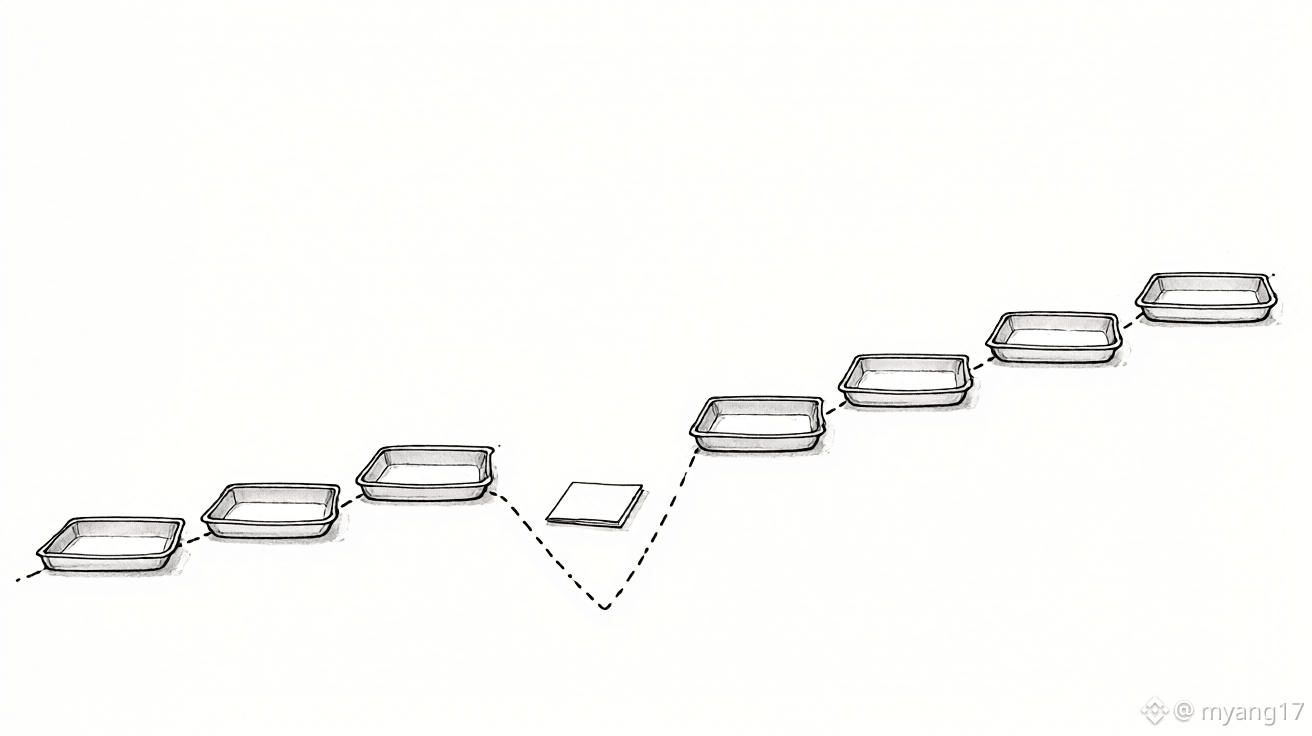
Net profit growth turned positive at 9% year over year this quarter, after falling 32% and 10% in the previous two quarters. The three figures form a V-shaped line that looks like a turning point. But the force behind that turnaround wasn’t demand: the food-delivery cash-burning war has called a truce, the bills have stopped piling up, and profits have bounced back on their own. $ETH
Cutting losses is the easiest story to quantify. One forecast puts Alibaba’s third-quarter net profit growth at 165%, with quarterly losses in instant retail narrowing from 35 billion last year to 9.2 billion. Meituan’s operating profit per food-delivery order went from negative 0.09 yuan to positive 0.10 yuan. JD.com’s losses from food delivery and Jingxi were cut by more than half year over year. All three are rising for exactly the same reason: they’ve pulled back from the front lines. $SOL
Meanwhile, others are taking a beating. Tencent’s adjusted net profit is expected to fall 3%, Baidu’s 39%, Kuaishou’s 86%, and Pinduoduo’s 21%. AI spending is weighing on profits: Tencent’s capital expenditure for the quarter came to 66 billion, a record high, while its operating margin narrowed from 36.6% to 32.4%. Spending now for the future makes the books look worse first. $CL
The real point of divergence is cash flow. One analysis compares Tencent and Alibaba side by side: Tencent’s operating cash flow from gaming and social media leaves it with a surplus every year from 2026 to 2028; Alibaba, still burning cash on instant retail and its AI labs, won’t reach breakeven until fiscal 2029. One has three years of surplus, the other three years of shortfall, and their valuations won’t be the same. Their accounting bases also don’t align: one uses non-IFRS standards, the other US GAAP, and their fiscal quarters don’t line up with calendar quarters either. They need to be normalized before making a direct comparison.
The calendar is packed. Baidu reports on the 16th, JD.com on the 17th, Tencent on the 18th, Alibaba, Kuaishou, and NetEase on the 19th, and Xiaomi on the 24th—all reporting within a week. The Hang Seng Tech Index trades at 17.6 times earnings, cheaper than it has been 80% of the time over the past five years. Tencent is at around 14 times, near its lowest level in a decade. Foreign investors made net inflows of HK$18.4 billion into Hong Kong stocks in October alone, more than the HK$13.4 billion combined over the first three quarters.
We’ll have to wait for these five sets of results to see how strong the right side of the V really is. Profits are back; demand isn’t.
These are my personal views and do not constitute investment advice. You are responsible for any gains or losses.
#This week is packed with earnings reports and macro events, putting the market to another test of volatility