
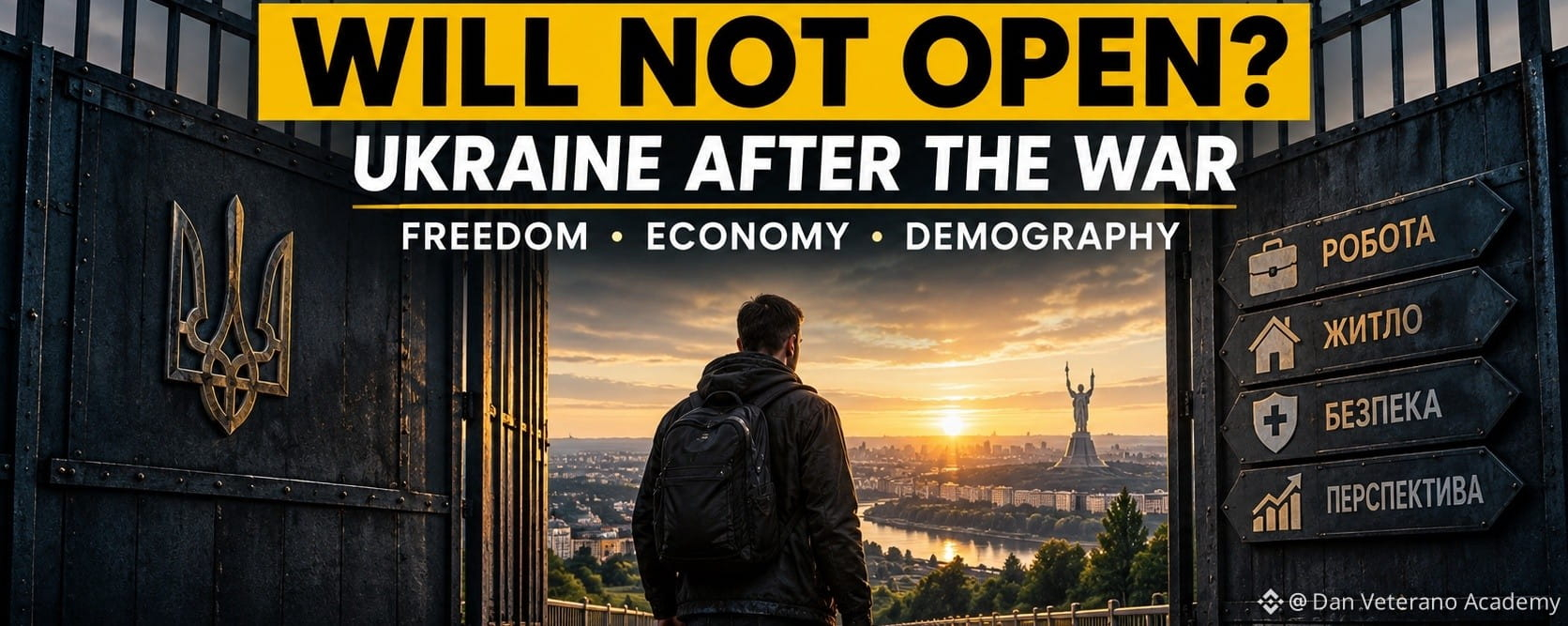
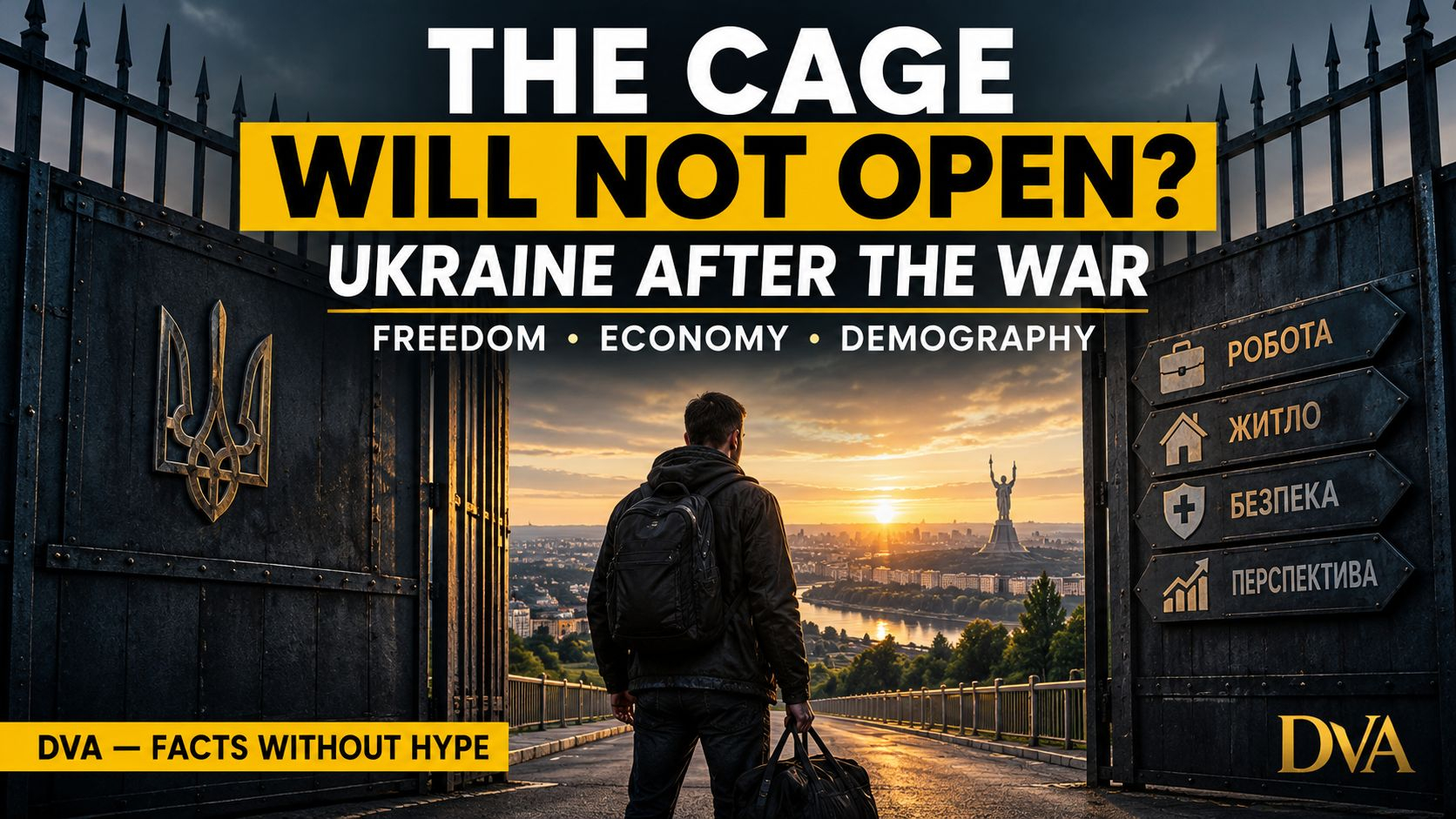
Will the cage stay shut? What Minister Kim’s statement really means
Veterans Affairs Minister Vitaliy Kim suggested that after the war, the borders might not immediately open for men. The reason is concern about a mass exodus if the country cannot provide jobs, housing, and prospects.
This is not a law or a government decision. But it is a signal.
Three things worth distinguishing:
🔹 the end of hostilities
🔹 the lifting of martial law
🔹 the restoration of freedom of movement
They won't necessarily happen at the same time.
Numbers worth knowing:
• ~940,000 military personnel could be demobilized over 3 years
• 2 million veterans already have this status (5–6 million including their families)
• 6.5 million Ukrainians abroad
• up to 600,000 could leave in 2028 under a moderate scenario (KSE Institute)
• temporary protection in the EU is in effect until 04.03.2027
Legally:
Article 33 of the Constitution guarantees the right to freely leave Ukraine. Article 64 allows restrictions only under martial law or a state of emergency. Once these are lifted, a separate law with justification is required. The economic need to retain workers is not automatic grounds for a restriction.
A problem few people talk about:
Restrictions are already fueling the black market. Ombudsman Lubinets has spoken about “turnkey” schemes costing $50,000–$70,000. The Security Service of Ukraine uncovered 9 schemes to evade mobilization. Closed borders don't disappear—they become more expensive to bypass.
Three scenarios:
1️⃣ Gradual reopening + support programs — a constructive approach
2️⃣ Prolonged administrative controls — legal conflicts and a shadow market
3️⃣ Open borders without economic growth — a new wave of emigration
The main point:
The question isn't when the borders will open. The question is why Ukrainians should want to stay.
A country people don't want to leave is stronger than a country they cannot leave.
DVA — facts without hype.
Preserving values and time.
Not financial advice.