
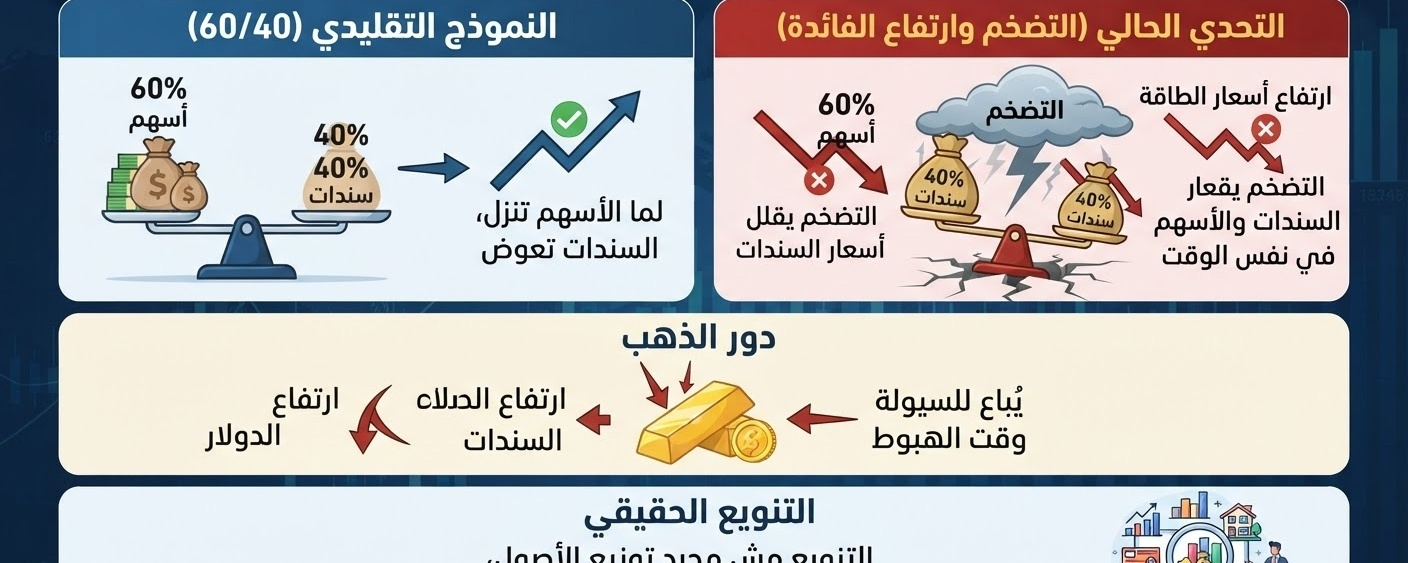

For many years, there was a popular investment portfolio model based on allocating 60% of funds to stocks and 40% to bonds.
The idea was simple: when stocks fell, bonds might rise or at least reduce portfolio losses, so investors wouldn’t depend on just one market.
But the problem is that this relationship isn’t guaranteed under all conditions 🙅
When a crisis is driven by recession fears and a slowing economy, investors often flee stocks and turn to bonds, which helps offset some of the losses.
But if the crisis is caused by inflation and rising energy prices, the picture is different.
Inflation can lead central banks to tighten monetary policy and raise interest rate expectations, which can push down bond and stock prices at the same time 📊
Gold isn’t immune to this scenario either; it can come under pressure from rising bond yields and a stronger dollar, or even be sold to raise cash during a sharp downturn—especially if investors need to cover losses or meet additional margin calls.
This means that owning different types of assets doesn’t necessarily guarantee you won’t lose money, because the assets you buy may be affected by the same underlying cause, even if they’re different in nature and tend to move in opposite directions.
This doesn’t make gold or bonds any less important in investing, but it does change how we think about them.
True diversification isn’t just spreading your money across several assets. It’s about understanding the risks that drive each asset, and whether they could all come under pressure at the same time 👌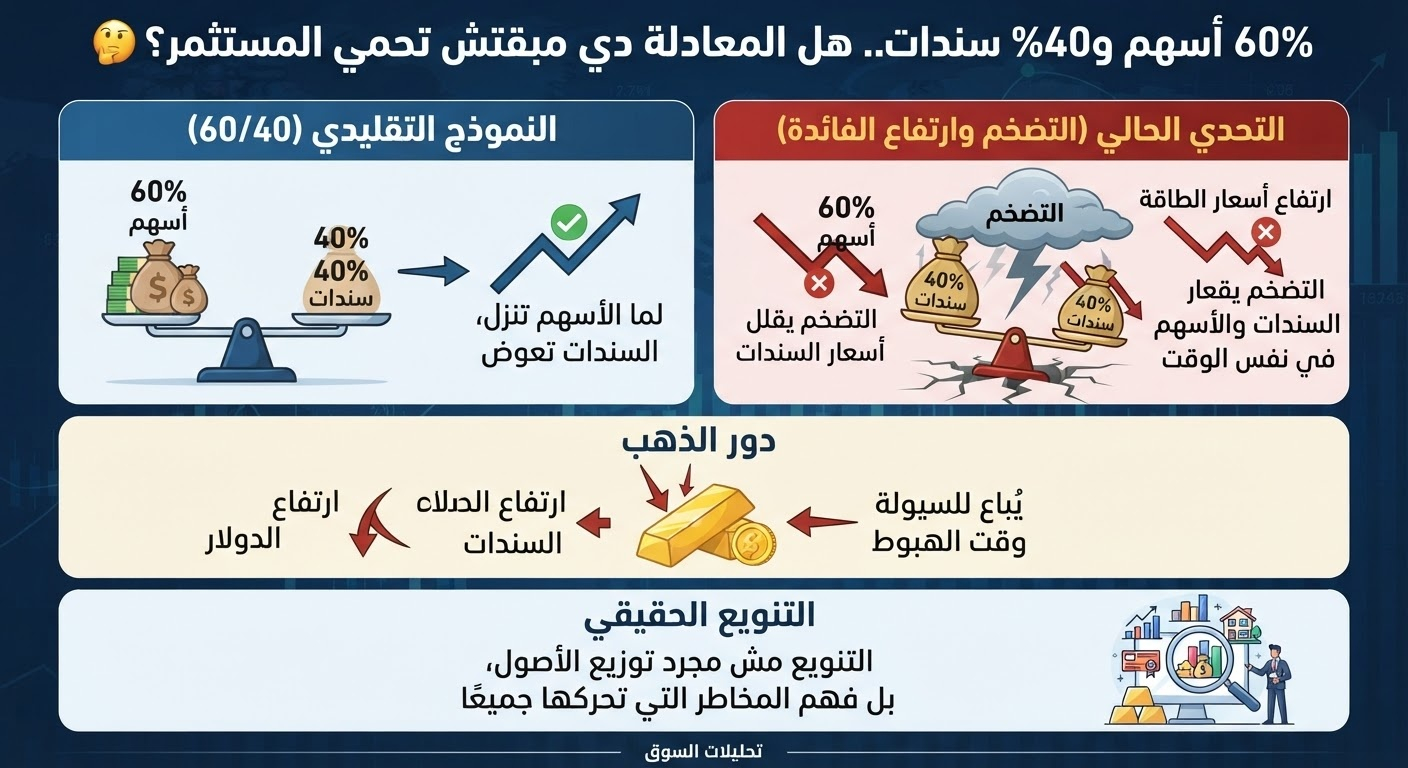
🌑 $HMSTR
✅@mshabaka $BNB


#WhatInvestmentSignalsDo13FFilingsReveal? #NvidiaEarningsTonight:AIStocks’NextMove? #AnthropicIPOTestsInvestorAppetiteForAI