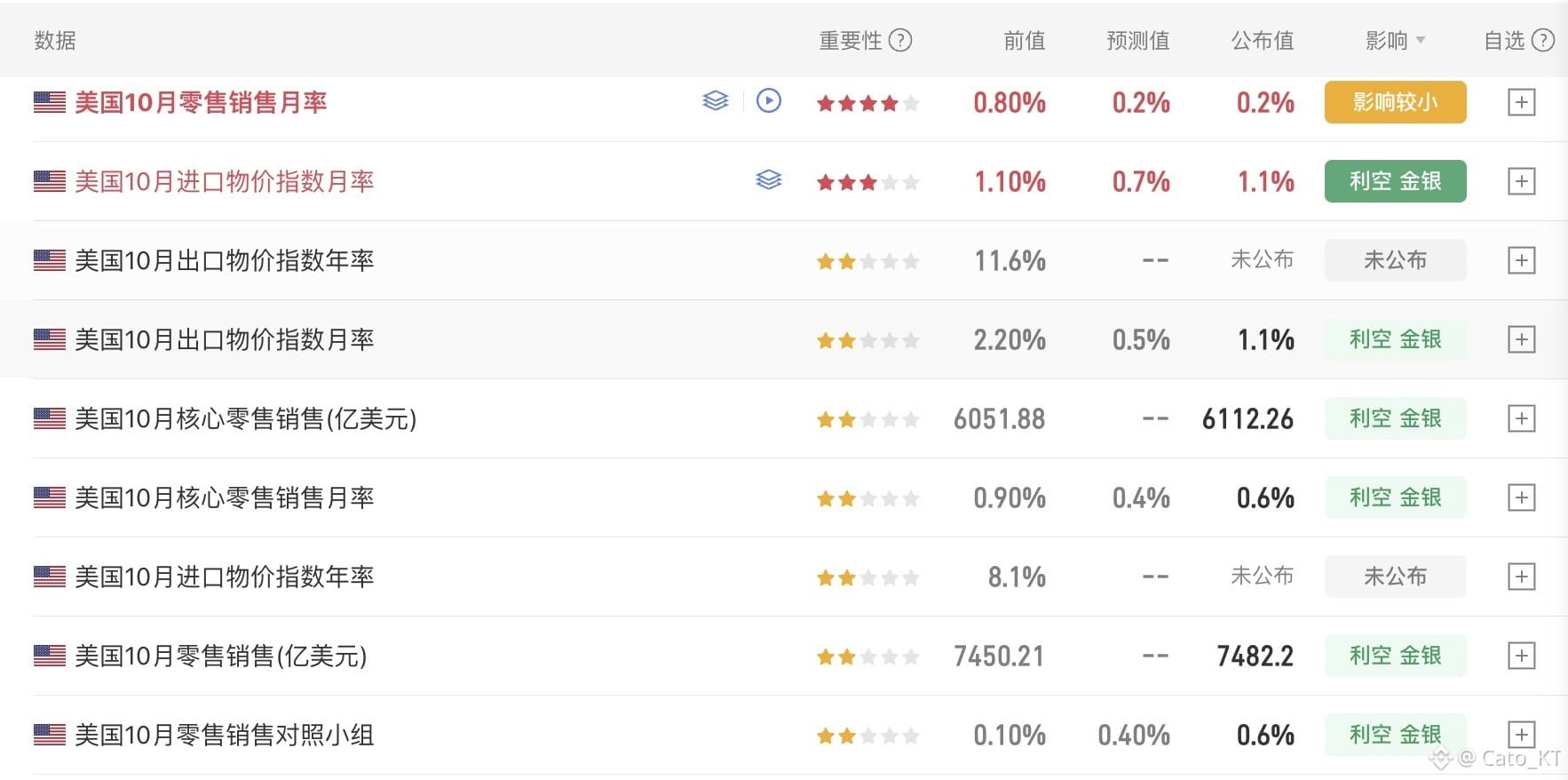
Fed governors continue to sound hawkish. October retail sales slowed, and the probability of a 50 bp rate hike in December has fallen, but the risk of consecutive rate hikes has not gone away!
Yesterday, Waller said little about interest rates or the economy, focusing instead on AI. His comments on AI risks are worth paying attention to.
Waller said that if returns on large-scale AI infrastructure investments fall short of expectations, that could trigger a stock market valuation correction and weigh on employment and the economy. He was talking about U.S. stocks, but the underlying message points to the unusual “reflexivity” of Fed policy in the current period.
As I’ve been saying for the past two weeks, reflexivity means that if the market expects the Fed to tighten policy—and prices in more tightening than expected—financial liquidity tightens, which in turn reduces the Fed’s need to continue raising rates.
The second half of Waller’s remarks was about how a stock market valuation correction could affect the economy and employment. If, at the December policy meeting, Waller says financial conditions are sufficiently tight and a correction in U.S. stocks is weighing on the economy, the need for further rate hikes would diminish. That is the logic behind the unusual reflexivity of Fed policy during this period.
As for tonight’s October retail sales data, although the headline figures weakened, consumer spending excluding autos remained strong. The data show that inflation is gradually eroding purchasing power, but we are still a long way from inflation curbing consumer spending as expected.
According to CME probabilities, the chance of a 50 bp rate hike in December has fallen to 4.6%, while the probability of a 25 bp hike has returned to 96%. The probability of another hike in January remains above 60%. This means the market still expects at least two rate hikes by March 2027, and possibly as many as three in a row.
In terms of policy expectations, I think interest rate markets will remain under relatively high pressure through December 9, particularly with the release of the October policy meeting minutes this week and several Fed officials recently voicing hawkish views. This will undoubtedly keep markets under sustained pressure from expectations of tighter monetary policy ahead.
Of course, if the market has already done the Fed’s work by tightening financial liquidity, the likelihood of further rate hikes after December will diminish. But policy reflexivity does not take hold that quickly, so over the next 20 days, everyone, be prepared to withstand the macro pressure!#本周财报与宏观事件密集,市场再迎波动考验
Yesterday, Waller said little about interest rates or the economy, focusing instead on AI. His comments on AI risks are worth paying attention to.
Waller said that if returns on large-scale AI infrastructure investments fall short of expectations, that could trigger a stock market valuation correction and weigh on employment and the economy. He was talking about U.S. stocks, but the underlying message points to the unusual “reflexivity” of Fed policy in the current period.
As I’ve been saying for the past two weeks, reflexivity means that if the market expects the Fed to tighten policy—and prices in more tightening than expected—financial liquidity tightens, which in turn reduces the Fed’s need to continue raising rates.
The second half of Waller’s remarks was about how a stock market valuation correction could affect the economy and employment. If, at the December policy meeting, Waller says financial conditions are sufficiently tight and a correction in U.S. stocks is weighing on the economy, the need for further rate hikes would diminish. That is the logic behind the unusual reflexivity of Fed policy during this period.
As for tonight’s October retail sales data, although the headline figures weakened, consumer spending excluding autos remained strong. The data show that inflation is gradually eroding purchasing power, but we are still a long way from inflation curbing consumer spending as expected.
According to CME probabilities, the chance of a 50 bp rate hike in December has fallen to 4.6%, while the probability of a 25 bp hike has returned to 96%. The probability of another hike in January remains above 60%. This means the market still expects at least two rate hikes by March 2027, and possibly as many as three in a row.
In terms of policy expectations, I think interest rate markets will remain under relatively high pressure through December 9, particularly with the release of the October policy meeting minutes this week and several Fed officials recently voicing hawkish views. This will undoubtedly keep markets under sustained pressure from expectations of tighter monetary policy ahead.
Of course, if the market has already done the Fed’s work by tightening financial liquidity, the likelihood of further rate hikes after December will diminish. But policy reflexivity does not take hold that quickly, so over the next 20 days, everyone, be prepared to withstand the macro pressure!#本周财报与宏观事件密集,市场再迎波动考验