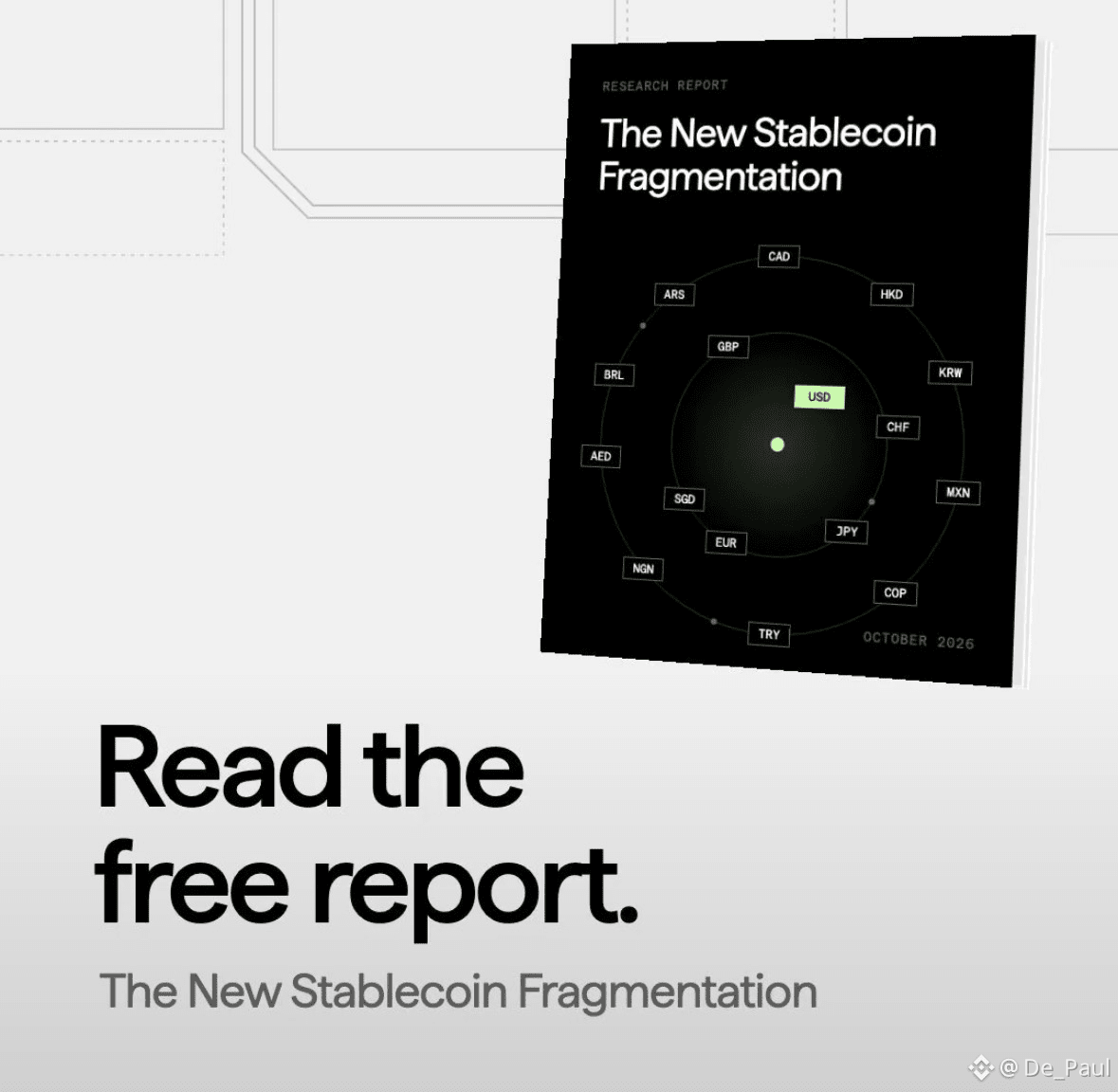
Two years ago, "stablecoin" meant two tickers: $USDT or $USDC
Today, if you’re building a cross-border payment app or a DeFi protocol, you have to navigate 147 different stablecoins across 72 #blockchains and 25 fiat currencies.
The stablecoin market isn't consolidating. It’s fragmenting—fast.
I just went through DIA Data’s new research report, The New Stablecoin Fragmentation, and three numbers stood out:
→ $3.9 Billion: How much #usd stablecoin supply recently contracted, driven largely by synthetic dollars pulling back while fiat-backed tokens held steady.
→ +54%: The growth rate of Euro-pegged stablecoins over the past 12 months as European licensing frameworks took hold.
→ 24 Non-USD Currencies: From the Nigerian Naira (NGN) and Brazilian Real (BRL) to the Japanese Yen (JPY), local currencies now account for $1.7B in on-chain supply.
Why this matters:
We are moving away from a single "internet dollar" toward localized, regulated digital cash. That’s great for real-world adoption, especially in emerging markets, but it creates a massive headache for liquidity, interoperability, and accurate on-chain pricing.
If you want to see how the map is being redrawn in real time, $DIA made the full report and their live Global Stablecoin Map completely free.