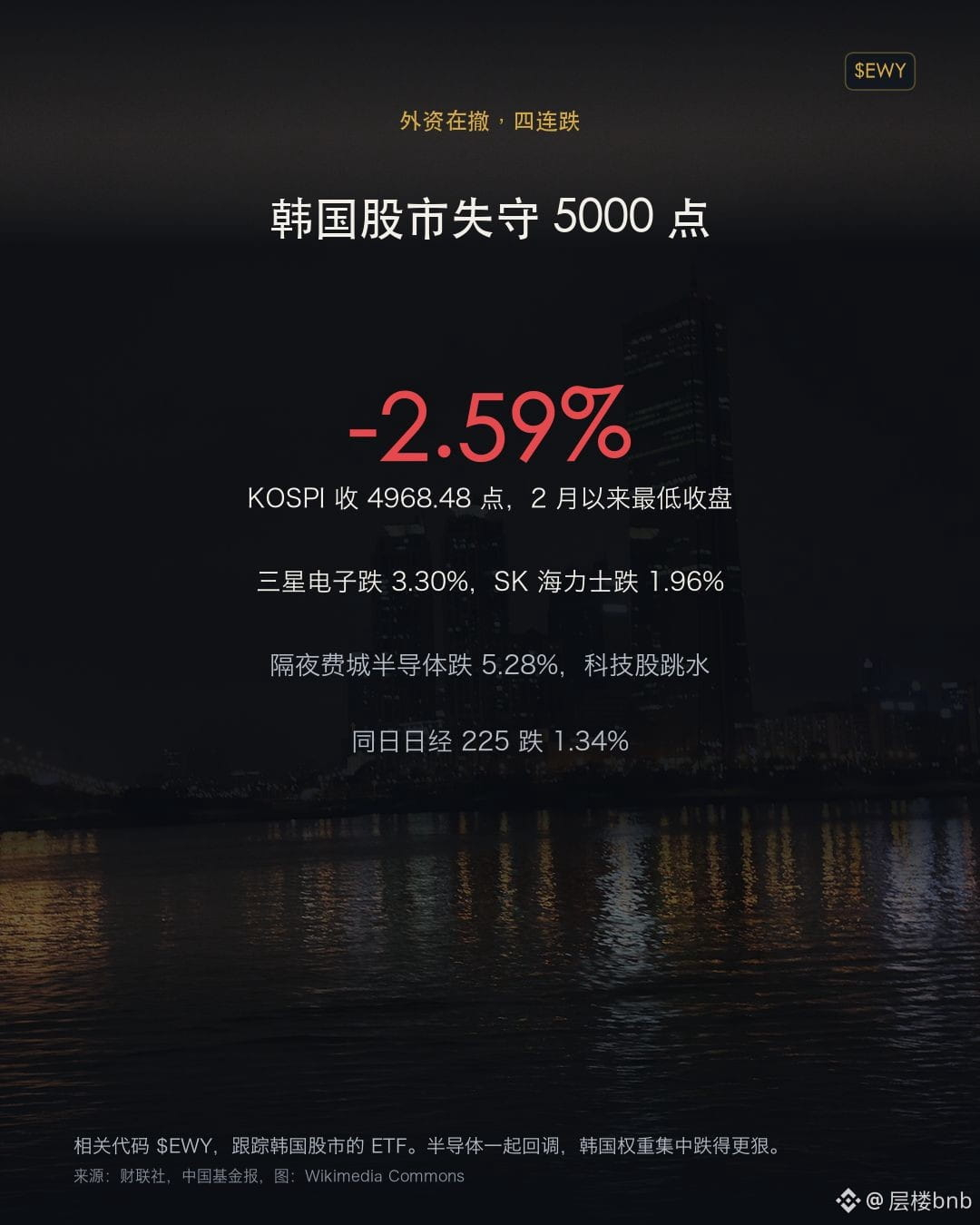
KOSPI plunges
On November 17, South Korea’s KOSPI index closed down 2.59% at 4,968.48 points, falling for a fourth straight session and dropping below 5,000 for the first time since February. Samsung Electronics fell 3.30%, while SK Hynix dropped 1.96%; the two heavyweight stocks were the main drags. The sell-off was triggered by overseas markets: U.S. tech stocks tumbled across the board overnight, with the Philadelphia Semiconductor Index down 5.28%. Nvidia fell more than 4%, TSMC more than 6%, and Micron and Intel each more than 7%, as foreign investors continued selling. With semiconductors accounting for a large share of South Korea’s market, the global pullback hit it harder. Japan’s Nikkei 225 also fell 1.34% that day. The index itself has no trading code, so use ETFs tracking the South Korean stock market to follow this downturn.
Related codes: $EWY
#kospi跌2.59%创2月以来最低收盘