
Logistics provider breached, order data from 27,000 orders exported
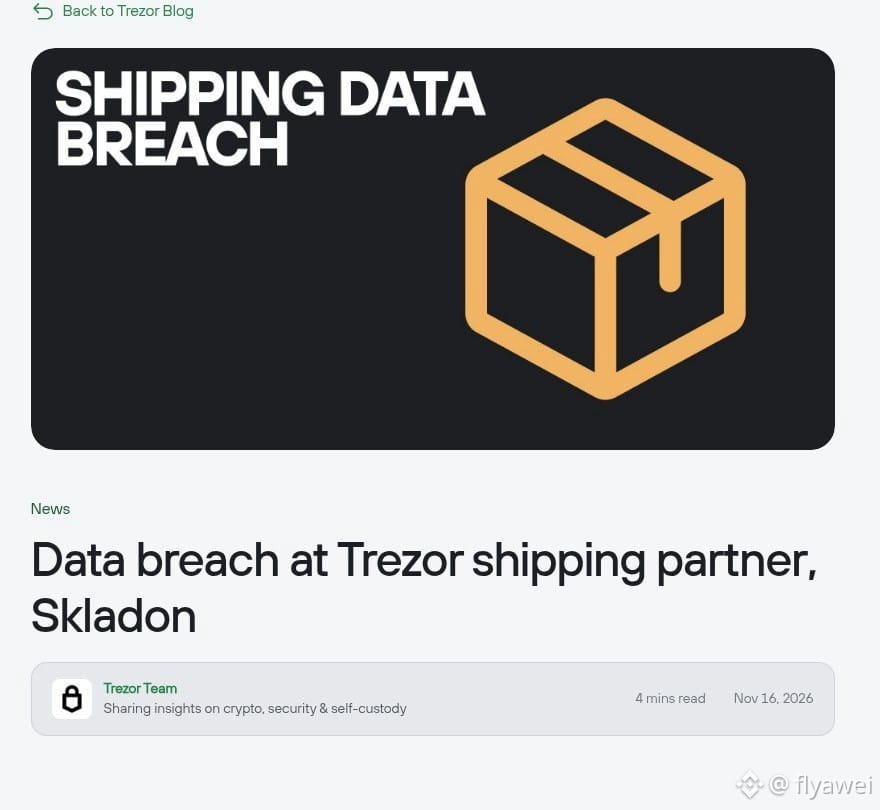
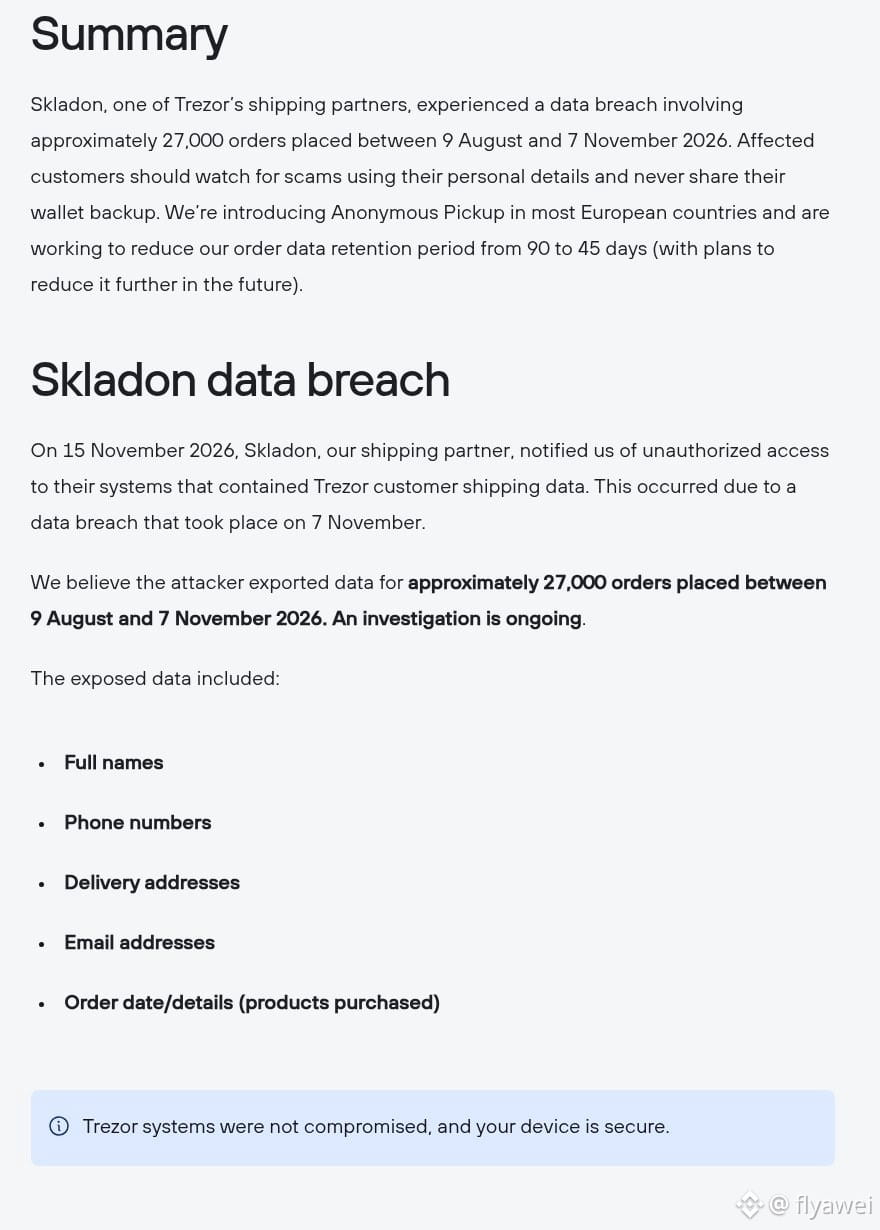
At 12:18 a.m. Beijing time on November 17, Trezor said its logistics partner Skladon had notified them on November 15 that someone had gained unauthorized access on November 7 to a system storing order data. The company believes data from about 27,000 orders was exported.
The orders were placed between August 9 and November 7. The stolen data included names, phone numbers, shipping addresses, email addresses, and what customers bought and how much they spent. Trezor said its own systems and devices were not breached, and that recovery phrases, PINs, and passphrases were not held by Trezor or its logistics provider. Skladon does not ship to the United States, so U.S. customers are not affected this time.
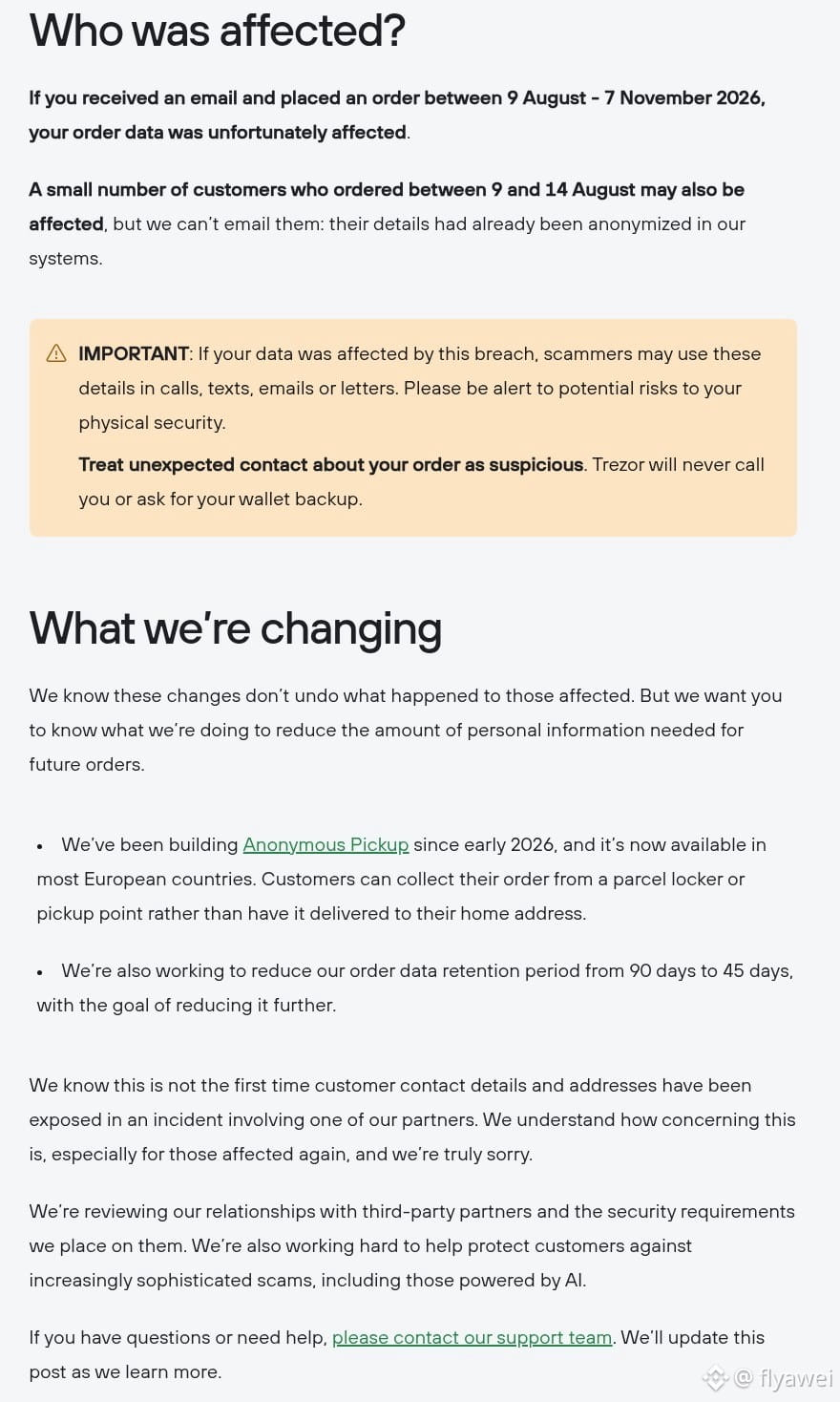
Anyone who placed an order between August 9 and November 7 and received an explanatory email has data included in the exported information.
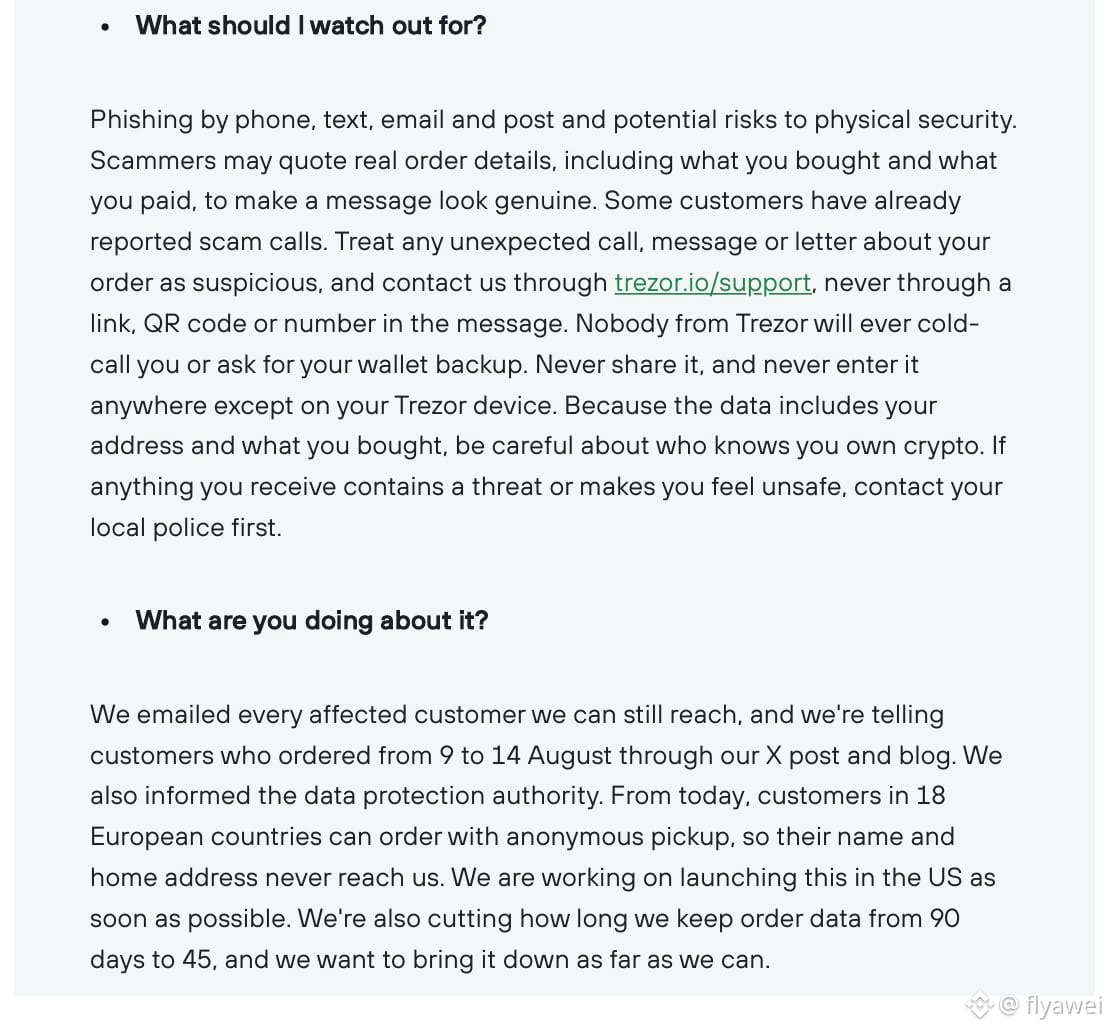
Some customers have already received scam calls. The callers may have real order details, and may contact people by phone, text, or email. The company warns customers to treat any unexpected contact about an order as suspicious. Trezor will not call you unsolicited or ask for your wallet backup. Be mindful of your physical safety, too, as your address is now linked to a cold wallet purchase.
Starting on the day of the announcement, customers in 18 European countries can choose anonymous pickup instead of providing their home address. The data retention period for order information is also set to be reduced from 90 days to 45 days.
The cold wallets themselves were not accessed, but with addresses and purchase records in someone else’s hands, future phishing attempts may seem more convincing. Keep your recovery words only on your own device, and don’t hand them over just because a call sounds plausible.
Beginners are advised to observe more and take fewer actions. If you’re buying crypto, buy only $BTC
At 12:18 a.m. Beijing time on November 17, Trezor said its logistics partner Skladon had notified them on November 15 that someone had gained unauthorized access on November 7 to a system storing order data. The company believes data from about 27,000 orders was exported.
The orders were placed between August 9 and November 7. The stolen data included names, phone numbers, shipping addresses, email addresses, and what customers bought and how much they spent. Trezor said its own systems and devices were not breached, and that recovery phrases, PINs, and passphrases were not held by Trezor or its logistics provider. Skladon does not ship to the United States, so U.S. customers are not affected this time.
Anyone who placed an order between August 9 and November 7 and received an explanatory email has data included in the exported information.
Some customers have already received scam calls. The callers may have real order details, and may contact people by phone, text, or email. The company warns customers to treat any unexpected contact about an order as suspicious. Trezor will not call you unsolicited or ask for your wallet backup. Be mindful of your physical safety, too, as your address is now linked to a cold wallet purchase.
Starting on the day of the announcement, customers in 18 European countries can choose anonymous pickup instead of providing their home address. The data retention period for order information is also set to be reduced from 90 days to 45 days.
The cold wallets themselves were not accessed, but with addresses and purchase records in someone else’s hands, future phishing attempts may seem more convincing. Keep your recovery words only on your own device, and don’t hand them over just because a call sounds plausible.
Beginners are advised to observe more and take fewer actions. If you’re buying crypto, buy only $BTC