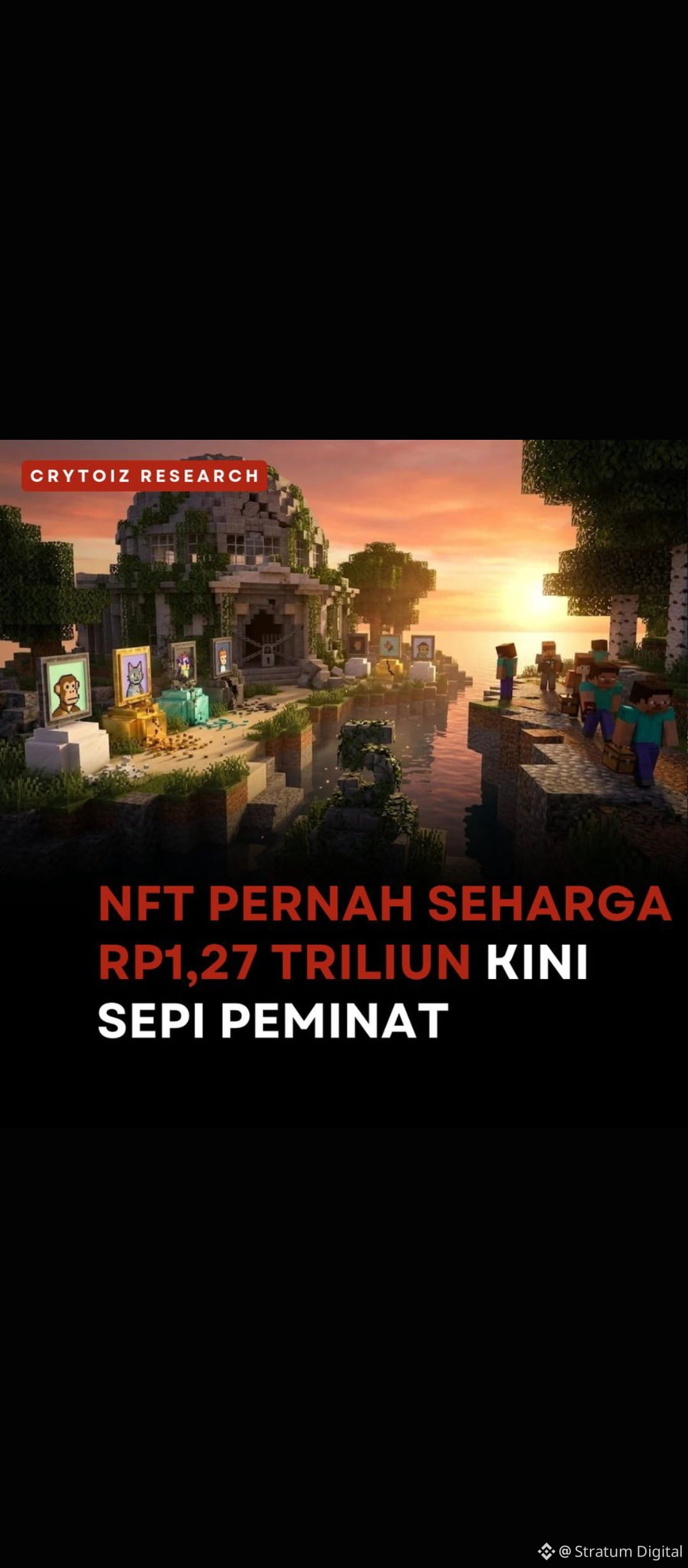
People once paid Rp1.27 trillion for a piece of digital art. Now, NFT trading activity has lost more than 99% of its volume since peaking in 2021.
The NFT craze was once enormous. Jack Dorsey sold an NFT of his first tweet for Rp52.95 billion, celebrities showed off their Bored Ape collections, and even McDonald's issued an NFT to celebrate the return of the McRib.
But the market, once crowded with buyers, is now growing quieter. Weekly NFT trading volume across various blockchains once reached Rp58.42 trillion in August 2021, compared with just Rp80.33 billion at the end of 2020.
Now, Blur, once the largest NFT marketplace on the Ethereum network, is also shutting down its website on Thursday.
The problem turned out to be more than just a changing trend. An NFT can prove that someone owns a token, but proof of ownership doesn't automatically make anyone else want it.
At the height of the craze in 2022, around 500 new NFT collections even appeared every day. As choices multiplied and buyers began to disappear, a collection's scarcity was no longer enough to sustain its price.
NFTs once proved that something digital could sell for trillions of rupiah. But when buyers stop showing up, blockchain technology can't force the market to keep valuing it.
$HUMA