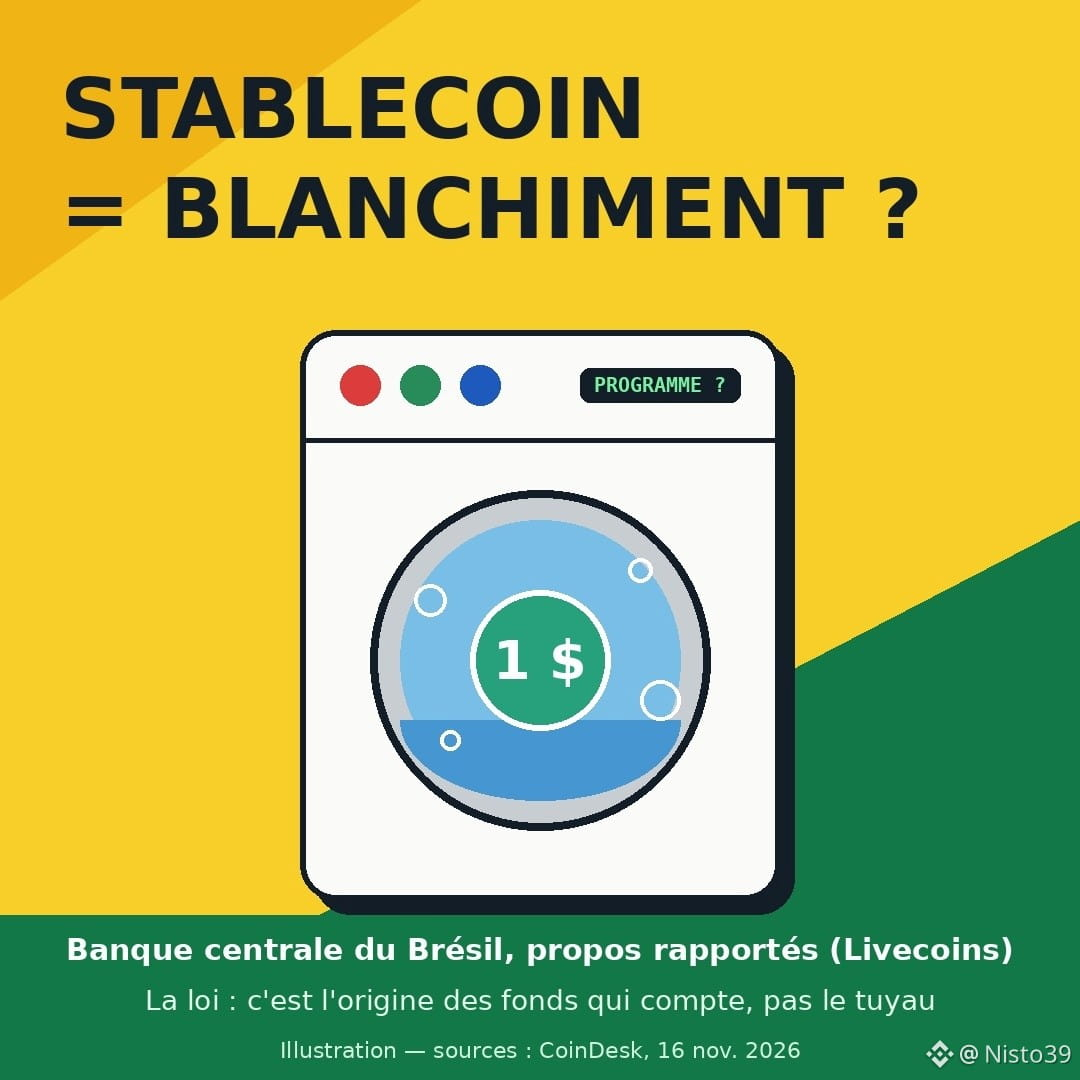
Your funds were clean. You convert them into stablecoins. Now they’re suspect.
That’s the reasoning attributed to Gerson Romantini, division chief at Brazil’s Central Bank, according to the outlet Livecoins. He reportedly even compared this market to the “dólar-cabo,” an informal channel for moving currency out of the country. He did not respond to CoinDesk.
The context: in Brazil, stablecoins (tokens meant to be worth $1, such as $USDT) accounted for around 80% of reported crypto transaction volume last year, according to the Finance Ministry.
Immediate pushback: lawmakers are preparing a request for information in Congress, the Instituto Livre Mercado is demanding the meeting minutes, and the ABToken association says that “using stablecoins, in itself, does not constitute money laundering.”
Brazilian law backs them up: money laundering means concealing the origin of money obtained through a crime. It’s the origin that matters, not the pipe.
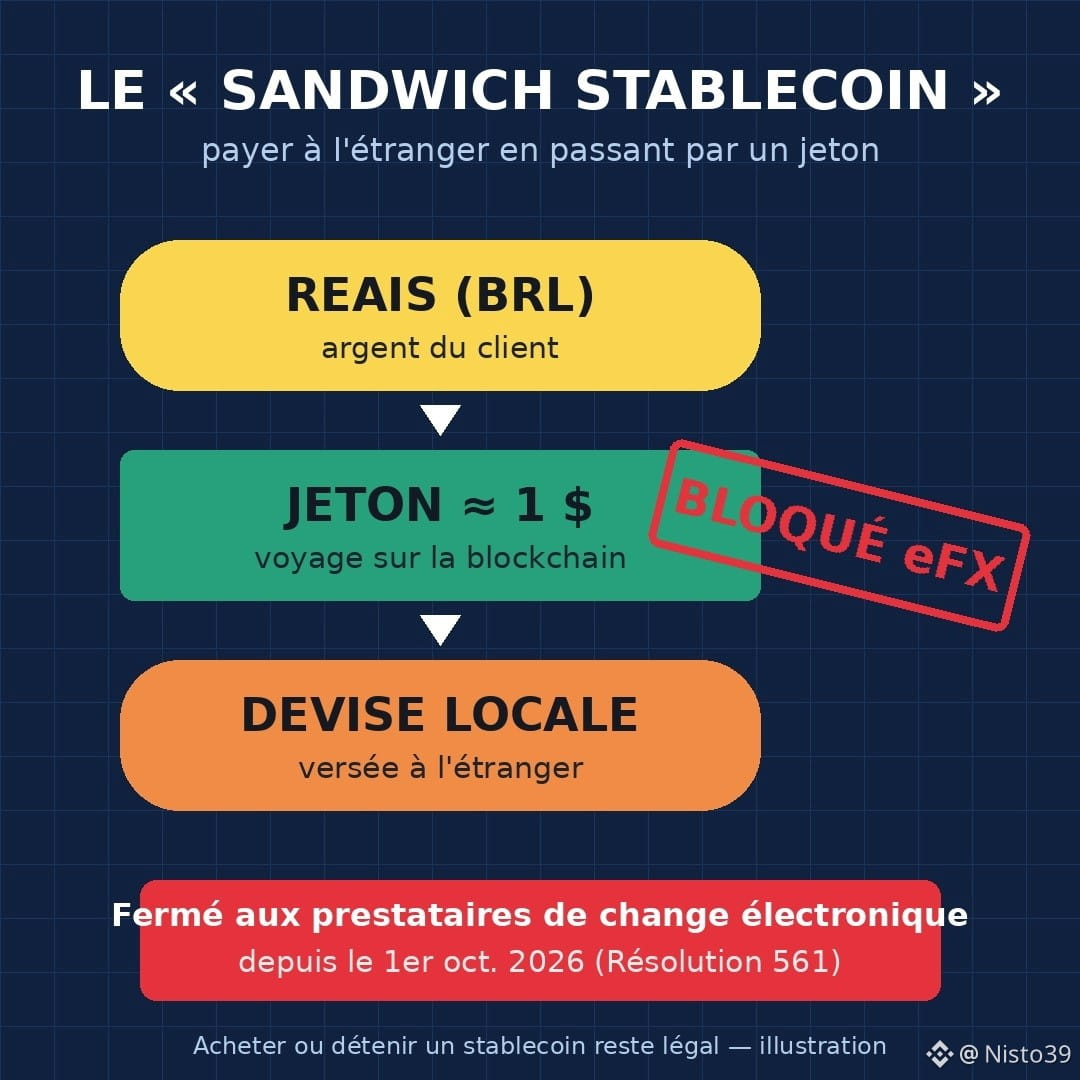
What is actually prohibited, however: since October 1 (Resolution 561), electronic foreign-exchange providers can no longer settle their international payments in crypto. The “stablecoin sandwich” (reais → token → foreign currency) is off-limits to them. Buying or holding stablecoins remains legal.
My take: conflating the tool with the crime suits a regulator that wants to keep control of foreign exchange. By the same logic, cash would be guilty by nature. And this could be said tomorrow in Lagos or Accra, where the digital dollar often serves as a shelter from a currency that’s melting away.
Legitimate wariness of a dollar it can’t control, or a monopolist reflex: which side do you think Brazil’s Central Bank is on?
#Stablecoin #Bresil #Regulation #Blanchiment #CryptoNews