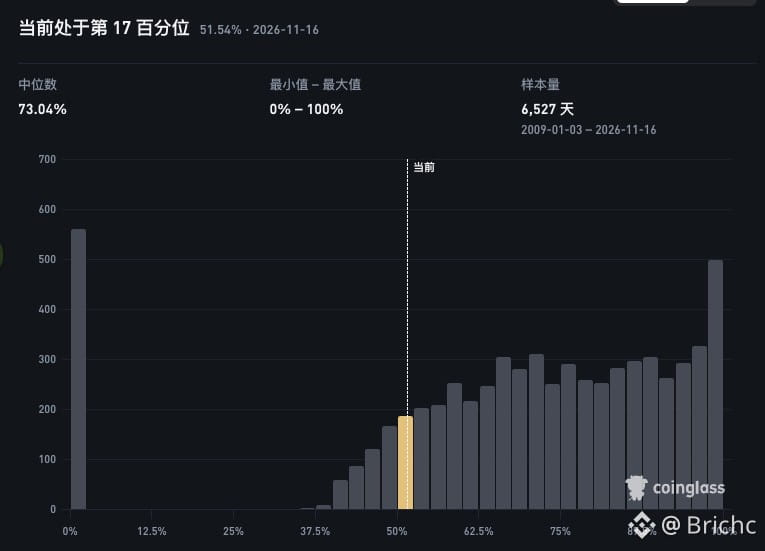
【$BTC Only 52% of Bitcoin is in profit—the market is nearing the break-even point】
Bitcoin fell nearly 14% in a week, closing at $64,883 on November 16. The share of supply in profit also dropped to 52.2%, just 2.2 percentage points away from the point at which most coins would be in unrealized loss. This change shows that holders who were still sitting on paper profits are rapidly losing their profit cushion, and market sentiment has become quite fragile.
The supply held by long-term holders has now fallen to about 16.2 million BTC, while the supply held by short-term holders has risen to about 3.9 million BTC. Based on a 155-day holding period, more coins moved into the short-term holder category over the past week, suggesting that older coins are starting to move again and the holding structure is loosening.
Financial flows are also adding pressure. U.S. spot Bitcoin ETFs have seen net outflows for eight consecutive trading days, with cumulative outflows of about $1.3 billion over the past seven trading days. At the same time, BTC fell below its 200-day moving average, and the daily RSI dropped to 23.7. Both selling pressure and oversold signals are clear.
The 52% level is one to take seriously. A drop below 50% would put most circulating coins into unrealized loss, further undermining market confidence. But this level is not, by itself, a switch that automatically triggers a reversal or further declines. What matters more now is whether ETF outflows ease and whether the supply held by long-term holders continues to fall. The market is already very weak; funding flows and holder behavior will need to confirm a true bottom.