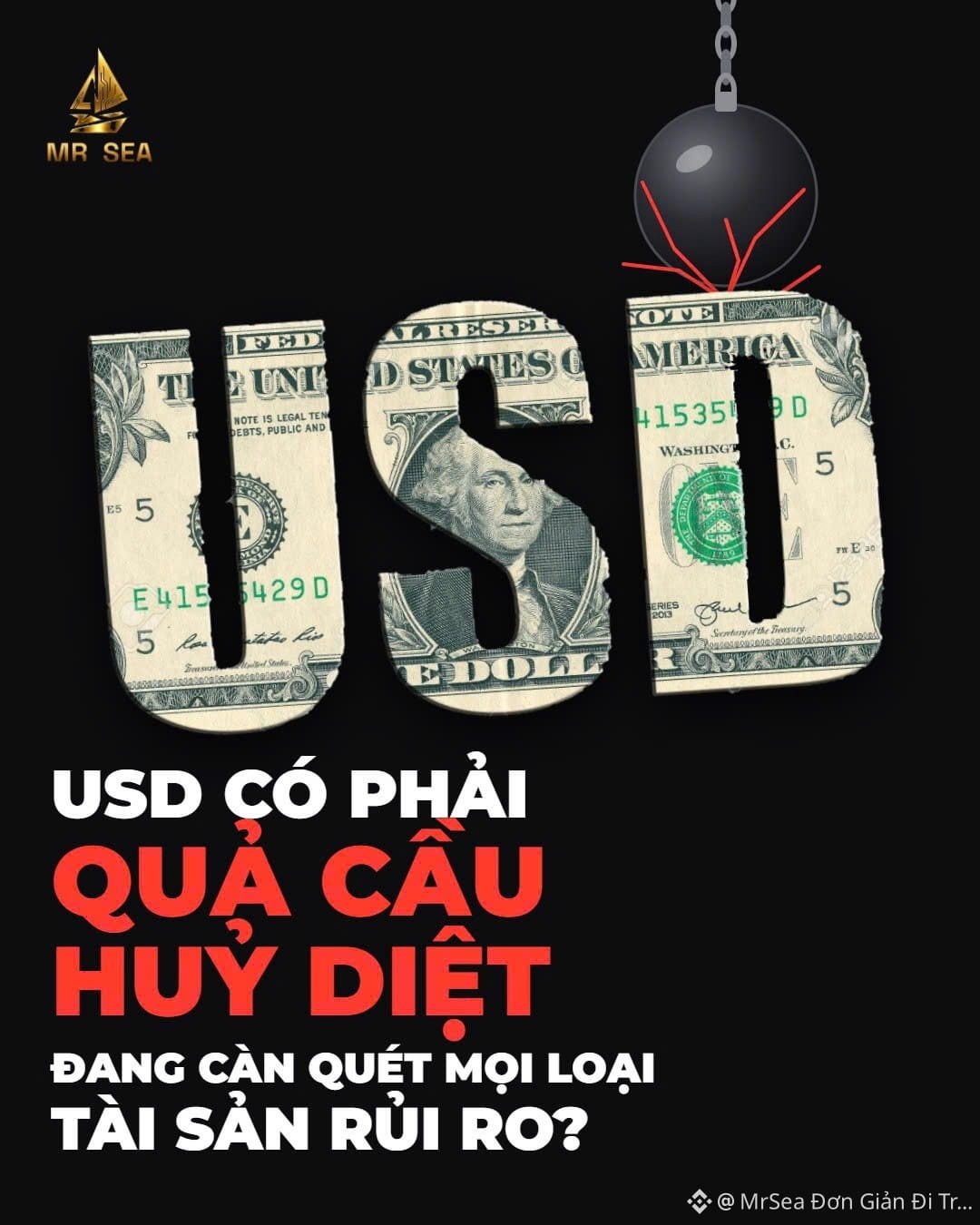
Is the USD a wrecking ball sweeping through every risk asset?
The USD closed at its highest level of the year. Gold lost nearly 5% in a week. Bitcoin slipped below 70k. Looking at this, you can see that global liquidity is tightening.
When the USD surges and gold breaks through a key level, global money is flowing to safety. Risk assets like stocks, crypto, and commodities are under a double squeeze: rising borrowing costs and money flowing out.
For risk assets to recover, three things need to happen: first, oil needs to fall below 70; second, the 10-year US Treasury yield needs to drop below 4.5%; and finally, the USD needs to start falling.
The problem is, people see a few green candles on the chart and tell themselves, “That’s the bottom—time to buy.” I’ve done that too, but this time three things are going wrong at once: the 10-year US Treasury yield is at 5.15%, oil is still hovering around $89, and the dollar is at its yearly high. All three need to turn around before money has a real reason to flow back into risk assets.
The last time the Fed hit its 2% inflation target was in February 2022. Small businesses are planning their biggest price increases since mid-2022, and history suggests this signal often leads to persistent inflation of 3–4%. The Fed is still discussing another 50-basis-point hike in December.
I’m waiting—not because I’m scared, but because waiting for the right moment is usually much better than guessing. When oil falls below $70, yields drop below 4.5%, and the dollar peaks and starts to turn down, that’s when I’ll seriously consider getting in.
The most likely time is next spring, ...